Chen Nai-Tzu, Cheng Shih-Hsun, Liu Ching-Ping, Souris Jeffrey S, Chen Chen-Tu, Mou Chung-Yuan, Lo Leu-Wei
Division of Medical Engineering Research, National Health Research Institutes, Zhunan 35053, Miaoli County, Taiwan.
Int J Mol Sci. 2012 Dec 5;13(12):16598-623. doi: 10.3390/ijms131216598.
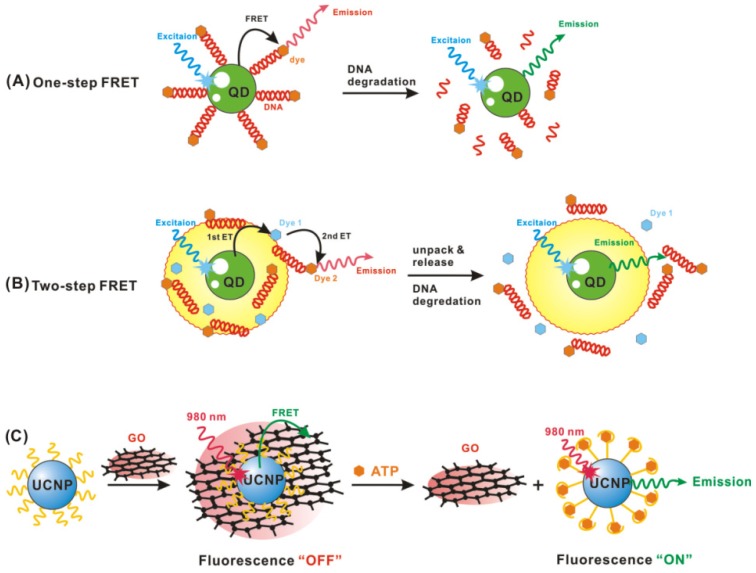
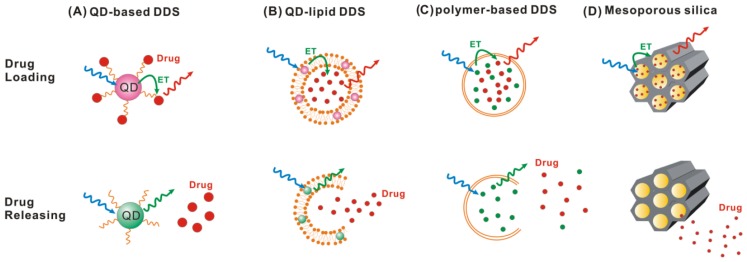
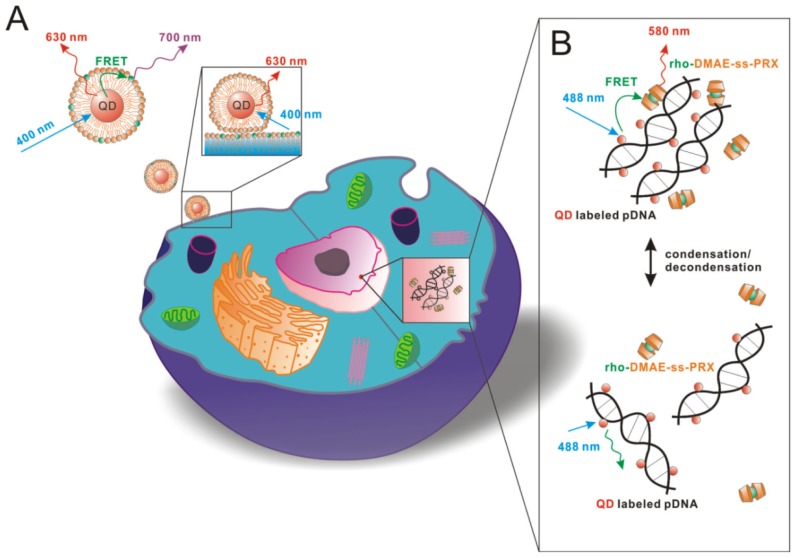
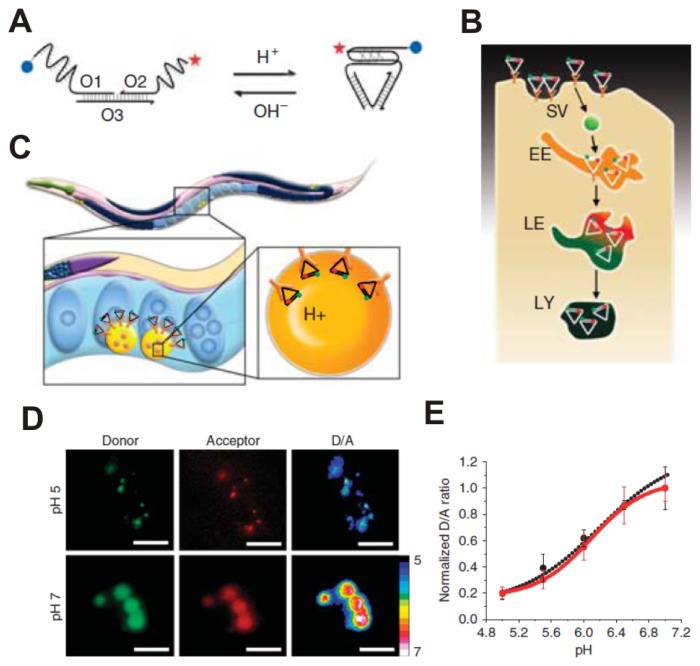
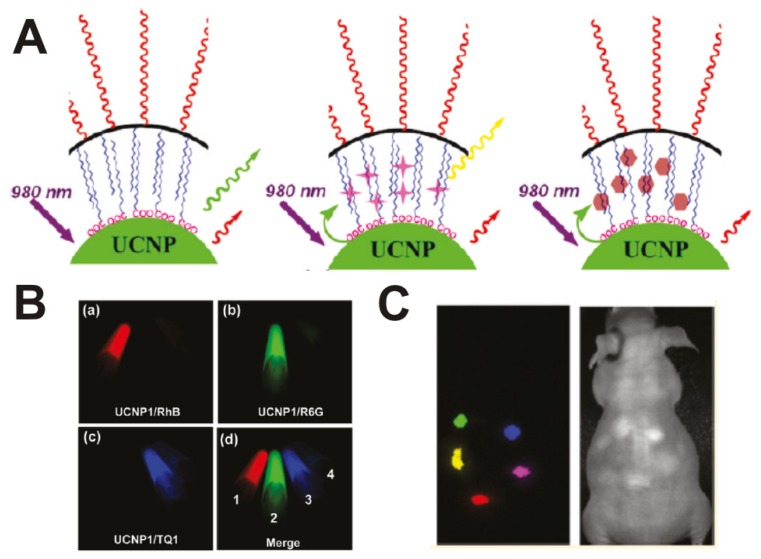
Förster resonance energy transfer (FRET) may be regarded as a "smart" technology in the design of fluorescence probes for biological sensing and imaging. Recently, a variety of nanoparticles that include quantum dots, gold nanoparticles, polymer, mesoporous silica nanoparticles and upconversion nanoparticles have been employed to modulate FRET. Researchers have developed a number of "visible" and "activatable" FRET probes sensitive to specific changes in the biological environment that are especially attractive from the biomedical point of view. This article reviews recent progress in bringing these nanoparticle-modulated energy transfer schemes to fruition for applications in biosensing, molecular imaging and drug delivery.
福斯特共振能量转移(FRET)在用于生物传感和成像的荧光探针设计中可被视为一种“智能”技术。最近,包括量子点、金纳米颗粒、聚合物、介孔二氧化硅纳米颗粒和上转换纳米颗粒在内的多种纳米颗粒已被用于调节FRET。研究人员已经开发出了许多对生物环境中的特定变化敏感的“可视化”和“可激活”FRET探针,从生物医学角度来看,这些探针特别具有吸引力。本文综述了将这些纳米颗粒调节的能量转移方案用于生物传感、分子成像和药物递送应用方面的最新进展。