European Institute of Oncology, Via Ripamonti 435, Milan, 20141, Italy.
Aging Cell. 2013 Jun;12(3):435-45. doi: 10.1111/acel.12060. Epub 2013 Mar 27.
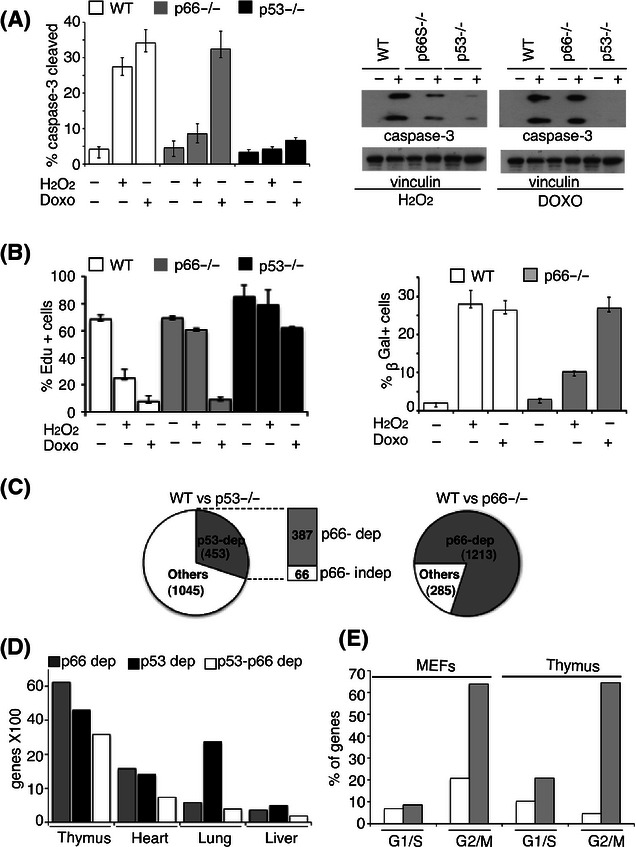
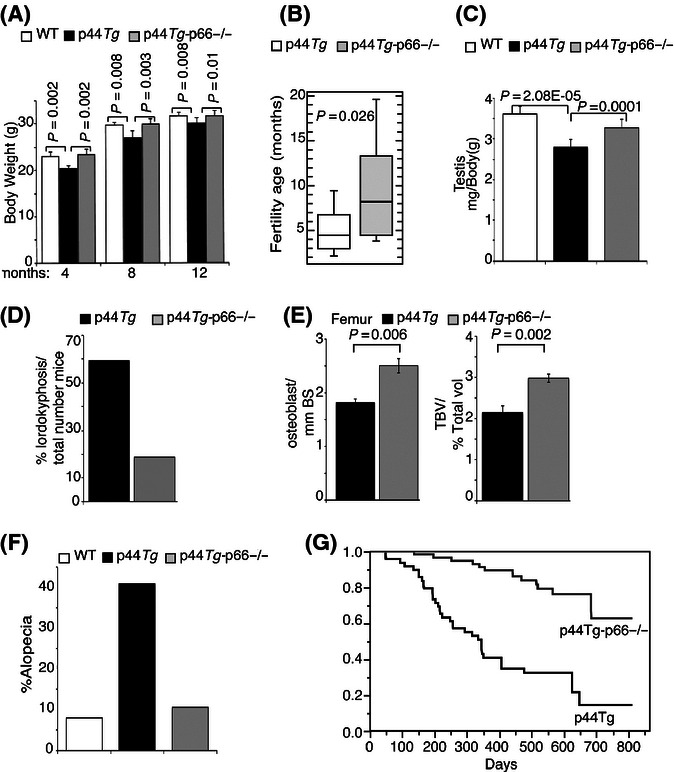
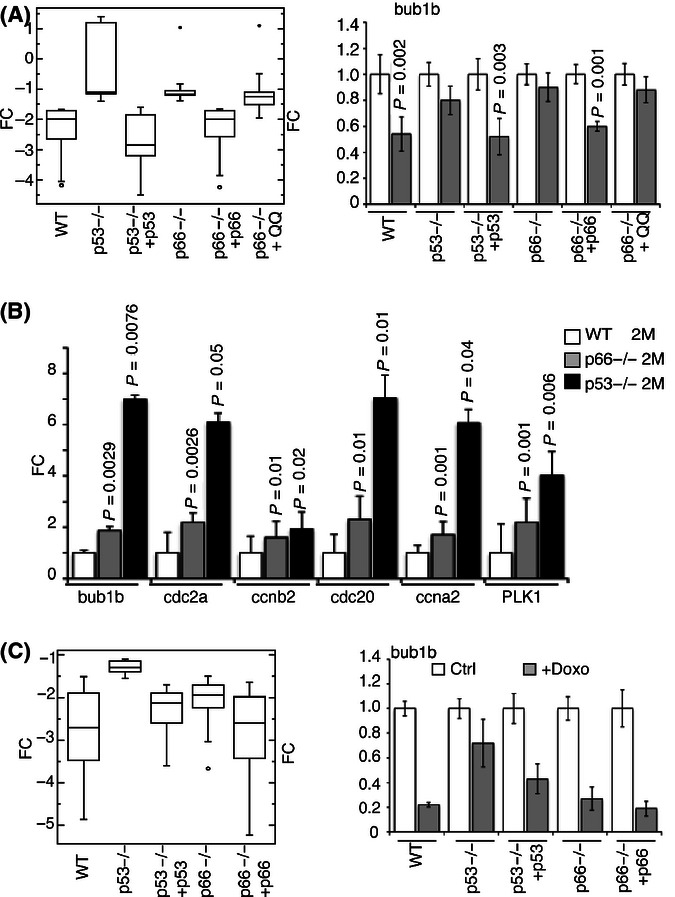
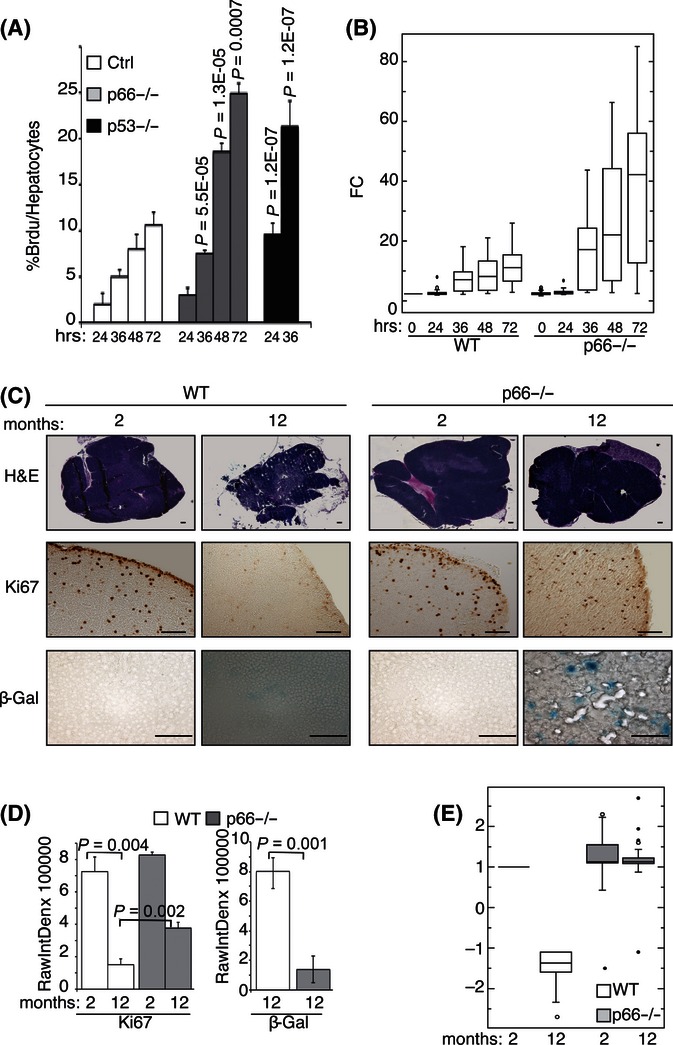
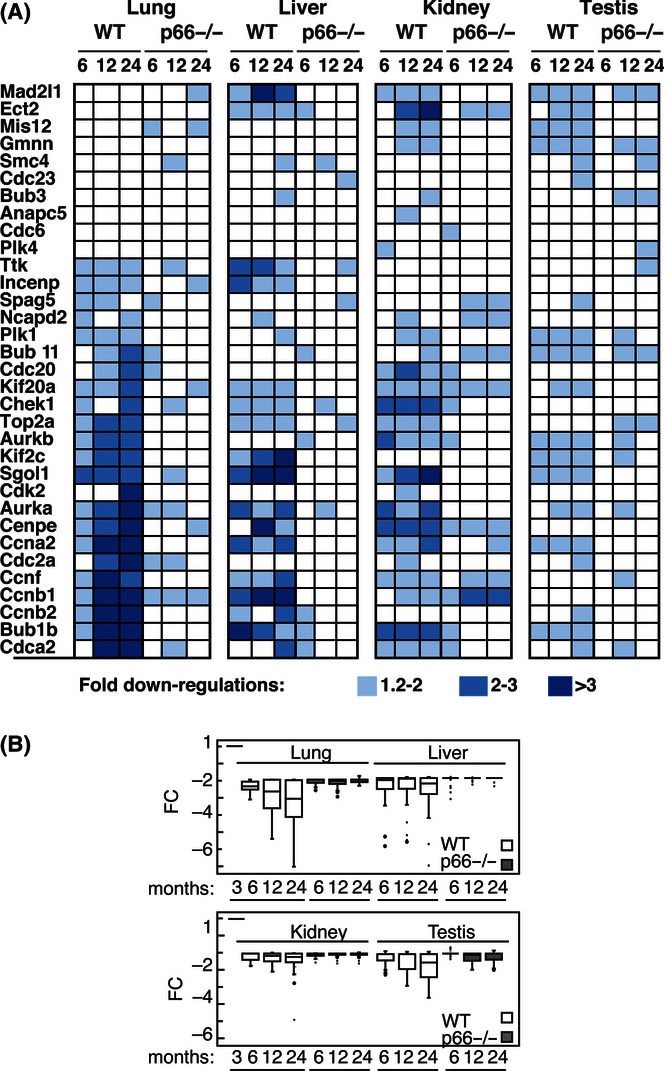
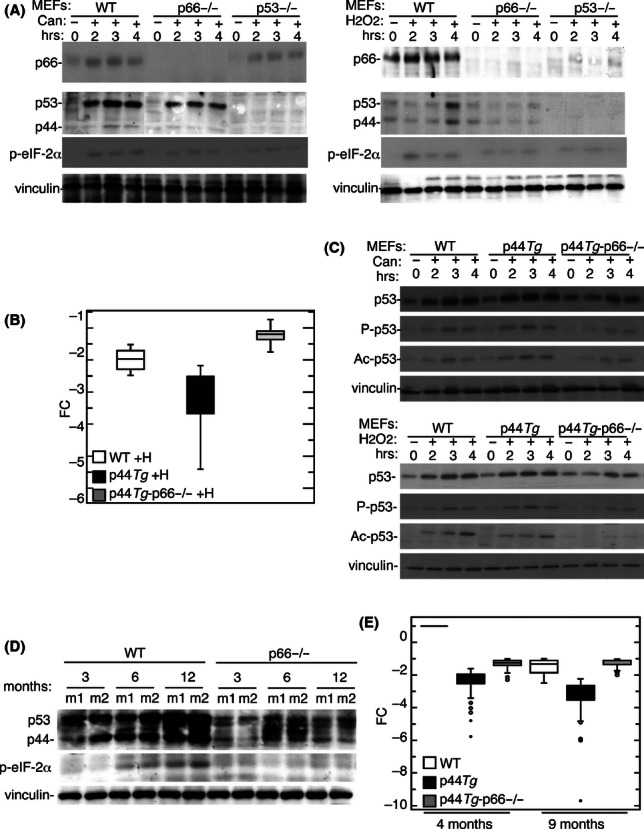
Oxidative stress is a determining factor of cellular senescence and aging and a potent inducer of the tumour-suppressor p53. Resistance to oxidative stress correlates with delayed aging in mammals, in the absence of accelerated tumorigenesis, suggesting inactivation of selected p53-downstream pathways. We investigated p53 regulation in mice carrying deletion of p66, a mutation that retards aging and confers cellular resistance and systemic resistance to oxidative stress. We identified a transcriptional network of ~200 genes that are repressed by p53 and encode for determinants of progression through mitosis or suppression of senescence. They are selectively down-regulated in cultured fibroblasts after oxidative stress, and, in vivo, in proliferating tissues and during physiological aging. Selectivity is imposed by p66 expression and activation of p44/p53 (also named Delta40p53), a p53 isoform that accelerates aging and prevents mitosis after protein damage. p66 deletion retards aging and increases longevity of p44/p53 transgenic mice. Thus, oxidative stress activates a specific p53 transcriptional response, mediated by p44/p53 and p66, which regulates cellular senescence and aging.
氧化应激是细胞衰老和老化的决定因素,也是肿瘤抑制因子 p53 的强力诱导剂。在没有加速肿瘤发生的情况下,哺乳动物对氧化应激的抵抗与衰老延迟相关,这表明某些 p53 下游途径失活。我们研究了携带 p66 缺失的小鼠中的 p53 调节,p66 突变可延缓衰老并赋予细胞和全身对氧化应激的抵抗性。我们确定了一个约 200 个基因的转录网络,这些基因受 p53 抑制,编码有丝分裂进展或抑制衰老的决定因素。它们在氧化应激后培养的成纤维细胞中以及在体内的增殖组织中和生理衰老过程中选择性地下调。选择性由 p66 的表达和 p44/p53(也称为 Delta40p53)的激活引起,p44/p53 是一种加速衰老并在蛋白质损伤后阻止有丝分裂的 p53 同工型。p66 缺失可延缓衰老并延长 p44/p53 转基因小鼠的寿命。因此,氧化应激激活了一种由 p44/p53 和 p66 介导的特定 p53 转录反应,该反应调节细胞衰老和老化。