Fogarty International Center, National Institutes of Health, Bethesda, Maryland, United States of America.
PLoS One. 2013;8(2):e54445. doi: 10.1371/journal.pone.0054445. Epub 2013 Feb 14.
There is limited information on influenza and respiratory syncytial virus (RSV) seasonal patterns in tropical areas, although there is renewed interest in understanding the seasonal drivers of respiratory viruses.
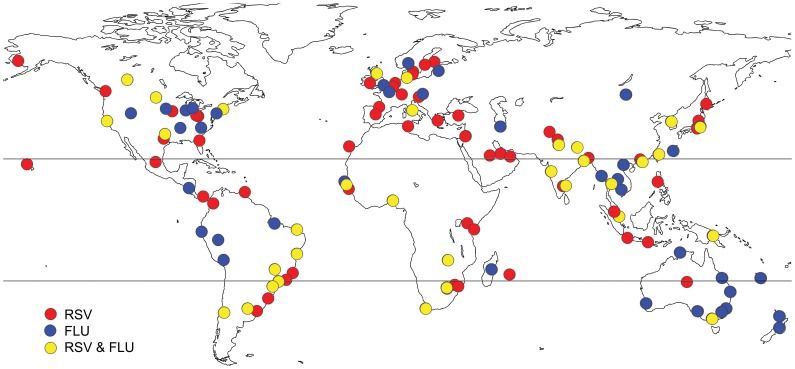
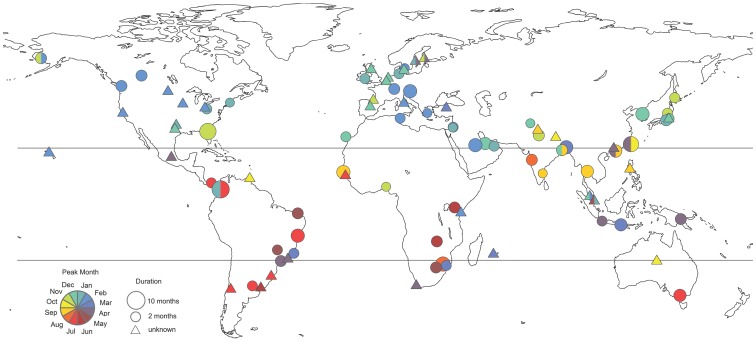
We review geographic variations in seasonality of laboratory-confirmed influenza and RSV epidemics in 137 global locations based on literature review and electronic sources. We assessed peak timing and epidemic duration and explored their association with geography and study settings. We fitted time series model to weekly national data available from the WHO influenza surveillance system (FluNet) to further characterize seasonal parameters.
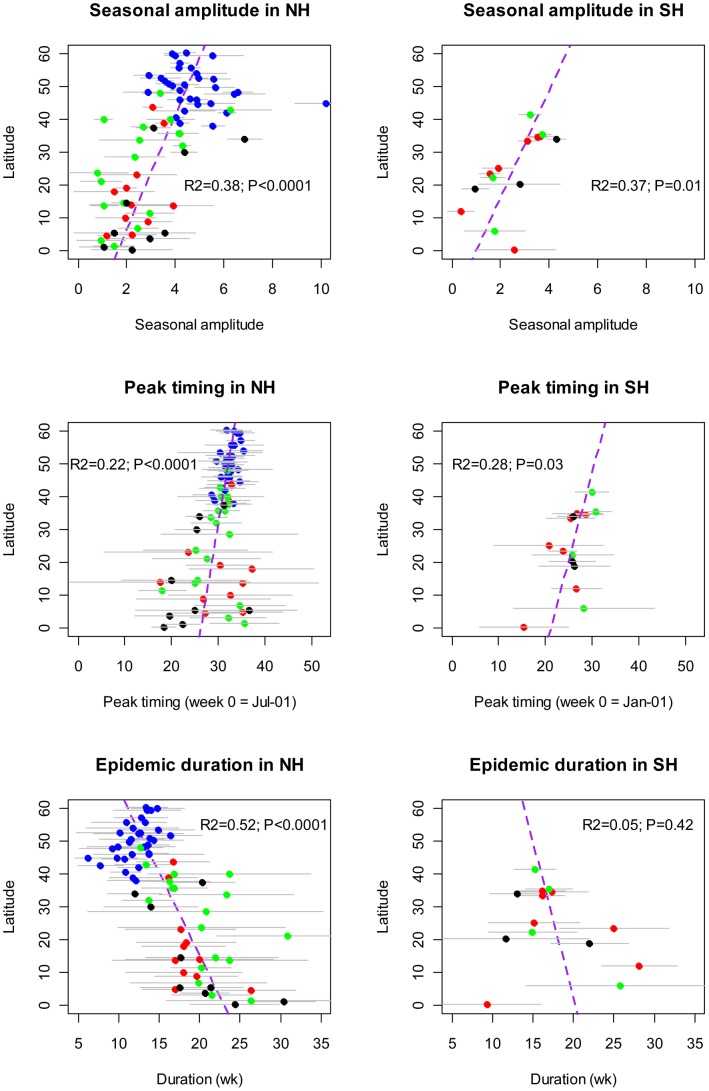
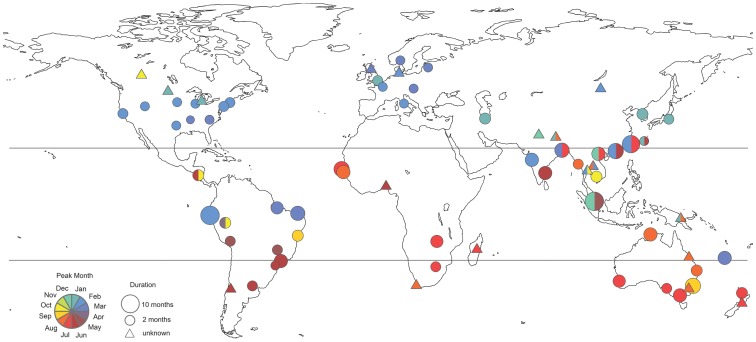
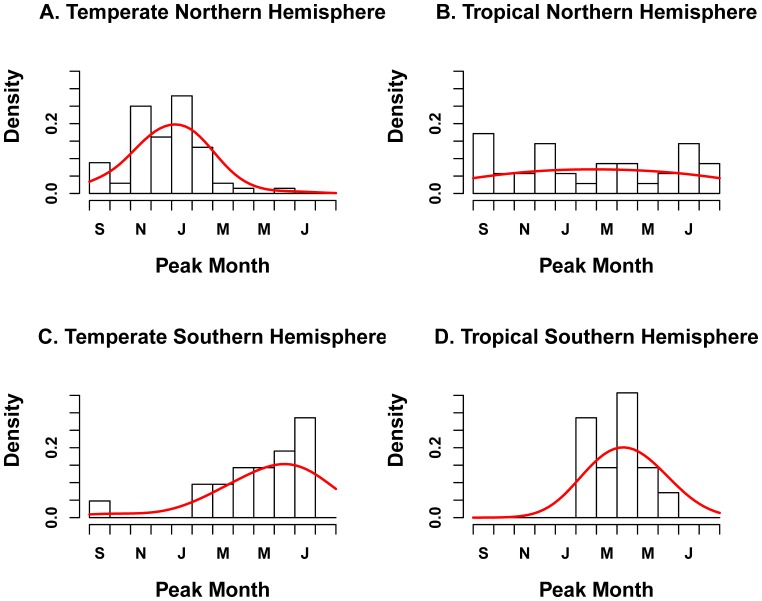
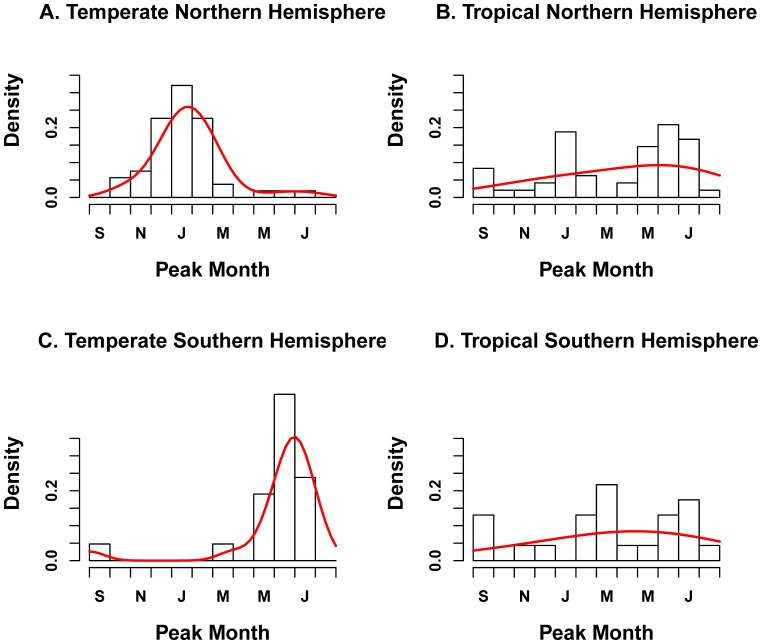
Influenza and RSV activity consistently peaked during winter months in temperate locales, while there was greater diversity in the tropics. Several temperate locations experienced semi-annual influenza activity with peaks occurring in winter and summer. Semi-annual activity was relatively common in tropical areas of Southeast Asia for both viruses. Biennial cycles of RSV activity were identified in Northern Europe. Both viruses exhibited weak latitudinal gradients in the timing of epidemics by hemisphere, with peak timing occurring later in the calendar year with increasing latitude (P<0.03). Time series model applied to influenza data from 85 countries confirmed the presence of latitudinal gradients in timing, duration, seasonal amplitude, and between-year variability of epidemics. Overall, 80% of tropical locations experienced distinct RSV seasons lasting 6 months or less, while the percentage was 50% for influenza.
Our review combining literature and electronic data sources suggests that a large fraction of tropical locations experience focused seasons of respiratory virus activity in individual years. Information on seasonal patterns remains limited in large undersampled regions, included Africa and Central America. Future studies should attempt to link the observed latitudinal gradients in seasonality of viral epidemics with climatic and population factors, and explore regional differences in disease transmission dynamics and attack rates.
虽然人们对了解呼吸道病毒的季节性驱动因素重新产生了兴趣,但有关热带地区流感和呼吸道合胞病毒 (RSV) 季节性模式的信息有限。
我们通过文献回顾和电子资源,综述了 137 个全球地点经实验室确认的流感和 RSV 流行的地理变异情况。我们评估了高峰期时间和流行持续时间,并探讨了它们与地理位置和研究环境的关联。我们拟合了来自世界卫生组织流感监测系统(FluNet)的每周国家级数据的时间序列模型,以进一步描述季节性参数。
流感和 RSV 活动在温带地区的冬季月份持续达到高峰,而在热带地区则存在更大的多样性。一些温带地区出现季节性流感活动,高峰期出现在冬季和夏季。这两种病毒在东南亚的热带地区都存在相对常见的半年流行活动。北欧地区出现了 RSV 活动的两年周期。这两种病毒在半球的流行时间上都表现出较弱的纬度梯度,随着纬度的增加,流行高峰期的时间越晚(P<0.03)。应用于来自 85 个国家的流感数据的时间序列模型证实了流行时间、持续时间、季节性幅度和年度间变异性方面存在纬度梯度。总体而言,80%的热带地区经历了持续 6 个月或更短时间的 RSV 明显季节性,而流感的这一比例为 50%。
我们的综述结合了文献和电子数据源,表明在个别年份,很大一部分热带地区经历了呼吸道病毒活动的集中季节性。在包括非洲和中美洲在内的大量采样不足的地区,有关季节性模式的信息仍然有限。未来的研究应尝试将观察到的病毒流行季节性的纬度梯度与气候和人口因素联系起来,并探索疾病传播动力学和攻击率的区域差异。