Australian Centre for Ancient DNA, School of Earth and Environmental Sciences, University of Adelaide, Adelaide, South Australia, Australia.
PLoS Genet. 2013;9(2):e1003296. doi: 10.1371/journal.pgen.1003296. Epub 2013 Feb 14.
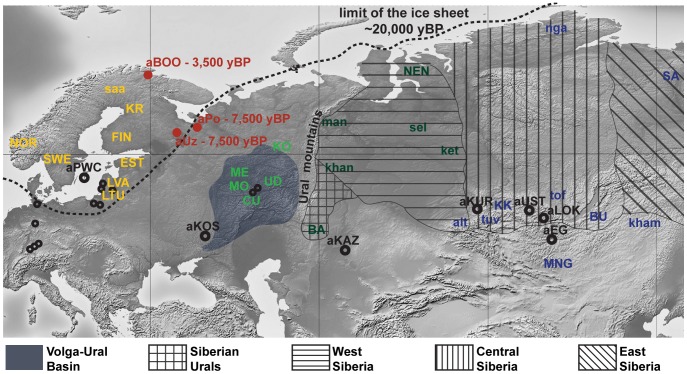
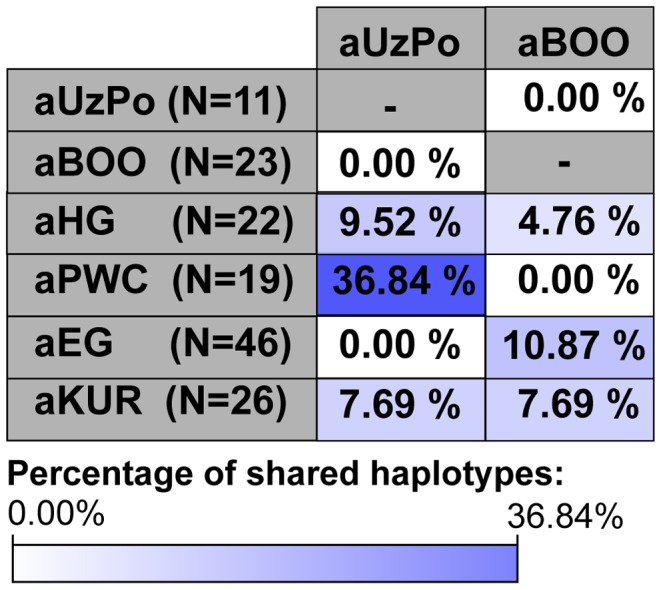
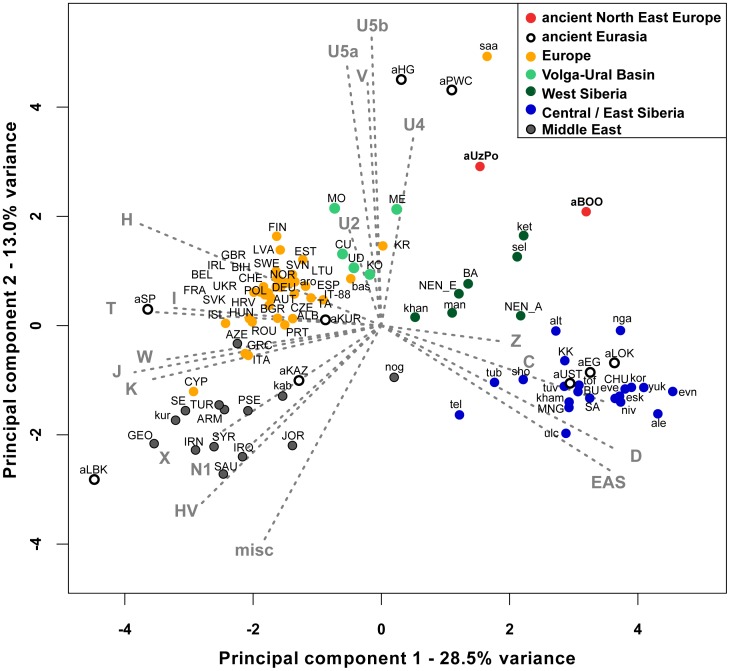
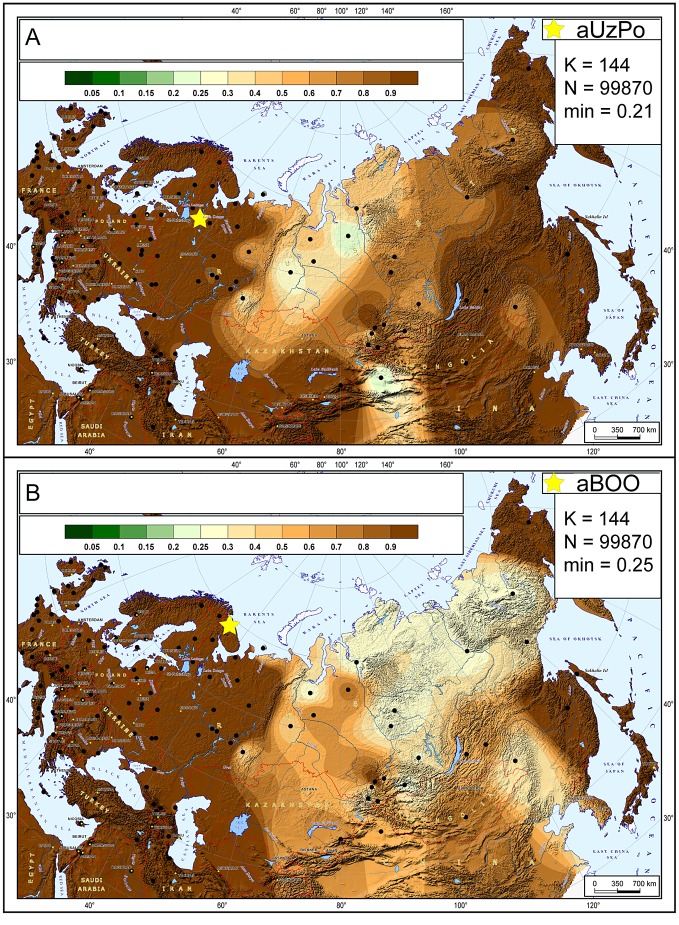
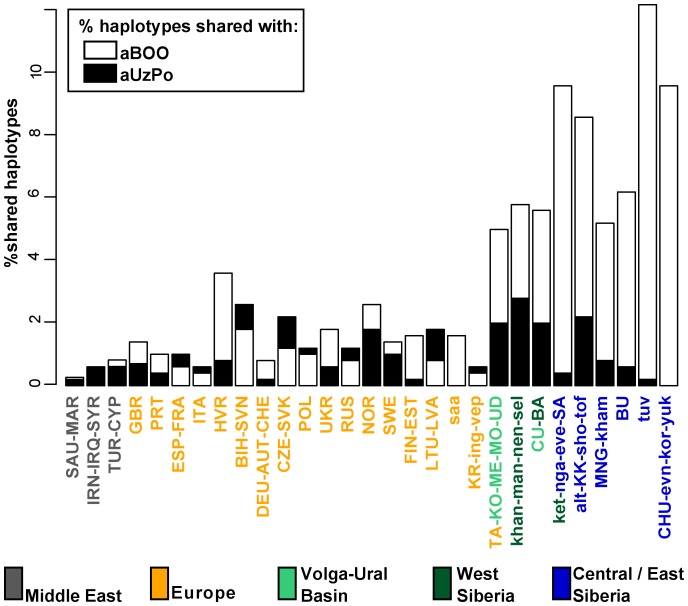
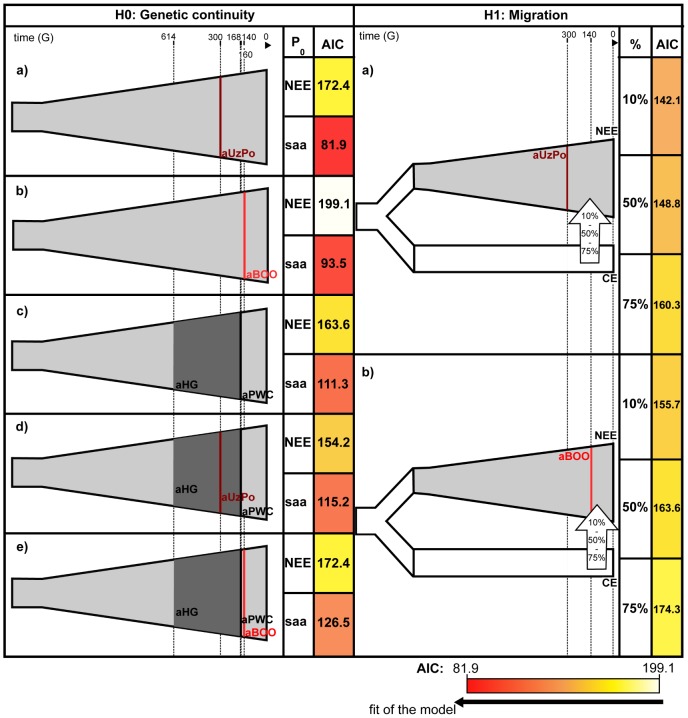
North East Europe harbors a high diversity of cultures and languages, suggesting a complex genetic history. Archaeological, anthropological, and genetic research has revealed a series of influences from Western and Eastern Eurasia in the past. While genetic data from modern-day populations is commonly used to make inferences about their origins and past migrations, ancient DNA provides a powerful test of such hypotheses by giving a snapshot of the past genetic diversity. In order to better understand the dynamics that have shaped the gene pool of North East Europeans, we generated and analyzed 34 mitochondrial genotypes from the skeletal remains of three archaeological sites in northwest Russia. These sites were dated to the Mesolithic and the Early Metal Age (7,500 and 3,500 uncalibrated years Before Present). We applied a suite of population genetic analyses (principal component analysis, genetic distance mapping, haplotype sharing analyses) and compared past demographic models through coalescent simulations using Bayesian Serial SimCoal and Approximate Bayesian Computation. Comparisons of genetic data from ancient and modern-day populations revealed significant changes in the mitochondrial makeup of North East Europeans through time. Mesolithic foragers showed high frequencies and diversity of haplogroups U (U2e, U4, U5a), a pattern observed previously in European hunter-gatherers from Iberia to Scandinavia. In contrast, the presence of mitochondrial DNA haplogroups C, D, and Z in Early Metal Age individuals suggested discontinuity with Mesolithic hunter-gatherers and genetic influx from central/eastern Siberia. We identified remarkable genetic dissimilarities between prehistoric and modern-day North East Europeans/Saami, which suggests an important role of post-Mesolithic migrations from Western Europe and subsequent population replacement/extinctions. This work demonstrates how ancient DNA can improve our understanding of human population movements across Eurasia. It contributes to the description of the spatio-temporal distribution of mitochondrial diversity and will be of significance for future reconstructions of the history of Europeans.
北欧拥有丰富多样的文化和语言,这表明其遗传历史十分复杂。考古学、人类学和遗传学研究揭示了过去来自欧亚大陆西部和东部的一系列影响。虽然现代人群的遗传数据通常被用于推断他们的起源和过去的迁徙,但古 DNA 通过提供过去遗传多样性的快照,为这些假设提供了有力的检验。为了更好地了解塑造北欧人群基因库的动态,我们从俄罗斯西北部的三个考古遗址的骨骼遗骸中生成并分析了 34 个线粒体基因型。这些遗址的年代可追溯到中石器时代和早期铁器时代(未校准的公元前 7500 年和 3500 年)。我们应用了一系列群体遗传分析(主成分分析、遗传距离图谱、单倍型共享分析),并通过贝叶斯串联 SimCoal 和近似贝叶斯计算进行的合并模拟比较了过去的人口统计学模型。对古代和现代人群遗传数据的比较表明,北欧人群的线粒体构成随着时间的推移发生了显著变化。中石器时代的采集者表现出 U 单倍群(U2e、U4、U5a)的高频率和多样性,这种模式以前在从伊比利亚到斯堪的纳维亚的欧洲狩猎采集者中观察到过。相比之下,线粒体 DNA 单倍群 C、D 和 Z 在早期铁器时代个体中的存在表明与中石器时代的狩猎采集者存在不连续性,并且有从中西伯利亚输入的遗传物质。我们发现史前和现代北欧人群/萨米人之间存在显著的遗传差异,这表明来自西欧的后中石器时代迁徙以及随后的人口更替/灭绝起到了重要作用。这项工作展示了古 DNA 如何提高我们对欧亚大陆人类种群迁徙的理解。它有助于描述线粒体多样性的时空分布,并将对未来欧洲人历史的重建具有重要意义。