Department of Microbiology, Infectious Diseases Program, National University of Singapore Kent Ridge, Singapore.
Front Immunol. 2013 Mar 5;4:56. doi: 10.3389/fimmu.2013.00056. eCollection 2013.
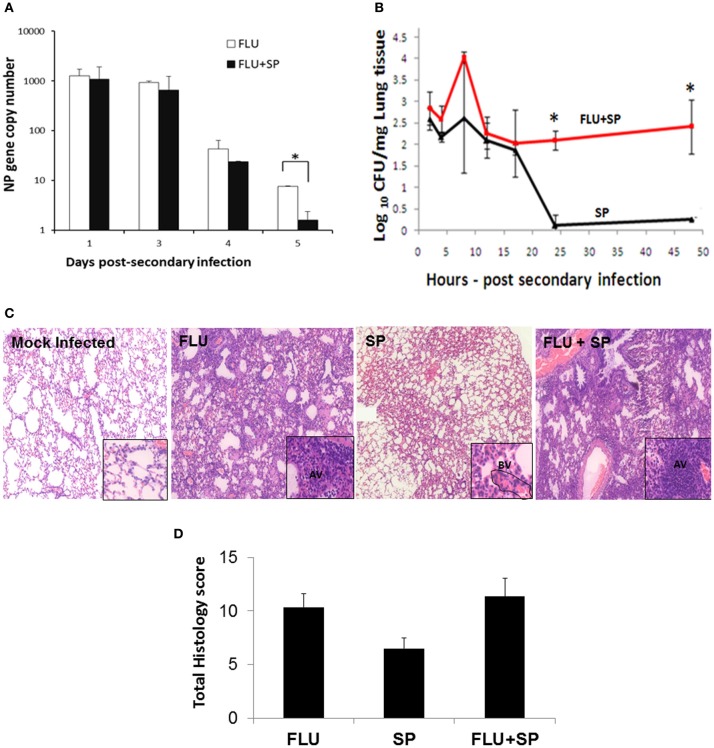
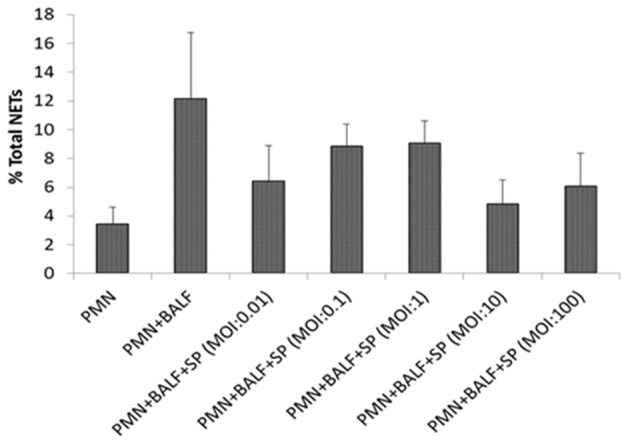
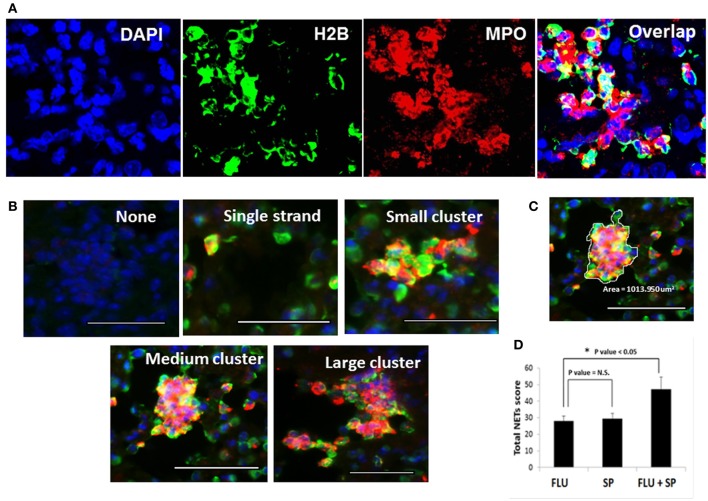
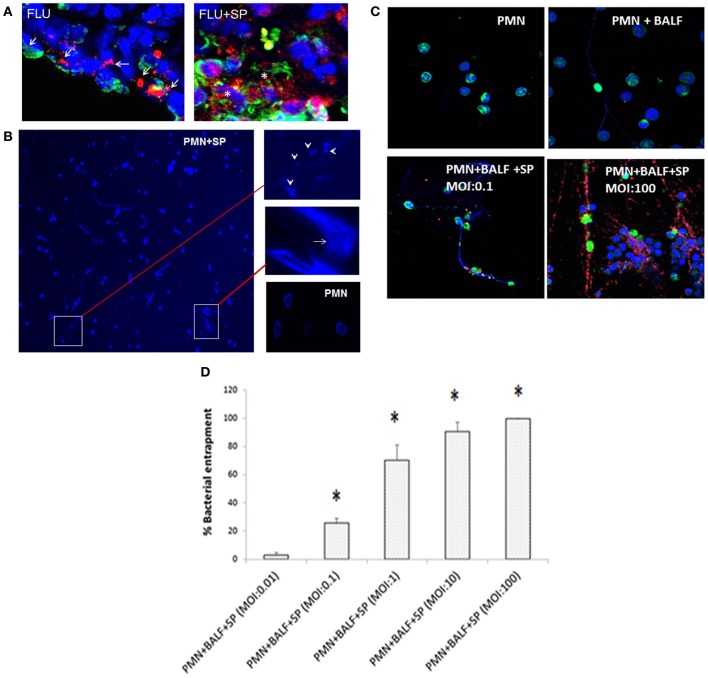
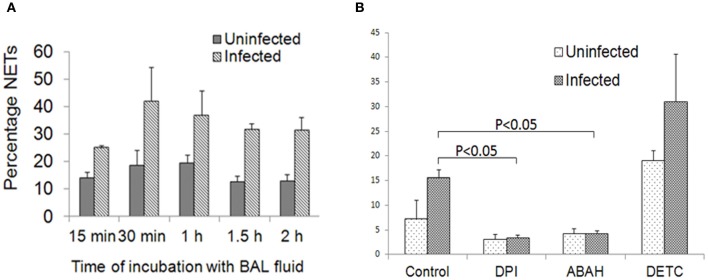
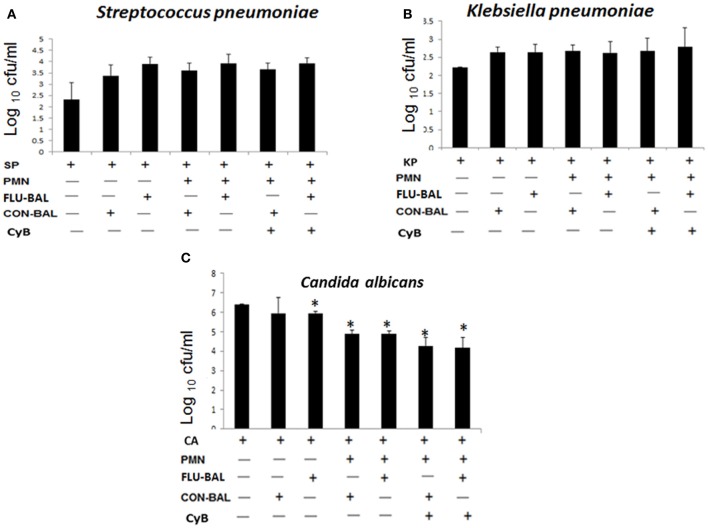
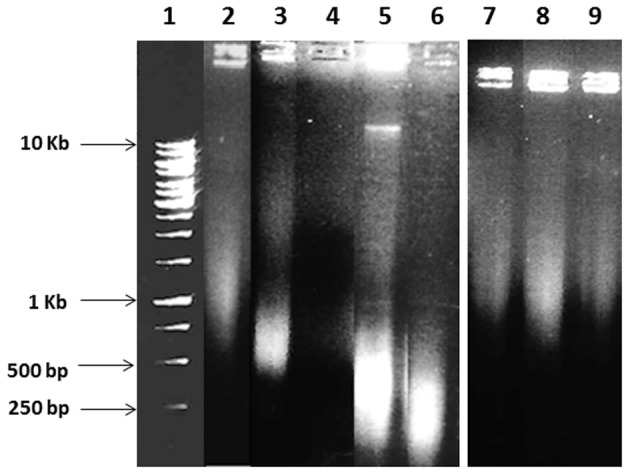
Seasonal influenza virus infections may lead to debilitating disease, and account for significant fatalities annually worldwide. Most of these deaths are attributed to the complications of secondary bacterial pneumonia. Evidence is accumulating to support the notion that neutrophil extracellular traps (NETs) harbor several antibacterial proteins, and trap and kill bacteria. We have previously demonstrated the induction of NETs that contribute to lung tissue injury in severe influenza pneumonia. However, the role of these NETs in secondary bacterial pneumonia is unclear. In this study, we explored whether NETs induced during pulmonary influenza infection have functional significance against infections with Streptococcus pneumoniae and other bacterial and fungal species. Our findings revealed that NETs do not participate in killing of Streptococcus pneumoniae in vivo and in vitro. Dual viral and bacterial infection elevated the bacterial load compared to animals infected with bacteria alone. Concurrently, enhanced lung pathogenesis was observed in dual-infected mice compared to those challenged with influenza virus or bacteria alone. The intensified NETs in dual-infected mice often appeared as clusters that were frequently filled with partially degraded DNA, as evidenced by punctate histone protein staining. The severe pulmonary pathology and excessive NETs generation in dual infection correlated with exaggerated inflammation and damage to the alveolar-capillary barrier. NETs stimulation in vitro did not significantly alter the gene expression of several antimicrobial proteins, and these NETs did not exhibit any bactericidal activity. Fungicidal activity against Candida albicans was observed at similar levels both in presence or absence of NETs. These results substantiate that the NETs released by primary influenza infection do not protect against secondary bacterial infection, but may compromise lung function.
季节性流感病毒感染可能导致身体虚弱的疾病,并在全球范围内造成每年大量死亡。这些死亡大多数归因于继发性细菌性肺炎的并发症。有证据表明,中性粒细胞胞外陷阱 (NETs) 含有多种抗菌蛋白,可以捕获和杀死细菌。我们之前已经证明,NETs 的诱导有助于严重流感肺炎中的肺组织损伤。然而,这些 NETs 在继发性细菌性肺炎中的作用尚不清楚。在这项研究中,我们探讨了在肺部流感感染期间诱导的 NETs 是否对肺炎链球菌和其他细菌和真菌物种的感染具有功能意义。我们的研究结果表明,NETs 不会参与体内和体外肺炎链球菌的杀伤。与单独感染细菌的动物相比,病毒和细菌的双重感染会增加细菌负荷。同时,与单独感染流感病毒或细菌的小鼠相比,双重感染的小鼠观察到更严重的肺部发病机制。与单独感染流感病毒或细菌的小鼠相比,双重感染的小鼠中增强的 NETs 通常表现为簇,这些簇中经常充满部分降解的 DNA,这一点可以通过点状组蛋白蛋白染色来证明。双重感染小鼠中严重的肺部病理学和过度的 NETs 生成与炎症加剧以及肺泡毛细血管屏障损伤相关。体外 NETs 刺激不会显著改变几种抗菌蛋白的基因表达,并且这些 NETs 没有表现出任何杀菌活性。对白色念珠菌的杀菌活性在存在或不存在 NETs 的情况下水平相似。这些结果证实,原发性流感感染释放的 NETs 不能保护免受继发性细菌感染,但可能会损害肺功能。