Department of Psychiatry and Psychology, Faculty of Health, Medicine and Life Sciences, School for Mental Health and Neuroscience (MHeNS), European Graduate School of Neuroscience (EURON), Maastricht University Medical Centre, Maastricht, the Netherlands.
Acta Psychiatr Scand. 2013 Jul;128(1):3-20. doi: 10.1111/acps.12095. Epub 2013 Mar 14.
To review the literature on psychological and biological findings on resilience (i.e. the successful adaptation and swift recovery after experiencing life adversities) at the level of the individual, and to integrate findings from animal and human studies.
Electronic and manual literature search of MEDLINE, EMBASE and PSYCHINFO, using a range of search terms around biological and psychological factors influencing resilience as observed in human and experimental animal studies, complemented by review articles and cross-references.
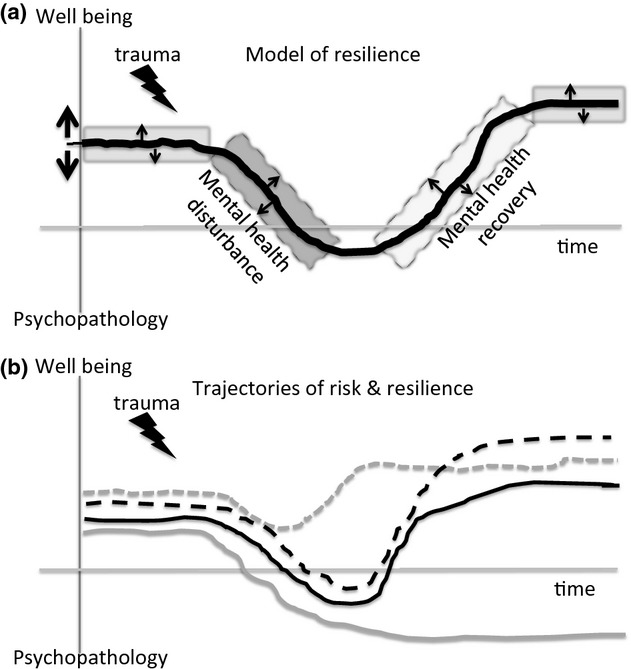
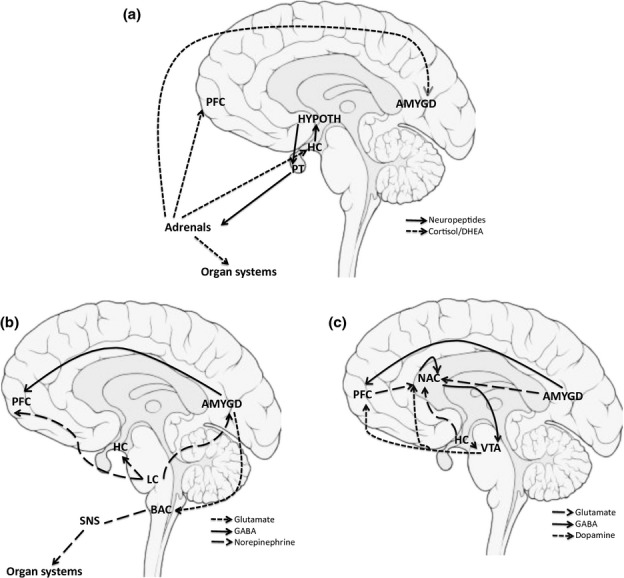
The term resilience is used in the literature for different phenomena ranging from prevention of mental health disturbance to successful adaptation and swift recovery after experiencing life adversities, and may also include post-traumatic psychological growth. Secure attachment, experiencing positive emotions and having a purpose in life are three important psychological building blocks of resilience. Overlap between psychological and biological findings on resilience in the literature is most apparent for the topic of stress sensitivity, although recent results suggest a crucial role for reward experience in resilience.
Improving the understanding of the links between genetic endowment, environmental impact and gene-environment interactions with developmental psychology and biology is crucial for elucidating the neurobiological and psychological underpinnings of resilience.
回顾个体层面上关于韧性(即在经历生活逆境后成功适应和迅速恢复)的心理和生物学研究发现,并整合来自动物和人类研究的结果。
使用围绕影响人类和实验动物研究中韧性的生物学和心理学因素的一系列搜索词,在 MEDLINE、EMBASE 和 PSYCHINFO 上进行电子和手动文献搜索,并辅以综述文章和交叉引用。
文献中使用韧性一词来描述不同的现象,从预防心理健康障碍到经历生活逆境后的成功适应和迅速恢复,也可能包括创伤后心理成长。安全依恋、体验积极情绪和生活有目标是韧性的三个重要心理基石。文献中关于韧性的心理和生物学发现之间的重叠在应激敏感性主题上最为明显,尽管最近的结果表明奖励体验在韧性中起着关键作用。
了解遗传倾向、环境影响和基因-环境相互作用与发展心理学和生物学之间的联系对于阐明韧性的神经生物学和心理学基础至关重要。