Faculty of Medicine, School of Medical Sciences, University of New South Wales, Kensington, NSW, Australia.
J Cell Mol Med. 2013 May;17(5):626-35. doi: 10.1111/jcmm.12042. Epub 2013 Mar 14.
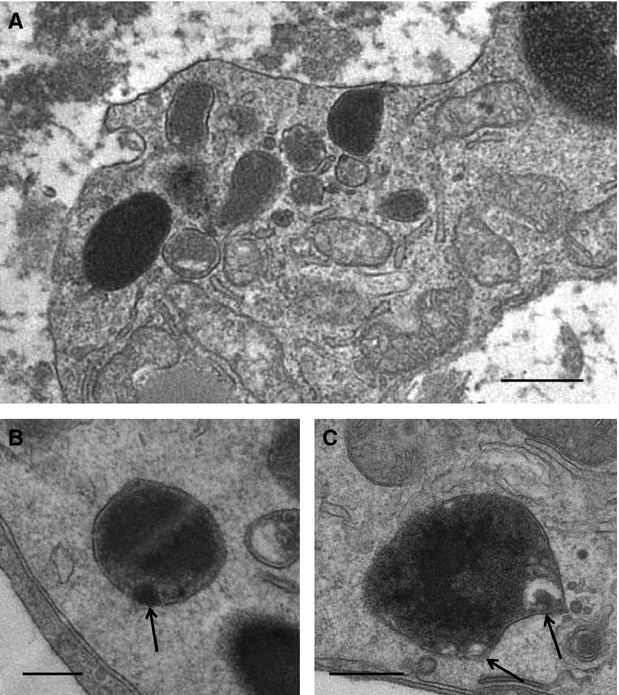
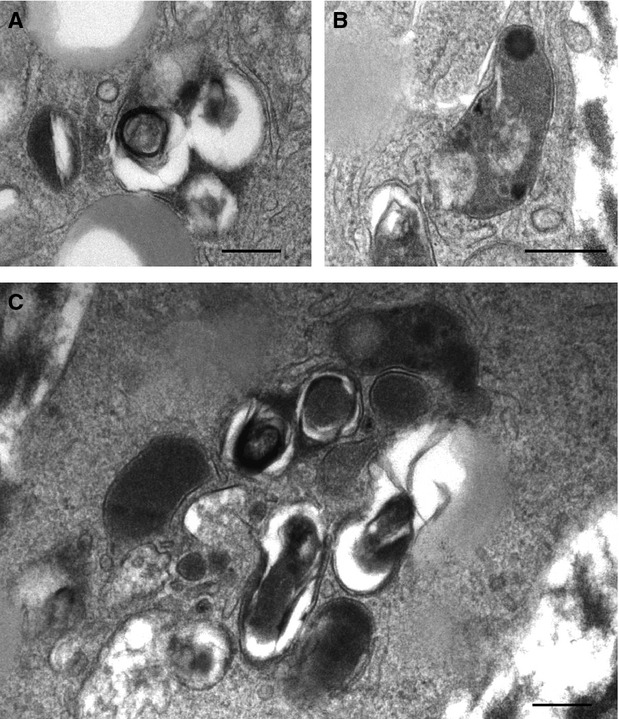
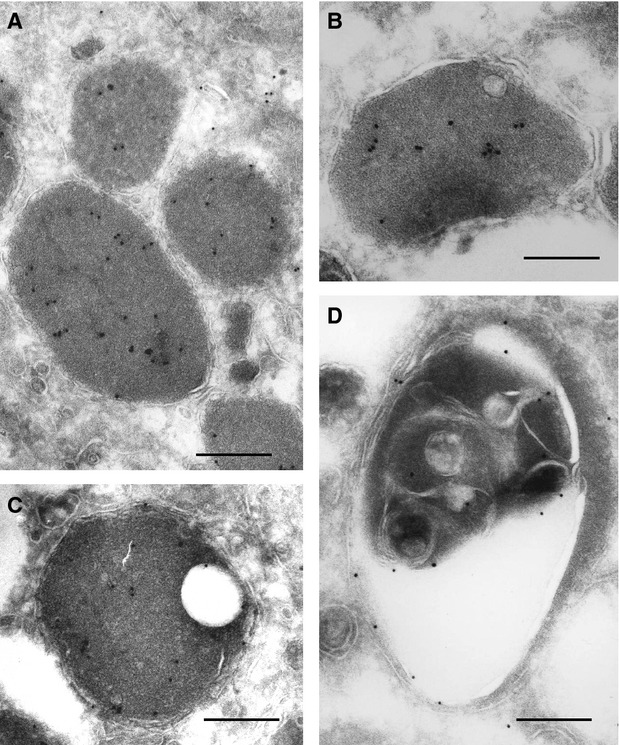
One of hypotheses of atherosclerosis is based on a presumption that the zones prone to the development of atherosclerosis contain lysosomes which are characterized by enzyme deficiency and thus, are unable to dispose of lipoproteins. The present study was undertaken to investigate the characteristics and changes of lysosomes in the earliest stages of the development of atherosclerosis. Electron microscopic immunocytochemistry revealed that there were certain changes in the distribution of CD68 antigen in lysosomes along the 'normal intima-initial lesion-fatty streak' sequence. There were no significant changes found in the key mRNAs encoding for the components of endosome/lysosome compartment in initial atherosclerotic lesions, but in fatty streaks, the contents of EEA1 and Rab5a mRNAs were found to be diminished while the contents of CD68 and p62 mRNAs were increased, compared with the intact tissue. The study reinforces a view that changes occurring in lysosomes play a role in atherogenesis from the very earlier stages of the disease.
动脉粥样硬化的一个假说基于这样一种假设,即易发生动脉粥样硬化的区域含有溶酶体,其特征为酶缺乏,因此无法处理脂蛋白。本研究旨在探讨动脉粥样硬化早期发展过程中溶酶体的特征和变化。电镜免疫细胞化学显示,在“正常内膜-初始病变-脂肪条纹”序列中,溶酶体中 CD68 抗原的分布存在某些变化。在初始动脉粥样硬化病变中,编码内体/溶酶体区室成分的关键 mRNA 没有发现显著变化,但在脂肪条纹中,与完整组织相比,EEA1 和 Rab5a mRNA 的含量减少,而 CD68 和 p62 mRNA 的含量增加。该研究证实了这样一种观点,即在疾病的早期阶段,溶酶体中发生的变化在动脉粥样形成中起作用。