Marques André R A, Ramos Cristiano, Machado-Oliveira Gisela, Vieira Otília V
iNOVA4Health, Chronic Diseases Research Center (CEDOC), NOVA Medical School (NMS), Universidade NOVA de Lisboa, Lisbon, Portugal.
Front Cell Dev Biol. 2021 Mar 29;9:658995. doi: 10.3389/fcell.2021.658995. eCollection 2021.
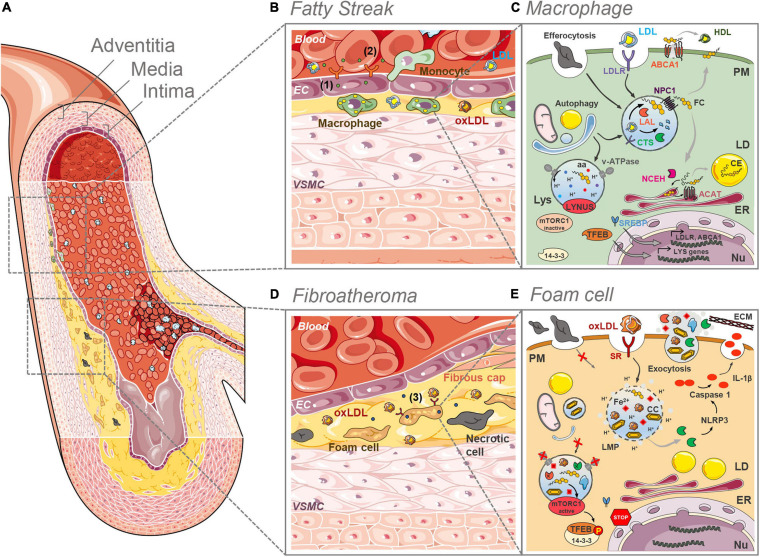
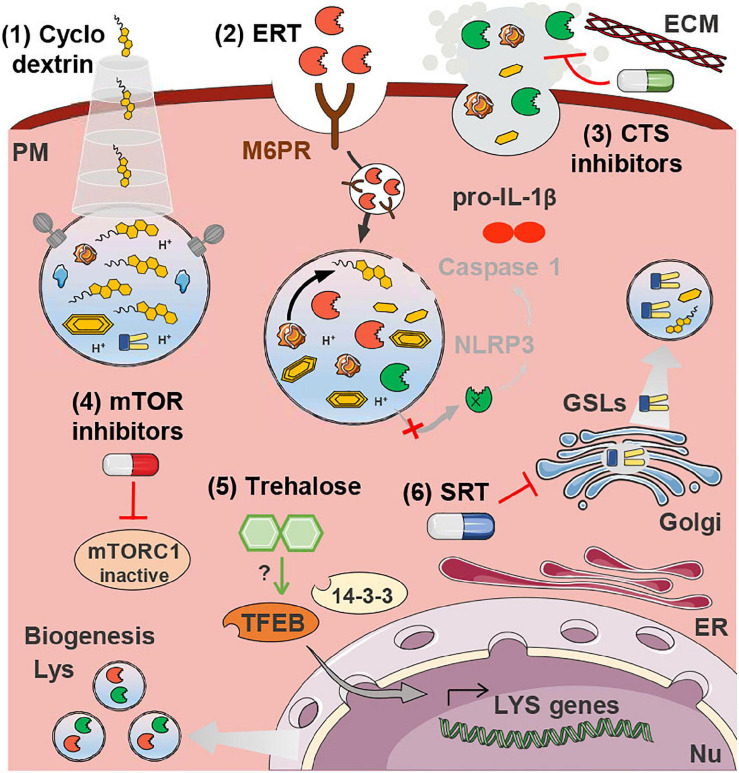
Atherosclerosis is a progressive insidious chronic disease that underlies most of the cardiovascular pathologies, including myocardial infarction and ischemic stroke. The malfunctioning of the lysosomal compartment has a central role in the etiology and pathogenesis of atherosclerosis. Lysosomes are the degradative organelles of mammalian cells and process endogenous and exogenous substrates in a very efficient manner. Dysfunction of these organelles and consequent inefficient degradation of modified low-density lipoproteins (LDL) and apoptotic cells in atherosclerotic lesions have, therefore, numerous deleterious consequences for cellular homeostasis and disease progression. Lysosome dysfunction has been mostly studied in the context of the inherited lysosomal storage disorders (LSDs). However, over the last years it has become increasingly evident that the consequences of this phenomenon are more far-reaching, also influencing the progression of multiple acquired human pathologies, such as neurodegenerative diseases, cancer, and cardiovascular diseases (CVDs). During the formation of atherosclerotic plaques, the lysosomal compartment of the various cells constituting the arterial wall is under severe stress, due to the tremendous amounts of lipoproteins being processed by these cells. The uncontrolled uptake of modified lipoproteins by arterial phagocytic cells, namely macrophages and vascular smooth muscle cells (VSMCs), is the initial step that triggers the pathogenic cascade culminating in the formation of atheroma. These cells become pathogenic "foam cells," which are characterized by dysfunctional lipid-laden lysosomes. Here, we summarize the current knowledge regarding the origin and impact of the malfunctioning of the lysosomal compartment in plaque cells. We further analyze how the field of LSD research may contribute with some insights to the study of CVDs, particularly how therapeutic approaches that target the lysosomes in LSDs could be applied to hamper atherosclerosis progression and associated mortality.
动脉粥样硬化是一种渐进性、隐匿性的慢性疾病,是大多数心血管疾病的基础,包括心肌梗死和缺血性中风。溶酶体区室功能异常在动脉粥样硬化的病因和发病机制中起核心作用。溶酶体是哺乳动物细胞的降解细胞器,能非常高效地处理内源性和外源性底物。因此,这些细胞器功能障碍以及动脉粥样硬化病变中修饰的低密度脂蛋白(LDL)和凋亡细胞降解效率低下,对细胞稳态和疾病进展产生了许多有害影响。溶酶体功能障碍大多是在遗传性溶酶体贮积症(LSD)的背景下进行研究的。然而,在过去几年中越来越明显的是,这种现象的后果更为深远,也影响多种后天性人类疾病的进展,如神经退行性疾病、癌症和心血管疾病(CVD)。在动脉粥样硬化斑块形成过程中,构成动脉壁的各种细胞的溶酶体区室承受着巨大压力,因为这些细胞要处理大量脂蛋白。动脉吞噬细胞,即巨噬细胞和血管平滑肌细胞(VSMC)对修饰脂蛋白的不受控制摄取是引发致病级联反应的第一步,最终导致动脉粥样瘤形成。这些细胞变成致病性“泡沫细胞”,其特征是充满脂质的溶酶体功能失调。在此,我们总结了关于斑块细胞中溶酶体区室功能异常的起源和影响的现有知识。我们进一步分析LSD研究领域如何能为CVD研究提供一些见解,特别是针对LSD中溶酶体的治疗方法如何应用于阻碍动脉粥样硬化进展和相关死亡率。