Institut Universitaire de Cardiologie et de Pneumologie de Québec, Laval University, Québec, Quebec, Canada.
Obesity (Silver Spring). 2013 Dec;21(12):2471-80. doi: 10.1002/oby.20437. Epub 2013 Jun 13.
The effects of fructose and glucose consumption on plasma acylation stimulating protein (ASP), adiponectin, and leptin concentrations relative to energy intake, body weight, adiposity, circulating triglycerides, and insulin sensitivity were determined.
Thirty two overweight/obese adults consumed glucose- or fructose-sweetened beverages (25% energy requirement) with their ad libitum diets for 8 weeks, followed by sweetened beverage consumption for 2 weeks with a standardized, energy-balanced diet. Plasma variables were measured at baseline, 2, 8, and 10 weeks, and body adiposity and insulin sensitivity at baseline and 10 weeks.
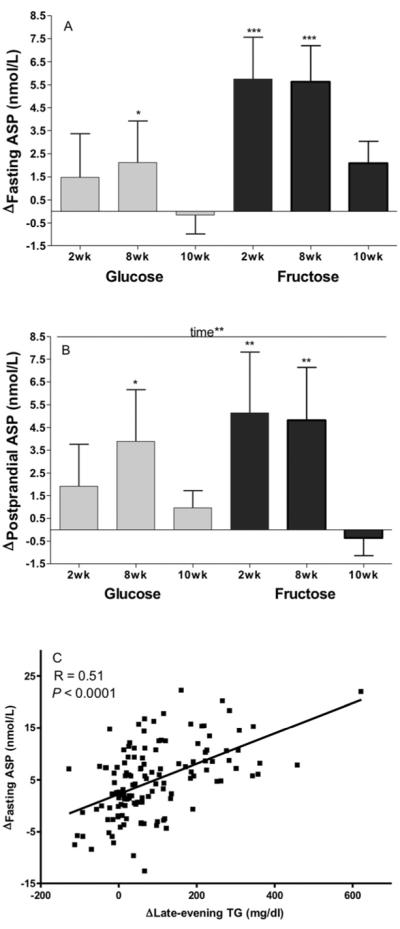
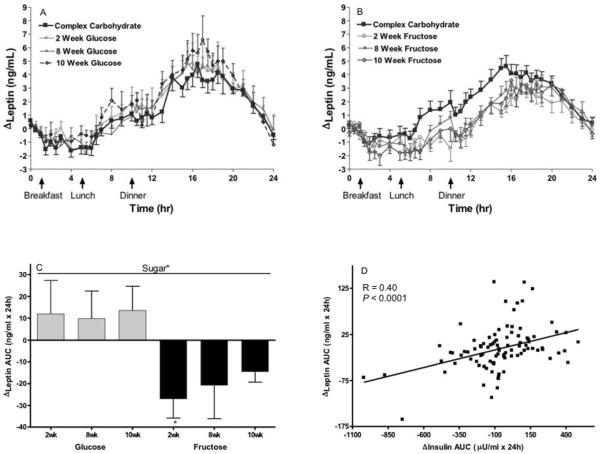
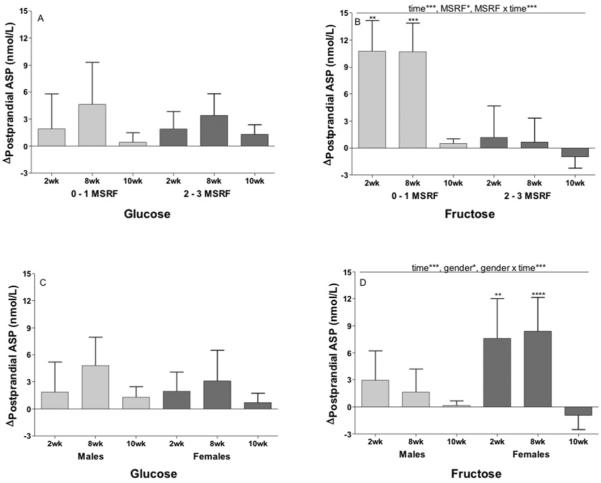
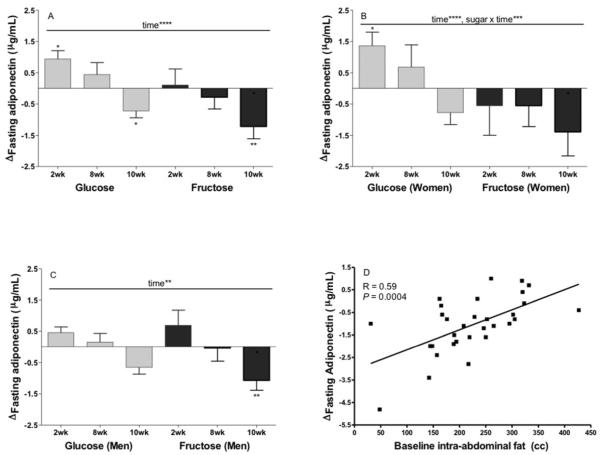
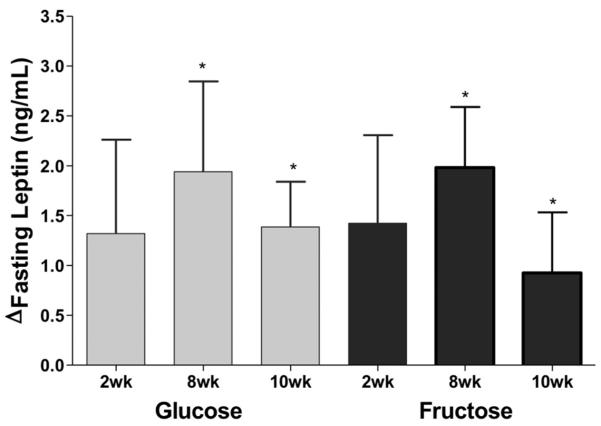
Fasting and postprandial ASP concentrations increased at 2 and/or 8 weeks. ASP increases correlated with changes in late-evening triglyceride concentrations. At 10 weeks, fasting adiponectin levels decreased in both groups, and decreases were inversely associated with baseline intra-abdominal fat volume. Sugar consumption increased fasting leptin concentrations; increases were associated with body weight changes. The 24-h leptin profiles increased during glucose consumption and decreased during fructose consumption. These changes correlated with changes of 24-h insulin levels.
The consumption of fructose and glucose beverages induced changes in plasma concentrations of ASP, adiponectin, and leptin. Further study is required to determine if these changes contribute to the metabolic dysfunction observed during fructose consumption.
确定果糖和葡萄糖的摄入对血浆酰化刺激蛋白(ASP)、脂联素和瘦素浓度的影响,这些因素与能量摄入、体重、肥胖、循环甘油三酯和胰岛素敏感性有关。
32 名超重/肥胖成年人在 8 周内摄入葡萄糖或果糖甜味饮料(占能量需求的 25%),并在接下来的 2 周内与自由饮食一起摄入甜味饮料,同时进行能量平衡的标准化饮食。在基线、2、8 和 10 周测量血浆变量,并在基线和 10 周测量身体脂肪量和胰岛素敏感性。
空腹和餐后 ASP 浓度在 2 周和/或 8 周时增加。ASP 的增加与深夜甘油三酯浓度的变化相关。在 10 周时,两组的空腹脂联素水平均下降,下降与基线腹内脂肪体积呈负相关。糖的摄入增加了空腹瘦素浓度;增加与体重变化相关。葡萄糖摄入期间 24 小时瘦素谱增加,果糖摄入期间减少。这些变化与 24 小时胰岛素水平的变化相关。
果糖和葡萄糖饮料的摄入引起了血浆 ASP、脂联素和瘦素浓度的变化。需要进一步研究以确定这些变化是否导致在果糖摄入期间观察到的代谢功能障碍。