Department of Biomedical Engineering, Tufts University, Medford, Massachusetts, United States of America.
PLoS One. 2013;8(3):e59219. doi: 10.1371/journal.pone.0059219. Epub 2013 Mar 14.
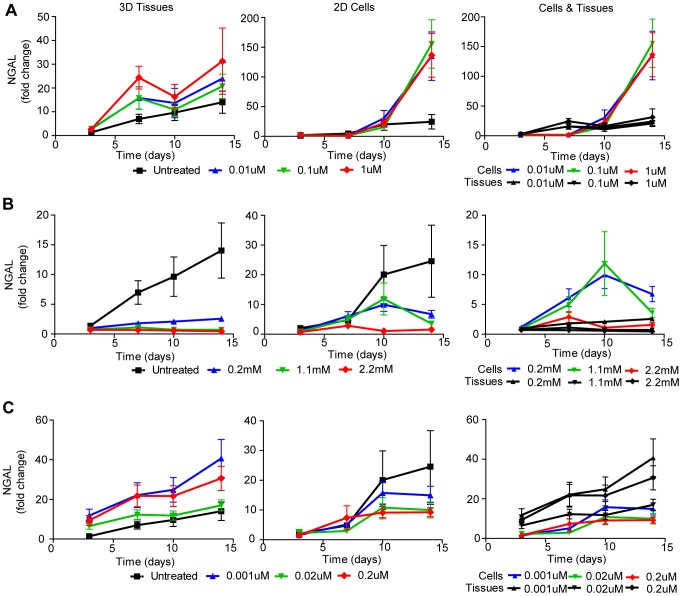
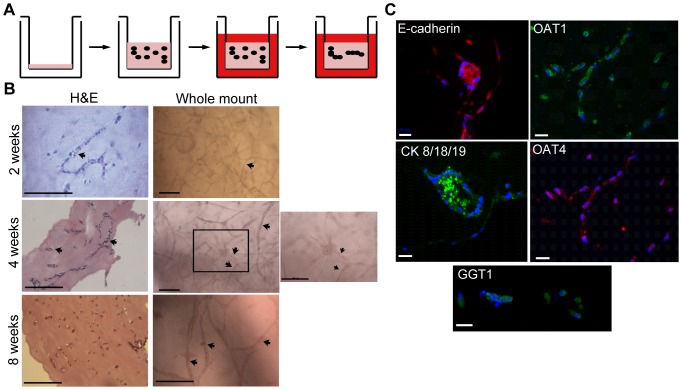
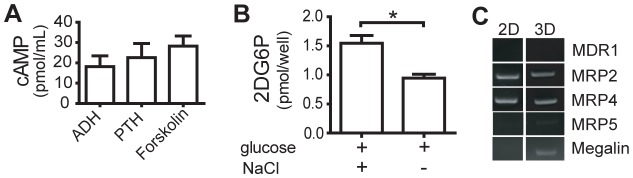
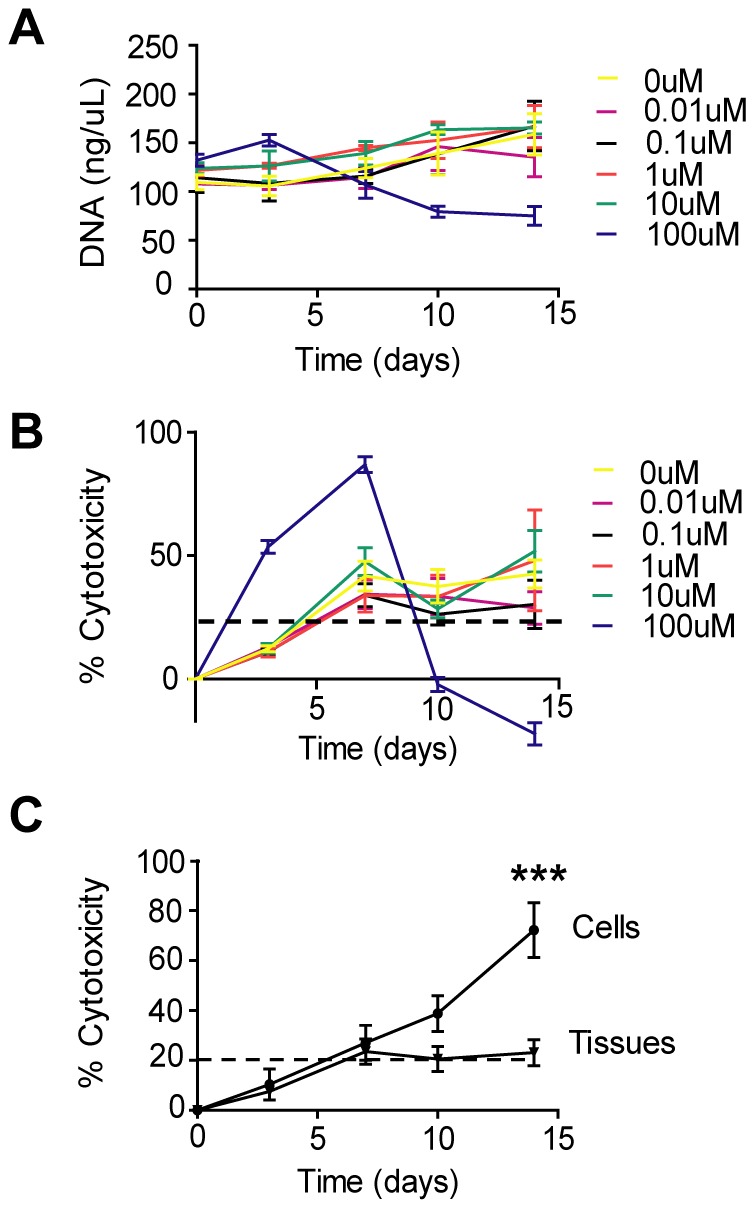
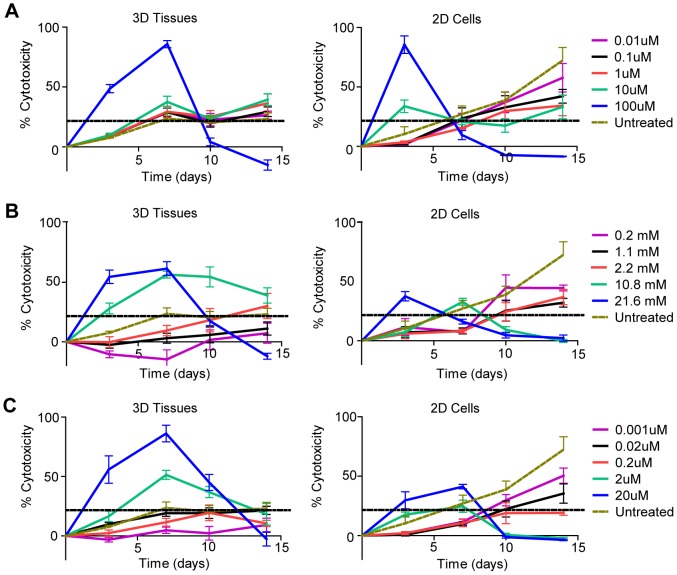
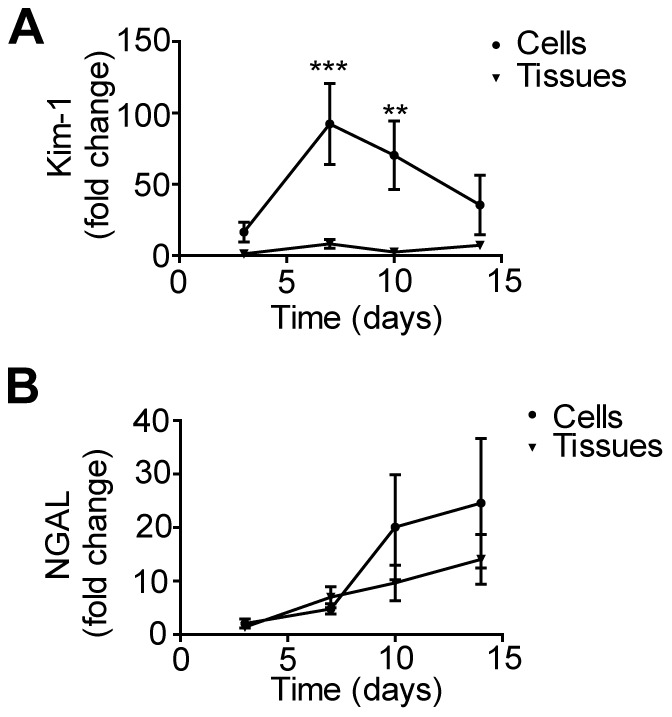
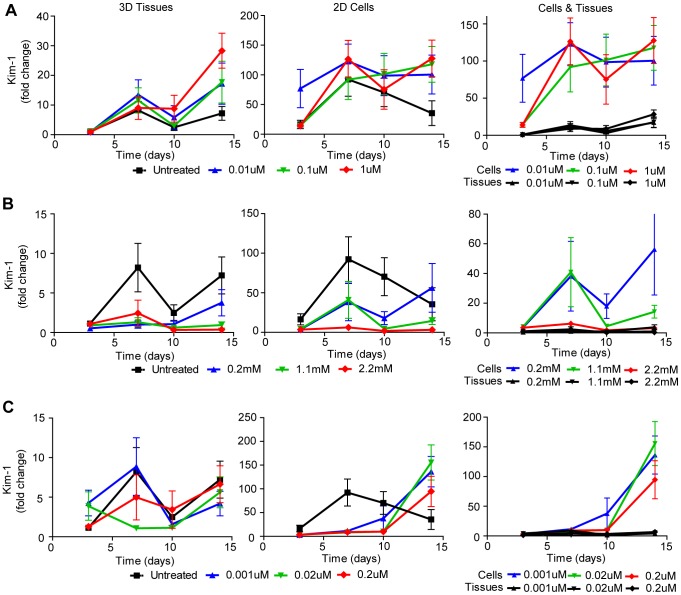
The staggering cost of bringing a drug to market coupled with the extremely high failure rate of prospective compounds in early phase clinical trials due to unexpected human toxicity makes it imperative that more relevant human models be developed to better predict drug toxicity. Drug-induced nephrotoxicity remains especially difficult to predict in both pre-clinical and clinical settings and is often undetected until patient hospitalization. Current pre-clinical methods of determining renal toxicity include 2D cell cultures and animal models, both of which are incapable of fully recapitulating the in vivo human response to drugs, contributing to the high failure rate upon clinical trials. We have bioengineered a 3D kidney tissue model using immortalized human renal cortical epithelial cells with kidney functions similar to that found in vivo. These 3D tissues were compared to 2D cells in terms of both acute (3 days) and chronic (2 weeks) toxicity induced by Cisplatin, Gentamicin, and Doxorubicin using both traditional LDH secretion and the pre-clinical biomarkers Kim-1 and NGAL as assessments of toxicity. The 3D tissues were more sensitive to drug-induced toxicity and, unlike the 2D cells, were capable of being used to monitor chronic toxicity due to repeat dosing. The inclusion of this tissue model in drug testing prior to the initiation of phase I clinical trials would allow for better prediction of the nephrotoxic effects of new drugs.
将一种药物推向市场的惊人成本,加上由于意想不到的人体毒性,早期临床前试验中预期化合物的极高失败率,使得必须开发更多相关的人体模型来更好地预测药物毒性。药物诱导的肾毒性在临床前和临床环境中都特别难以预测,并且通常在患者住院之前未被发现。目前用于确定肾毒性的临床前方法包括 2D 细胞培养和动物模型,这两种方法都不能完全重现体内对药物的反应,导致临床试验的高失败率。我们使用具有与体内相似功能的永生化人肾皮质上皮细胞生物工程构建了 3D 肾组织模型。这些 3D 组织在急性(3 天)和慢性(2 周)毒性方面与 2D 细胞进行了比较,分别使用传统的 LDH 分泌和临床前生物标志物 Kim-1 和 NGAL 评估毒性。3D 组织对药物诱导的毒性更敏感,并且与 2D 细胞不同,由于重复给药,它们能够用于监测慢性毒性。在开始进行 I 期临床试验之前,将这种组织模型纳入药物测试,将能够更好地预测新药的肾毒性作用。