Department of Pathology, Center for Biodefense and Emerging Infectious Diseases, Sealy Center for Vaccine Development, Institute for Human Infections and Immunity, and Center for Tropical Diseases, University of Texas Medical Branch, Galveston, Texas, USA.
PLoS Negl Trop Dis. 2013;7(3):e1910. doi: 10.1371/journal.pntd.0001910. Epub 2013 Mar 14.
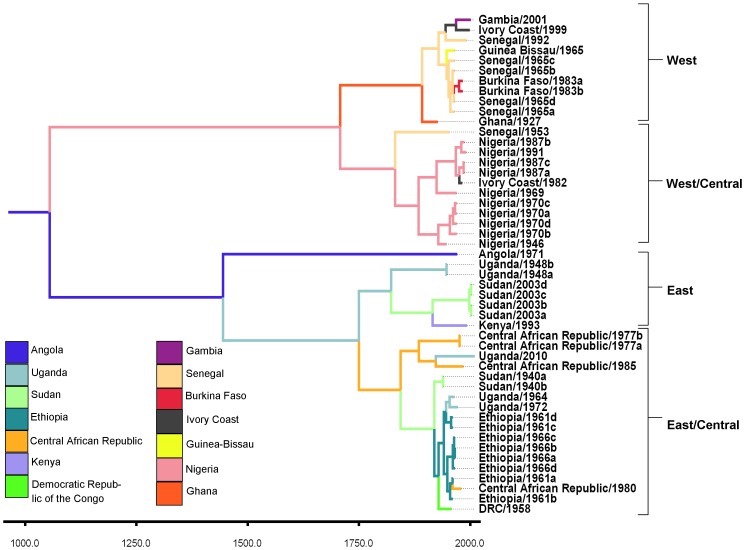
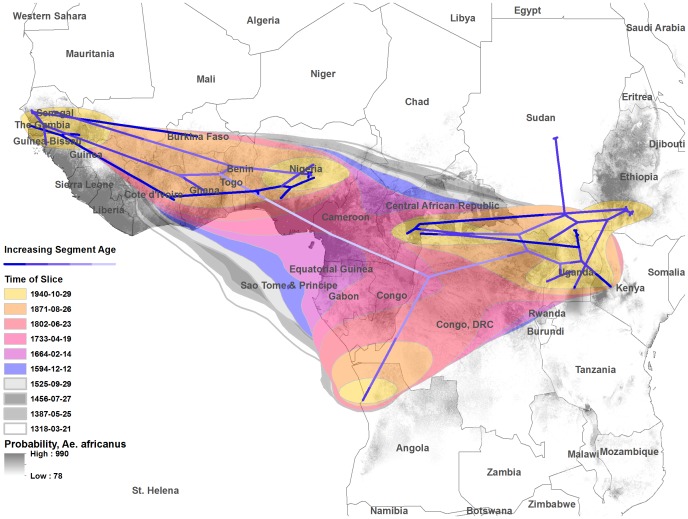
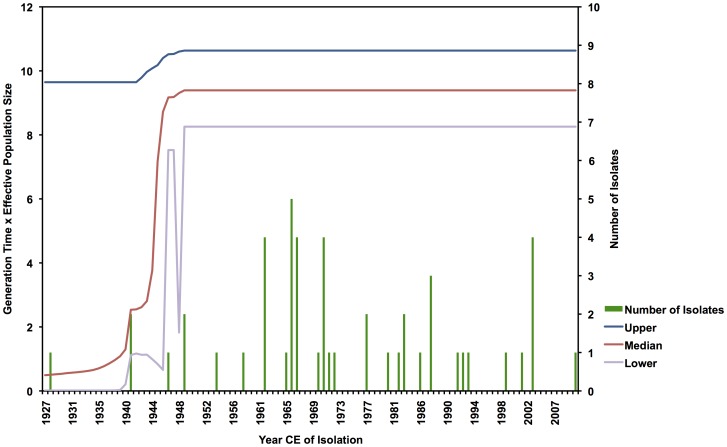
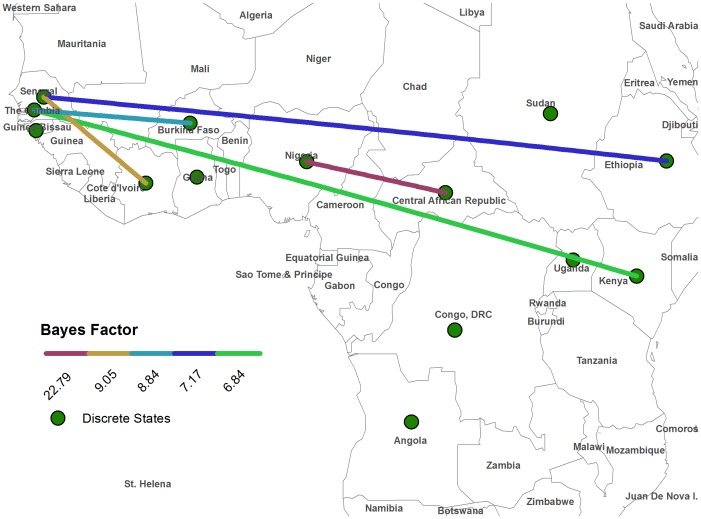
Yellow fever virus (YFV) is a mosquito-borne flavivirus that is a major public health problem in tropical areas of Africa and South America. There have been detailed studies on YFV ecology in West Africa and South America, but current understanding of YFV circulation on the African continent is incomplete. This inadequacy is especially notable for East and Central Africa, for which the unpredictability of human outbreaks is compounded by limitations in both historical and present surveillance efforts. Sparse availability of nucleotide sequence data makes it difficult to investigate the dispersal of YFV in these regions of the continent. To remedy this, we constructed Bayesian phylogenetic and geographic analyses utilizing 49 partial genomic sequences to infer the structure of YFV divergence across the known range of the virus on the African continent. Relaxed clock analysis demonstrated evidence for simultaneous divergence of YFV into east and west lineages, a finding that differs from previous hypotheses of YFV dispersal from reservoirs located on edges of the endemic range. Using discrete and continuous geographic diffusion models, we provide detailed structure of YFV lineage diversity. Significant transition links between extant East and West African lineages are presented, implying connection between areas of known sylvatic cycling. The results of demographic modeling reinforce the existence of a stably maintained population of YFV with spillover events into human populations occurring periodically. Geographically distinct foci of circulation are reconstructed, which have significant implications for studies of YFV ecology and emergence of human disease. We propose further incorporation of Bayesian phylogeography into formal GIS analyses to augment studies of arboviral disease.
黄热病病毒(YFV)是一种经蚊传播的黄病毒,是非洲和南美洲热带地区的一个主要公共卫生问题。已经对西非洲和南美洲的 YFV 生态学进行了详细研究,但目前对非洲大陆 YFV 循环的了解并不完整。这种不足在东非和中非尤为明显,人类疫情的不可预测性因历史和当前监测工作的局限性而更加复杂。核苷酸序列数据的稀缺性使得难以调查这些大陆地区 YFV 的传播情况。为了解决这个问题,我们构建了贝叶斯系统发育和地理分析,利用 49 个部分基因组序列推断 YFV 在非洲大陆已知病毒范围内的变异结构。放松的时钟分析表明,YFV 同时分为东支和西支,这一发现与以前关于从流行地区边缘的宿主传播 YFV 的假说不同。使用离散和连续的地理扩散模型,我们提供了 YFV 谱系多样性的详细结构。提出了现存的东非和西非谱系之间的重要过渡联系,暗示了已知森林循环地区之间的联系。人口统计模型的结果证实了 YFV 存在一个稳定维持的种群,其溢出事件会定期发生在人类群体中。重建了循环的地理上不同的焦点,这对 YFV 生态学和人类疾病出现的研究具有重要意义。我们建议进一步将贝叶斯系统地理学纳入正式的 GIS 分析,以增强对虫媒病毒病的研究。