von Stackelberg Katherine
E Risk Sciences, LLP, 12 Holton Street, Allston, MA 02134, USA ; Harvard Center for Risk Analysis, 401 Park Drive, Landmark 404J, Boston, MA 02215, USA.
J Toxicol. 2013;2013:371610. doi: 10.1155/2013/371610. Epub 2013 Feb 26.
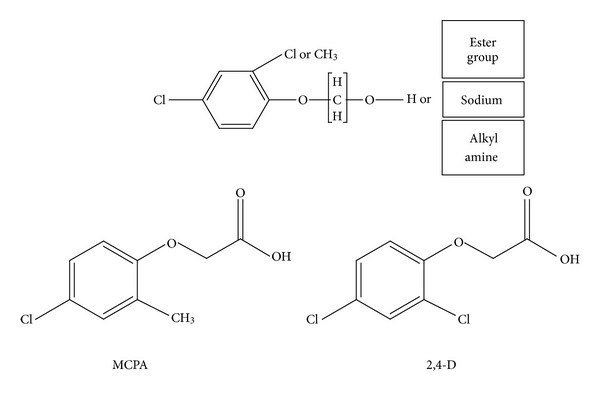
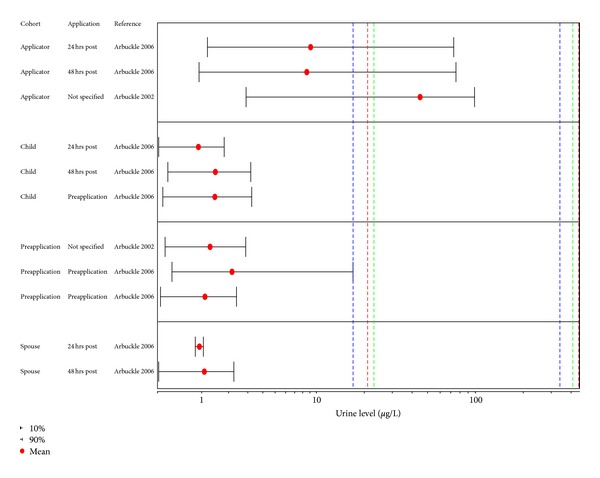
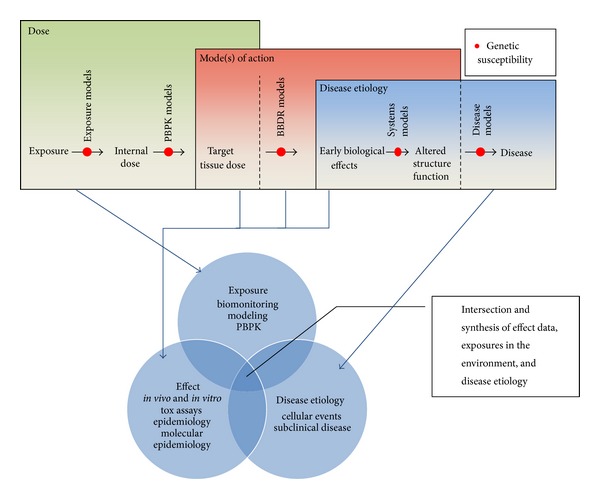
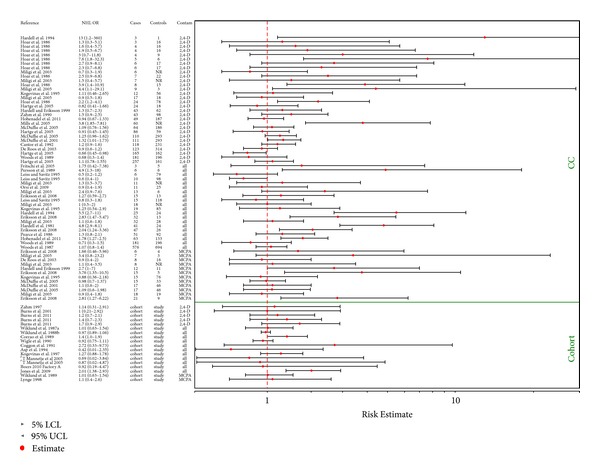
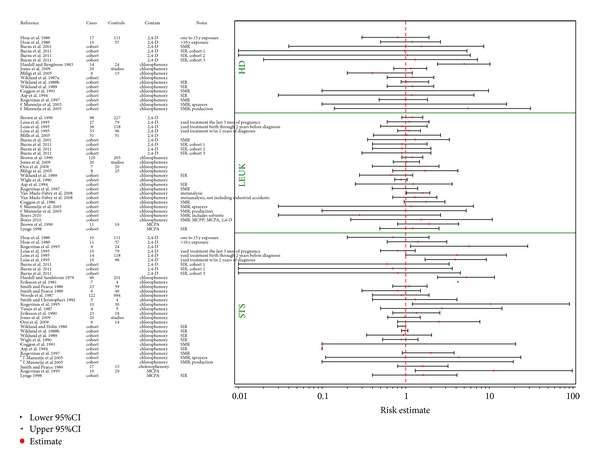
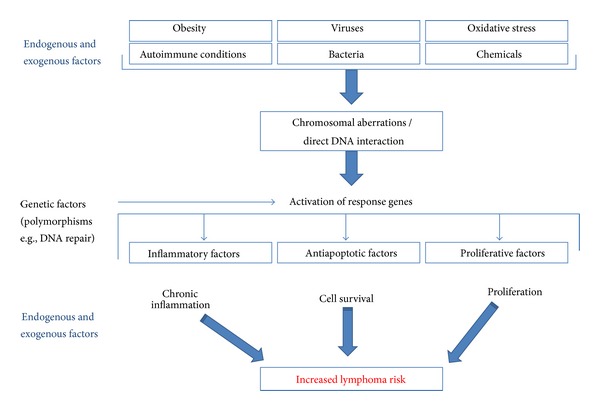
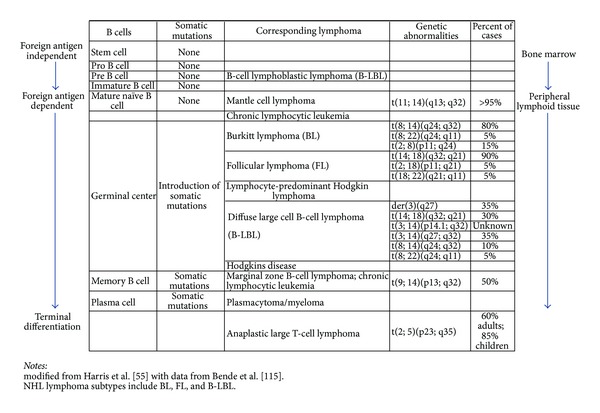
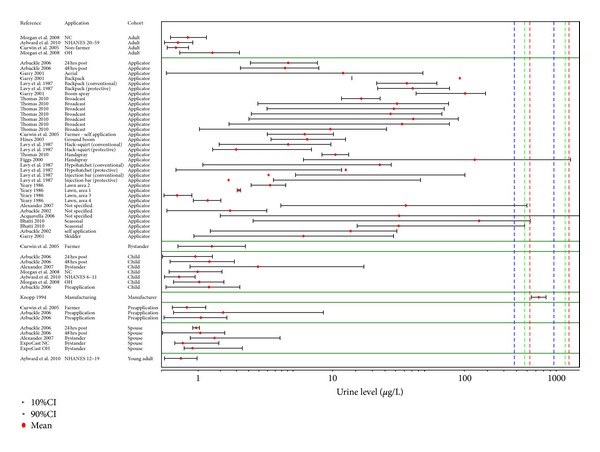
Chlorophenoxy compounds, particularly 2,4-dichlorophenoxyacetic acid (2,4-D) and 4-chloro-2-methylphenoxy)acetic acid (MCPA), are amongst the most widely used herbicides in the United States for both agricultural and residential applications. Epidemiologic studies suggest that exposure to 2,4-D and MCPA may be associated with increased risk non-Hodgkins lymphoma (NHL), Hodgkin's disease (HD), leukemia, and soft-tissue sarcoma (STS). Toxicological studies in rodents show no evidence of carcinogenicity, and regulatory agencies worldwide consider chlorophenoxies as not likely to be carcinogenic or unclassifiable as to carcinogenicity. This systematic review assembles the available data to evaluate epidemiologic, toxicological, pharmacokinetic, exposure, and biomonitoring studies with respect to key cellular events noted in disease etiology and how those relate to hypothesized modes of action for these constituents to determine the plausibility of an association between exposure to environmentally relevant concentrations of 2,4-D and MCPA and lymphohematopoietic cancers. The combined evidence does not support a genotoxic mode of action. Although plausible hypotheses for other carcinogenic modes of action exist, a comparison of biomonitoring data to oral equivalent doses calculated from bioassay data shows that environmental exposures are not sufficient to support a causal relationship. Genetic polymorphisms exist that are known to increase the risk of developing NHL. The potential interaction between these polymorphisms and exposures to chlorophenoxy compounds, particularly in occupational settings, is largely unknown.
氯苯氧基化合物,特别是2,4-二氯苯氧基乙酸(2,4-D)和4-氯-2-甲基苯氧基乙酸(MCPA),是美国农业和住宅应用中使用最广泛的除草剂之一。流行病学研究表明,接触2,4-D和MCPA可能与非霍奇金淋巴瘤(NHL)、霍奇金病(HD)、白血病和软组织肉瘤(STS)风险增加有关。对啮齿动物的毒理学研究未显示致癌性证据,全球监管机构认为氯苯氧基不太可能致癌或无法分类其致癌性。本系统评价收集现有数据,以评估关于疾病病因中关键细胞事件的流行病学、毒理学、药代动力学、暴露和生物监测研究,以及这些事件与这些成分假设作用模式的关系,以确定接触环境相关浓度的2,4-D和MCPA与淋巴造血系统癌症之间关联的合理性。综合证据不支持遗传毒性作用模式。虽然存在其他致癌作用模式的合理假设,但将生物监测数据与根据生物测定数据计算的口服等效剂量进行比较表明,环境暴露不足以支持因果关系。已知存在增加患NHL风险的基因多态性。这些多态性与氯苯氧基化合物暴露之间的潜在相互作用,特别是在职业环境中,很大程度上尚不清楚。