Department of Biotechnology, Delft University of Technology, Julianalaan 67, Delft 2628 BC, The Netherlands.
Biotechnol Biofuels. 2013 Apr 3;6(1):48. doi: 10.1186/1754-6834-6-48.
n-Butanol and isobutanol produced from biomass-derived sugars are promising renewable transport fuels and solvents. Saccharomyces cerevisiae has been engineered for butanol production, but its high butanol sensitivity poses an upper limit to product titers that can be reached by further pathway engineering. A better understanding of the molecular basis of butanol stress and tolerance of S. cerevisiae is important for achieving improved tolerance.
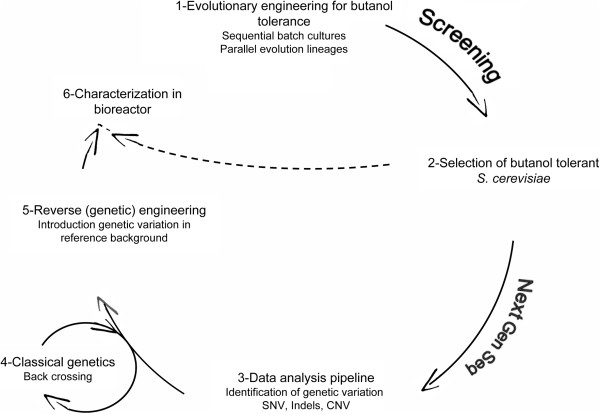
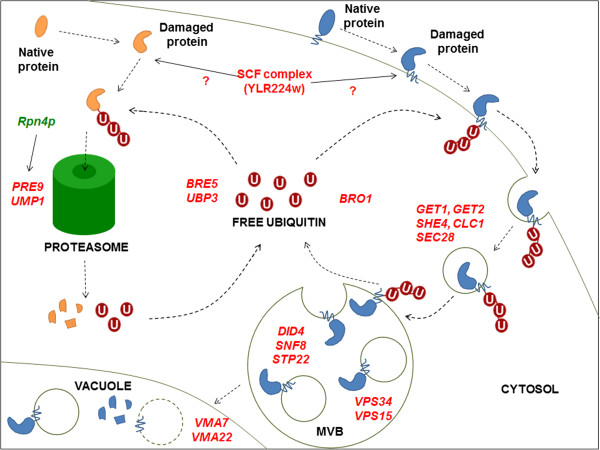
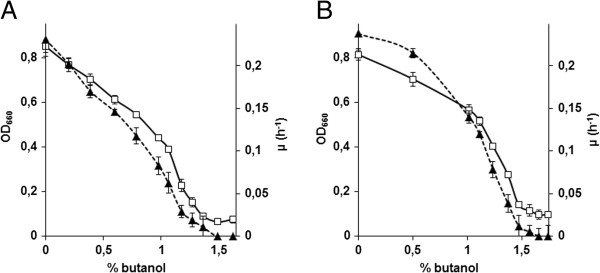
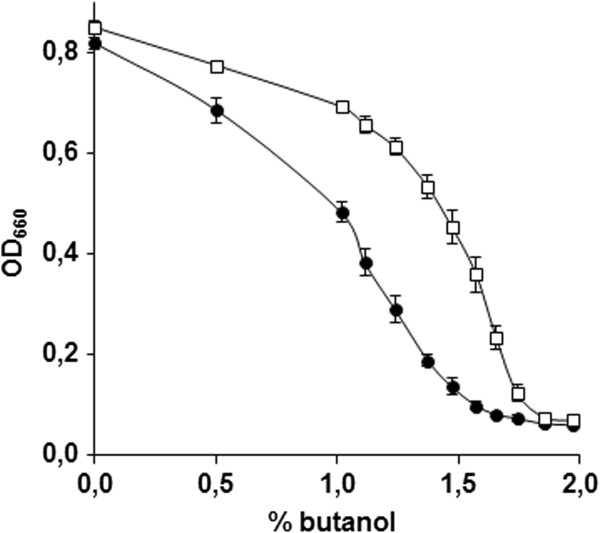
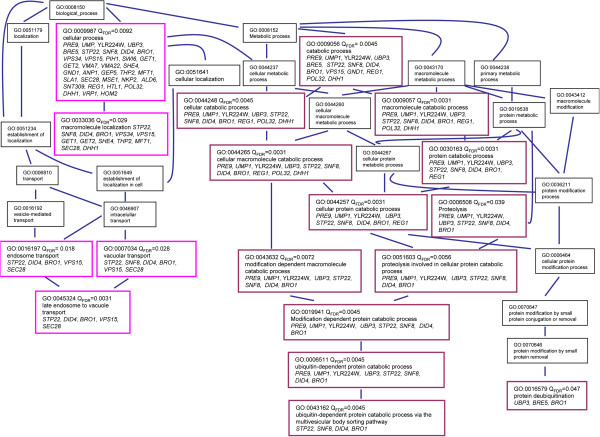
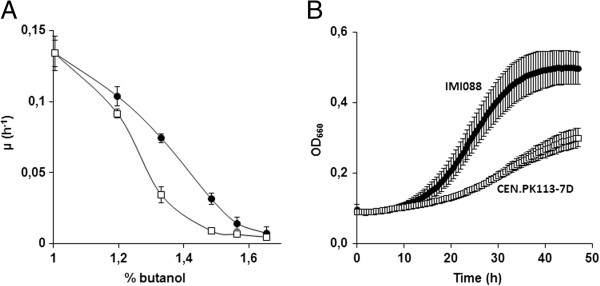
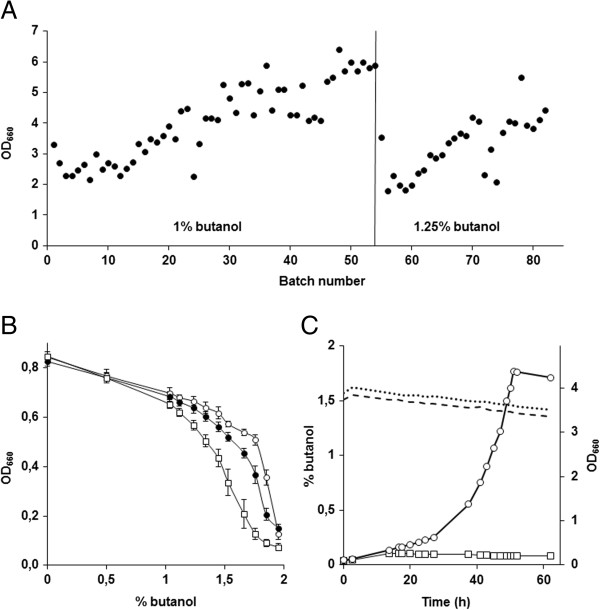
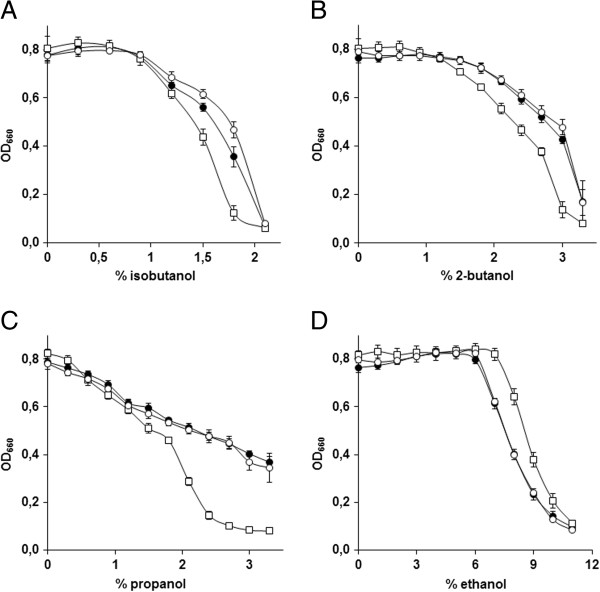
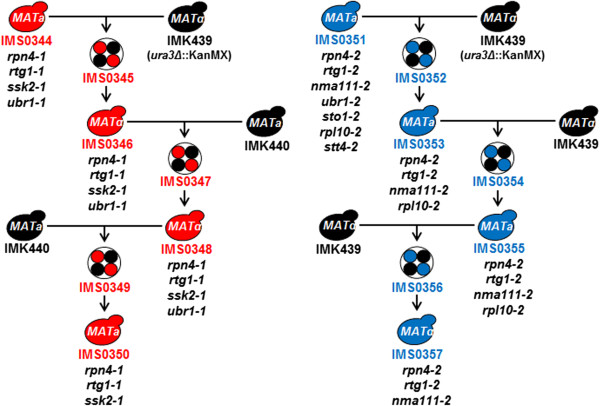
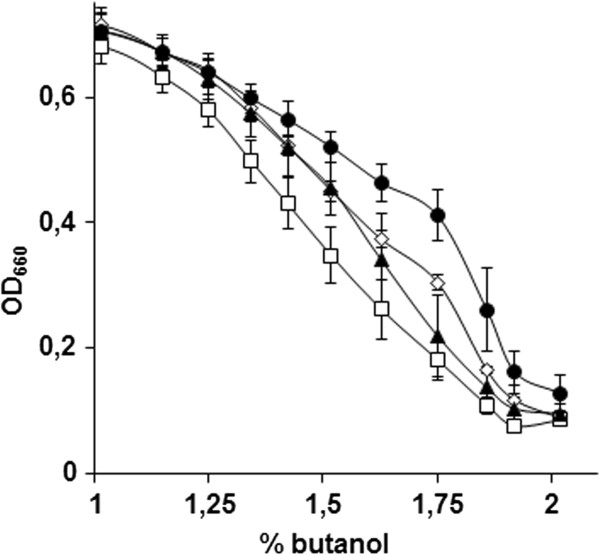
By combining a screening of the haploid S. cerevisiae knock-out library, gene overexpression, and genome analysis of evolutionary engineered n-butanol-tolerant strains, we established that protein degradation plays an essential role in tolerance. Strains deleted in genes involved in the ubiquitin-proteasome system and in vacuolar degradation of damaged proteins showed hypersensitivity to n-butanol. Overexpression of YLR224W, encoding the subunit responsible for the recognition of damaged proteins of an ubiquitin ligase complex, resulted in a strain with a higher n-butanol tolerance. Two independently evolved n-butanol-tolerant strains carried different mutations in both RPN4 and RTG1, which encode transcription factors involved in the expression of proteasome and peroxisomal genes, respectively. Introduction of these mutated alleles in the reference strain increased butanol tolerance, confirming their relevance in the higher tolerance phenotype. The evolved strains, in addition to n-butanol, were also more tolerant to 2-butanol, isobutanol and 1-propanol, indicating a common molecular basis for sensitivity and tolerance to C3 and C4 alcohols.
This study shows that maintenance of protein integrity plays an essential role in butanol tolerance and demonstrates new promising targets to engineer S. cerevisiae for improved tolerance.
由生物量衍生糖产生的正丁醇和异丁醇是很有前途的可再生运输燃料和溶剂。酿酒酵母已被用于丁醇生产,但由于其对丁醇的高敏感性,进一步的途径工程所能达到的产物滴度存在上限。更好地了解酿酒酵母对丁醇胁迫和耐受性的分子基础对于实现提高的耐受性非常重要。
通过组合筛选酿酒酵母单倍体敲除文库、基因过表达和进化工程耐正丁醇菌株的基因组分析,我们确定了蛋白质降解在耐受性中起着重要作用。参与泛素-蛋白酶体系统和受损蛋白质液泡降解的基因缺失菌株对正丁醇表现出超敏性。编码识别泛素连接酶复合物中受损蛋白的亚基的 YLR224W 基因的过表达导致具有更高正丁醇耐受性的菌株。两个独立进化的耐正丁醇菌株在编码分别参与蛋白酶体和过氧化物酶体基因表达的转录因子的 RPN4 和 RTG1 基因中都携带不同的突变。在参考菌株中引入这些突变等位基因增加了丁醇耐受性,证实了它们在更高耐受性表型中的相关性。进化菌株除了对正丁醇,还对 2-丁醇、异丁醇和 1-丙醇更耐受,表明对 C3 和 C4 醇的敏感性和耐受性具有共同的分子基础。
本研究表明,维持蛋白质完整性在丁醇耐受性中起着至关重要的作用,并展示了新的有前途的目标,以工程酿酒酵母提高耐受性。