Department of Oral Health Sciences, Nihon University School of Dentistry, Tokyo, Japan.
PLoS One. 2013;8(3):e59402. doi: 10.1371/journal.pone.0059402. Epub 2013 Mar 15.
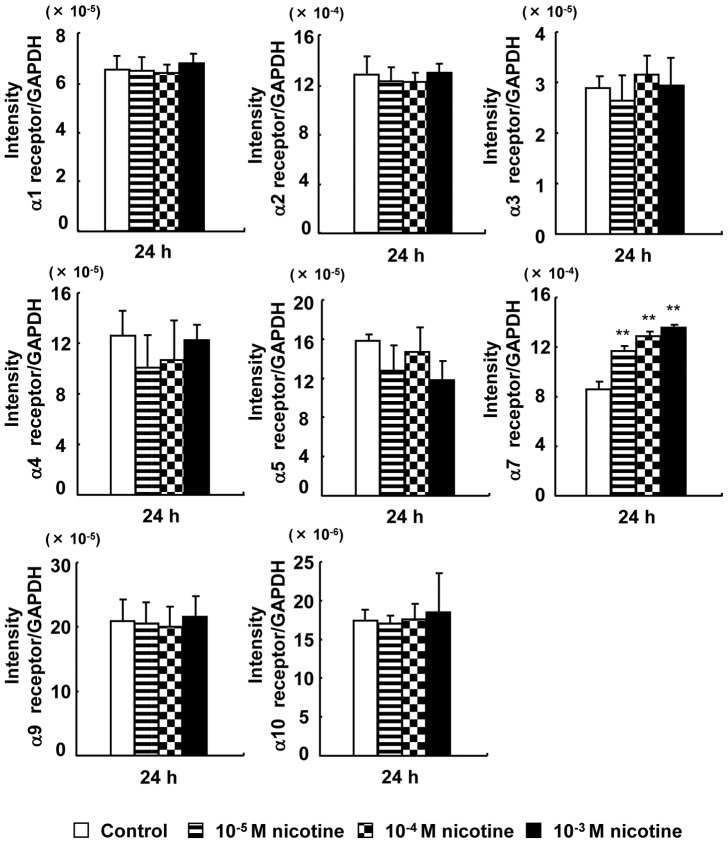
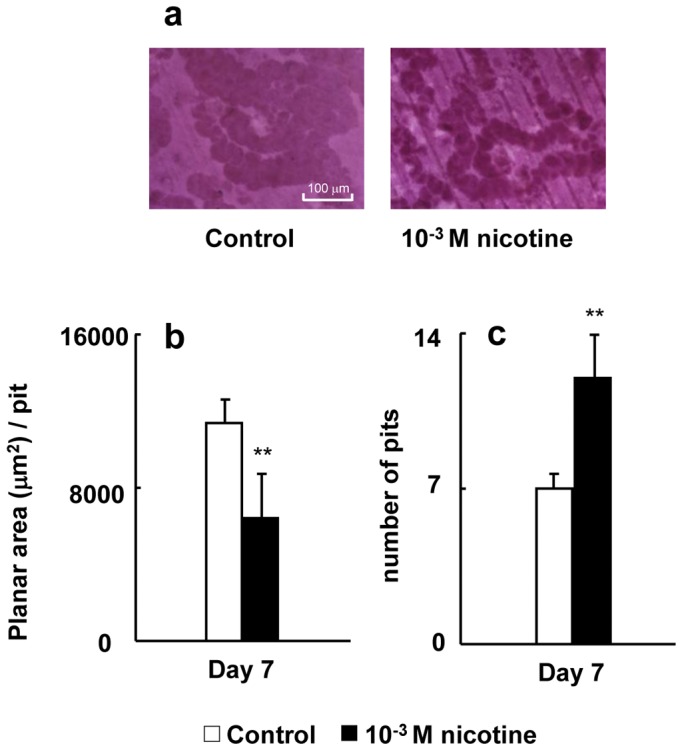
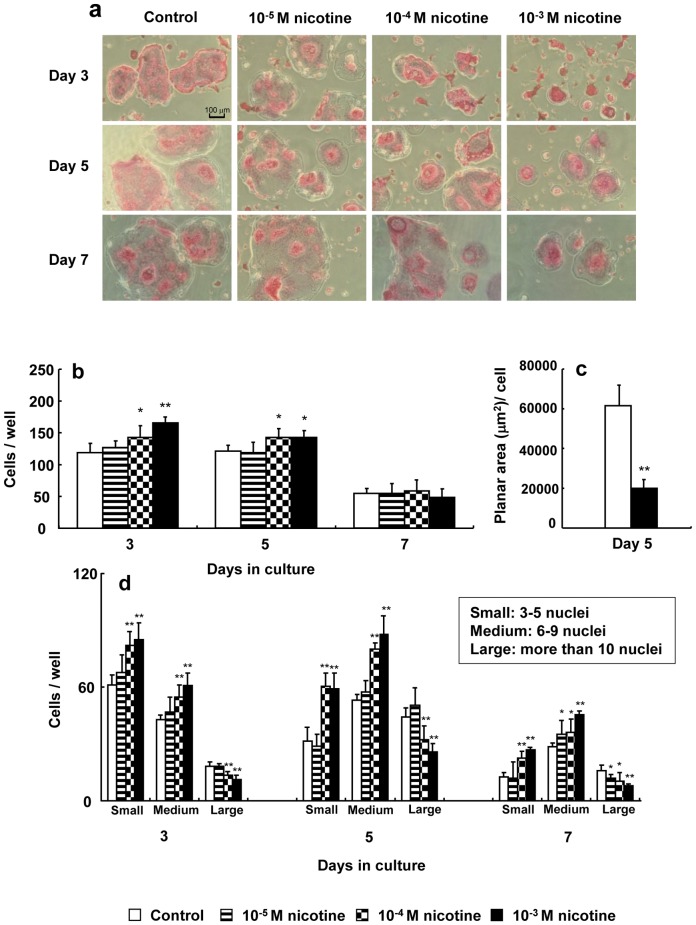
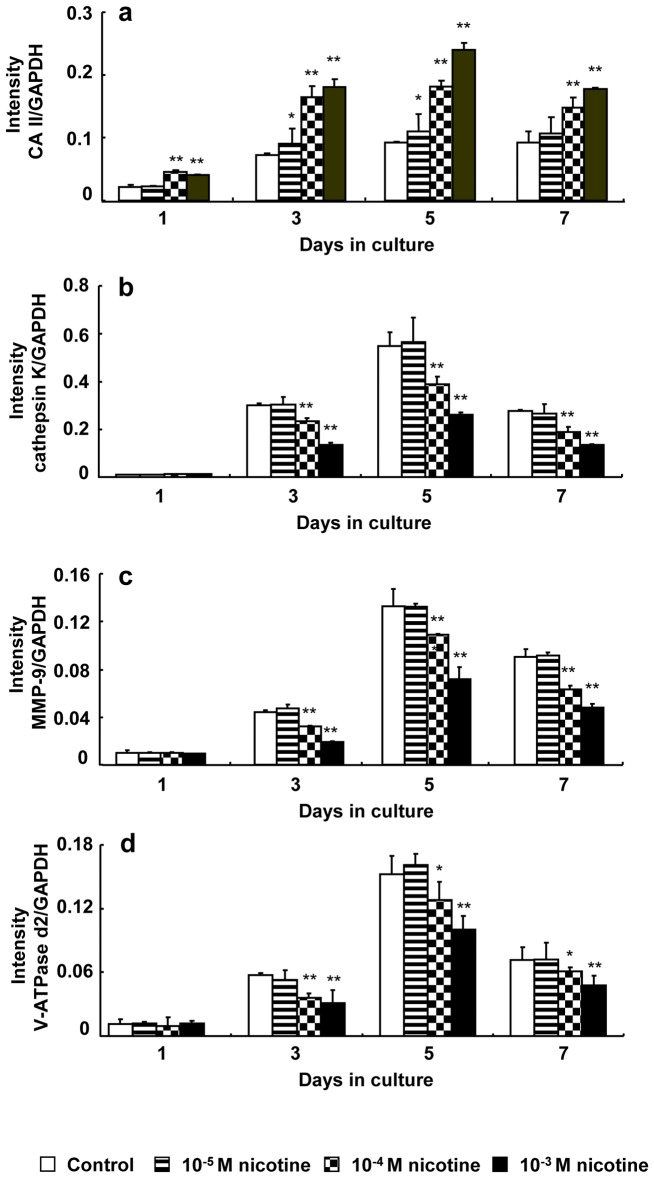
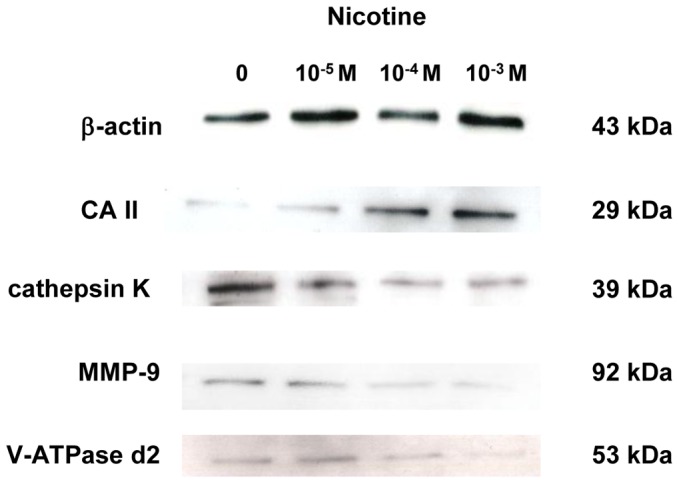
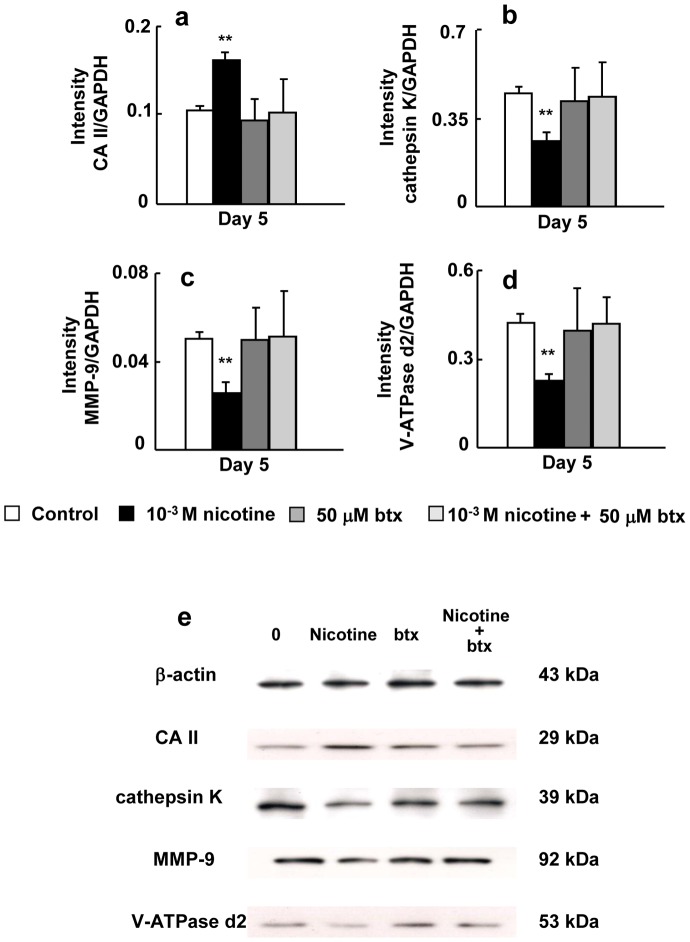
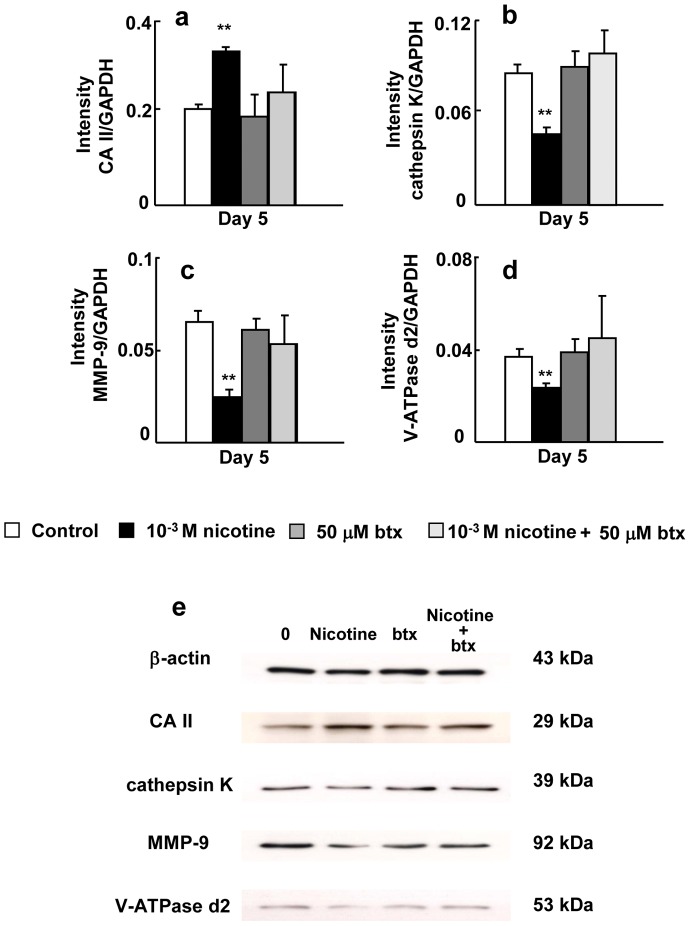
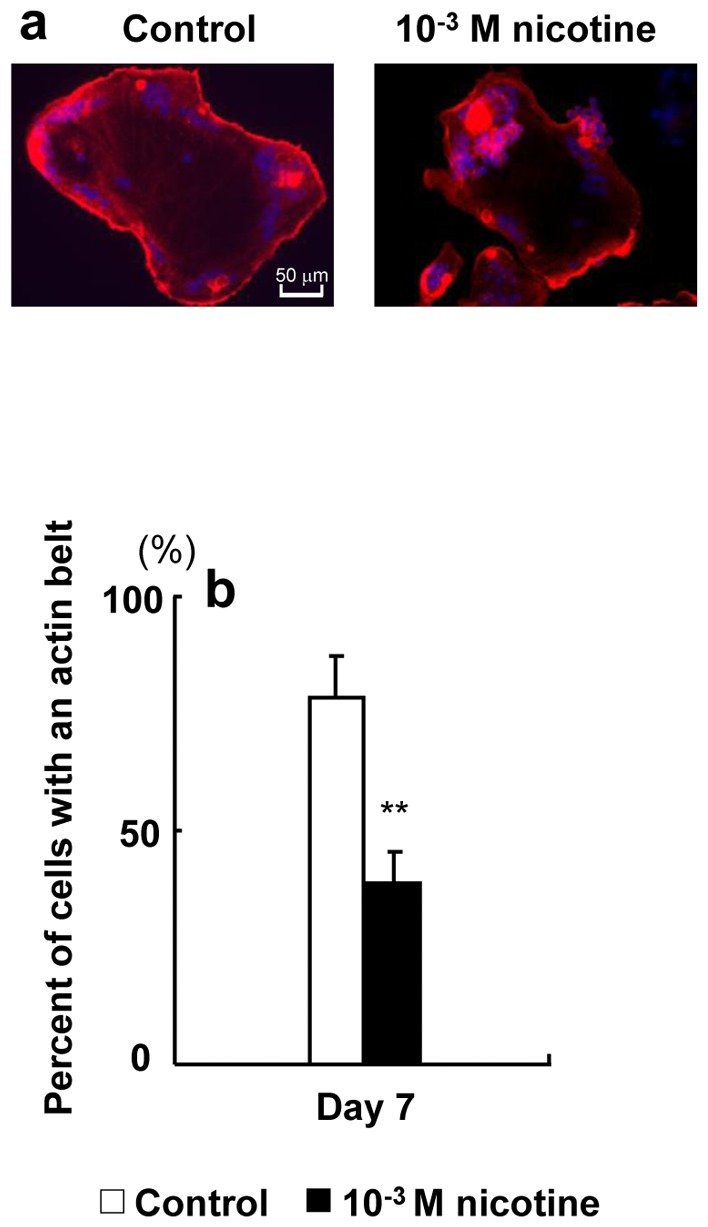
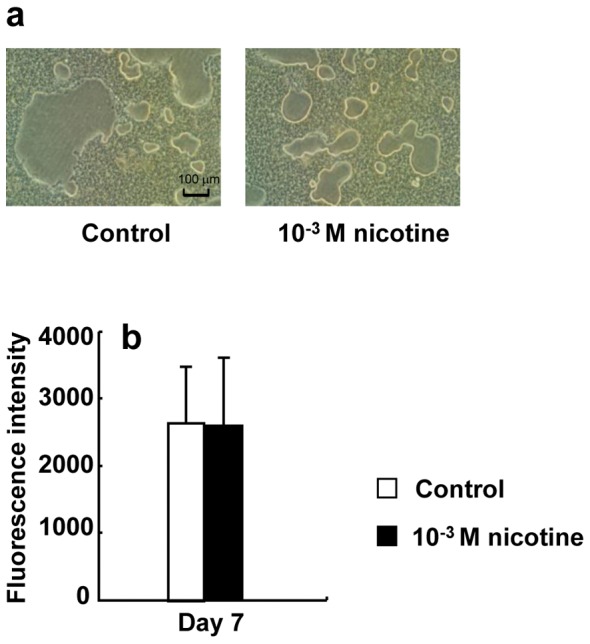
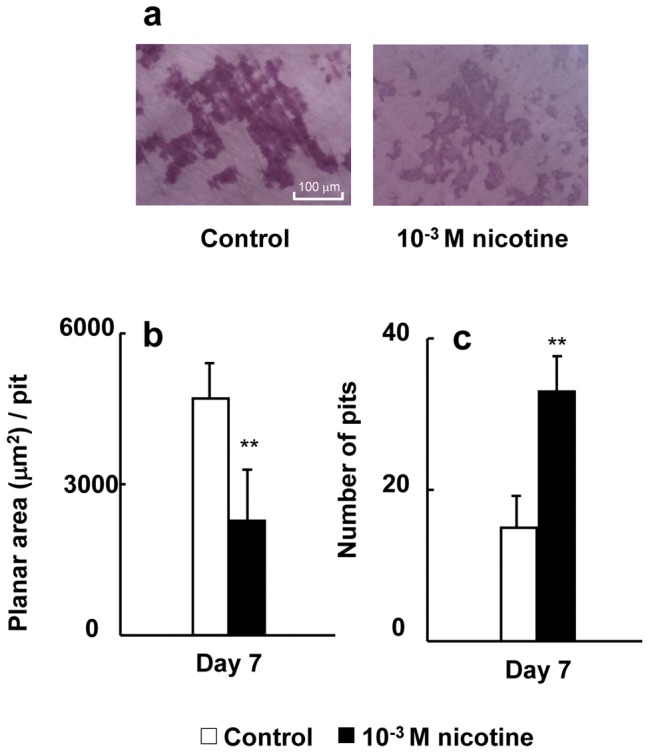
Tobacco smoking is an important risk factor for the development of several cancers, osteoporosis, and inflammatory diseases such as periodontitis. Nicotine is one of the major components of tobacco. In previous study, we showed that nicotine inhibits mineralized nodule formation by osteoblasts, and the culture medium from osteoblasts containing nicotine and lipopolysaccharide increases osteoclast differentiation. However, the direct effect of nicotine on the differentiation and function of osteoclasts is poorly understood. Thus, we examined the direct effects of nicotine on the expression of nicotine receptors and bone resorption-related enzymes, mineral resorption, actin organization, and bone resorption using RAW264.7 cells and bone marrow cells as osteoclast precursors. Cells were cultured with 10(-5), 10(-4), or 10(-3) M nicotine and/or 50 µM α-bungarotoxin (btx), an 7 nicotine receptor antagonist, in differentiation medium containing the soluble RANKL for up 7 days. 1-5, 7, 9, and 10 nicotine receptors were expressed on RAW264.7 cells. The expression of 7 nicotine receptor was increased by the addition of nicotine. Nicotine suppressed the number of tartrate-resistant acid phosphatase positive multinuclear osteoclasts with large nuclei(≥10 nuclei), and decreased the planar area of each cell. Nicotine decreased expression of cathepsin K, MMP-9, and V-ATPase d2. Btx inhibited nicotine effects. Nicotine increased CA II expression although decreased the expression of V-ATPase d2 and the distribution of F-actin. Nicotine suppressed the planar area of resorption pit by osteoclasts, but did not affect mineral resorption. These results suggest that nicotine increased the number of osteoclasts with small nuclei, but suppressed the number of osteoclasts with large nuclei. Moreover, nicotine reduced the planar area of resorption pit by suppressing the number of osteoclasts with large nuclei, V-ATPase d2, cathepsin K and MMP-9 expression and actin organization.
吸烟是导致多种癌症、骨质疏松症和炎症性疾病(如牙周炎)的重要危险因素。尼古丁是烟草的主要成分之一。在之前的研究中,我们发现尼古丁抑制成骨细胞矿化结节的形成,并且含有尼古丁和脂多糖的成骨细胞培养基增加破骨细胞分化。然而,尼古丁对破骨细胞的分化和功能的直接影响知之甚少。因此,我们使用 RAW264.7 细胞和骨髓细胞作为破骨细胞前体,研究了尼古丁对尼古丁受体表达和骨吸收相关酶、矿化吸收、肌动蛋白组织和骨吸收的直接影响。细胞在分化培养基中与 10(-5)、10(-4)或 10(-3)M 尼古丁和/或 50μMα-银环蛇毒素(btx)(尼古丁受体拮抗剂)一起培养,包含可溶性 RANKL 的分化培养基中培养 7 天。1-5、7、9 和 10 种尼古丁受体在 RAW264.7 细胞上表达。添加尼古丁可增加 7 种尼古丁受体的表达。尼古丁抑制抗酒石酸酸性磷酸酶阳性多核破骨细胞的数量(≥10 核),并减少每个细胞的平面面积。尼古丁降低组织蛋白酶 K、MMP-9 和 V-ATPase d2 的表达。btx 抑制了尼古丁的作用。尼古丁增加了 CA II 的表达,尽管降低了 V-ATPase d2 的表达和 F-肌动蛋白的分布。尼古丁通过抑制具有大核的破骨细胞的数量来抑制破骨细胞的吸收坑的平面面积,但不影响矿化吸收。这些结果表明,尼古丁增加了具有小核的破骨细胞的数量,但抑制了具有大核的破骨细胞的数量。此外,尼古丁通过抑制具有大核的破骨细胞、V-ATPase d2、组织蛋白酶 K 和 MMP-9 的表达以及肌动蛋白组织的数量来减少破骨细胞吸收坑的平面面积。