Centre for Computational Systems Biology, School of Life Sciences, Fudan University, Shanghai, People's Republic of China.
PLoS Comput Biol. 2013;9(3):e1003014. doi: 10.1371/journal.pcbi.1003014. Epub 2013 Mar 28.
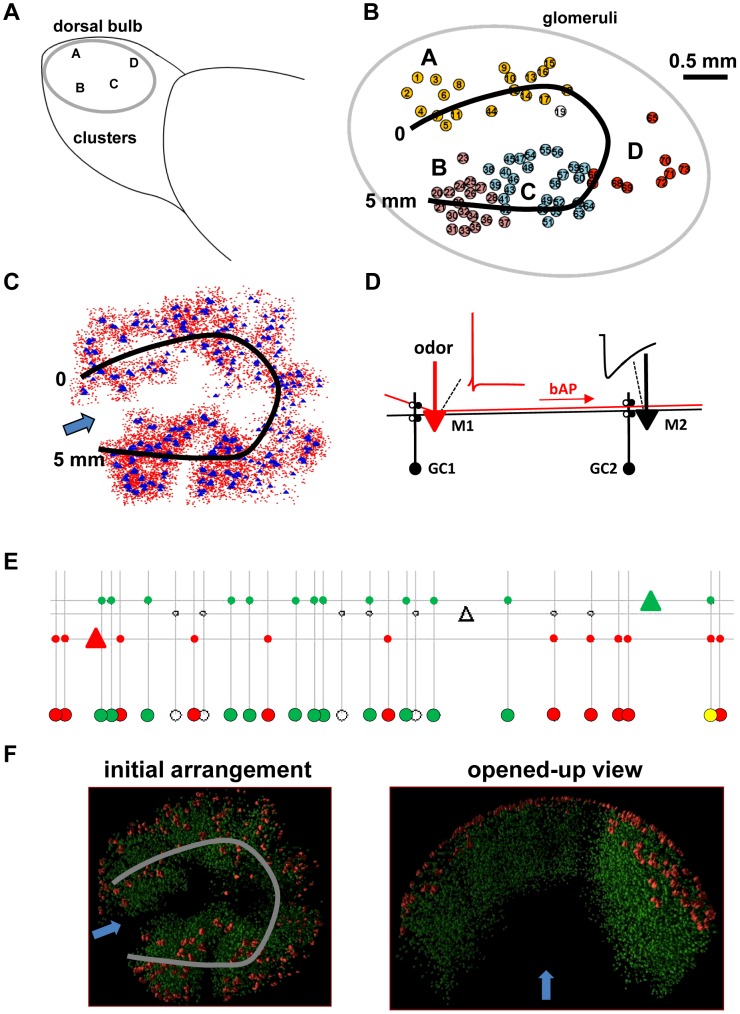
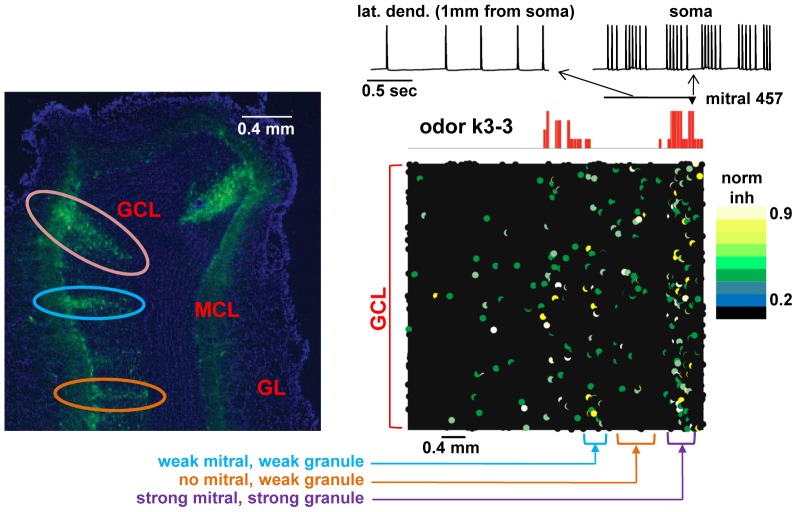
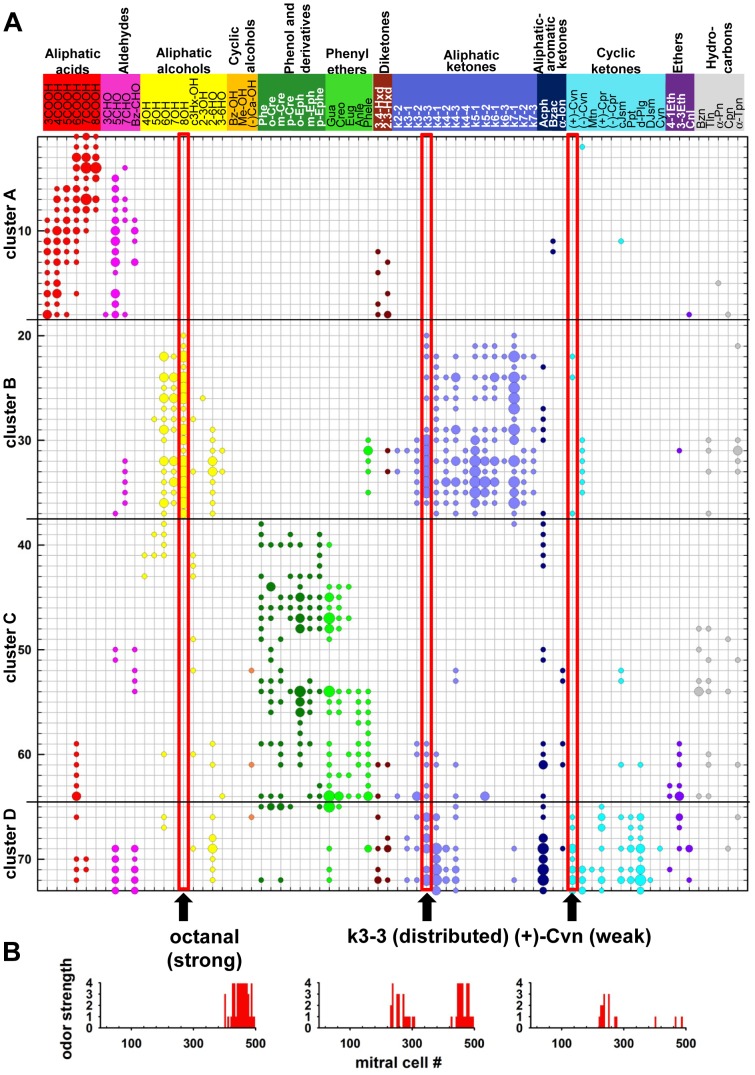
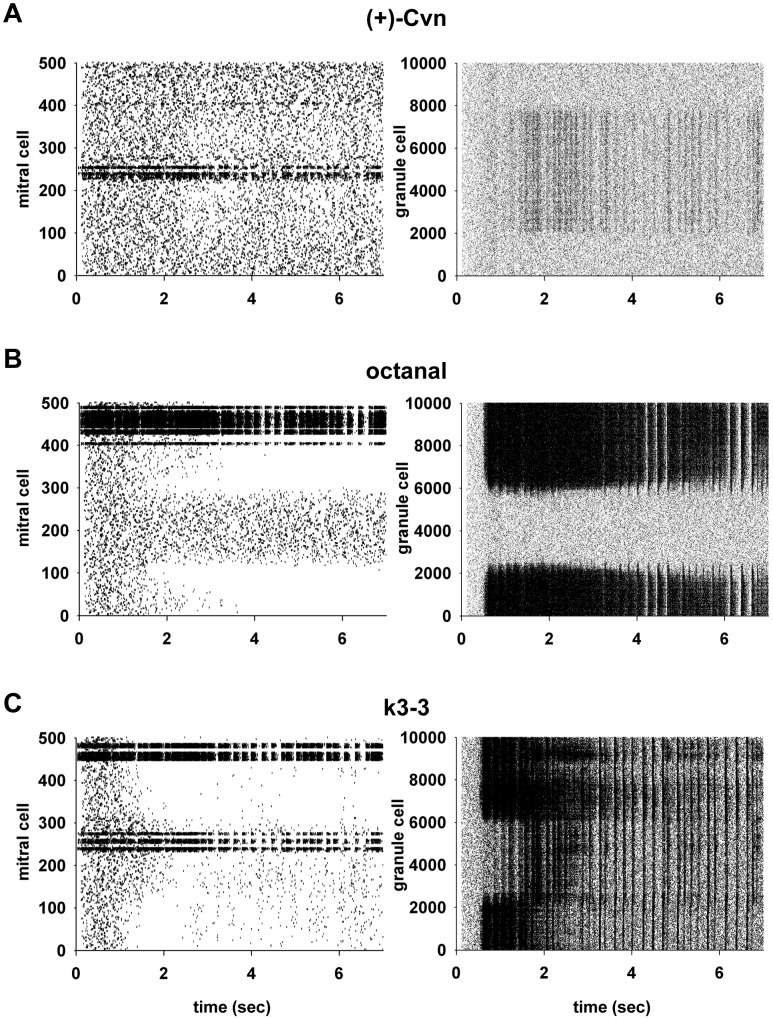
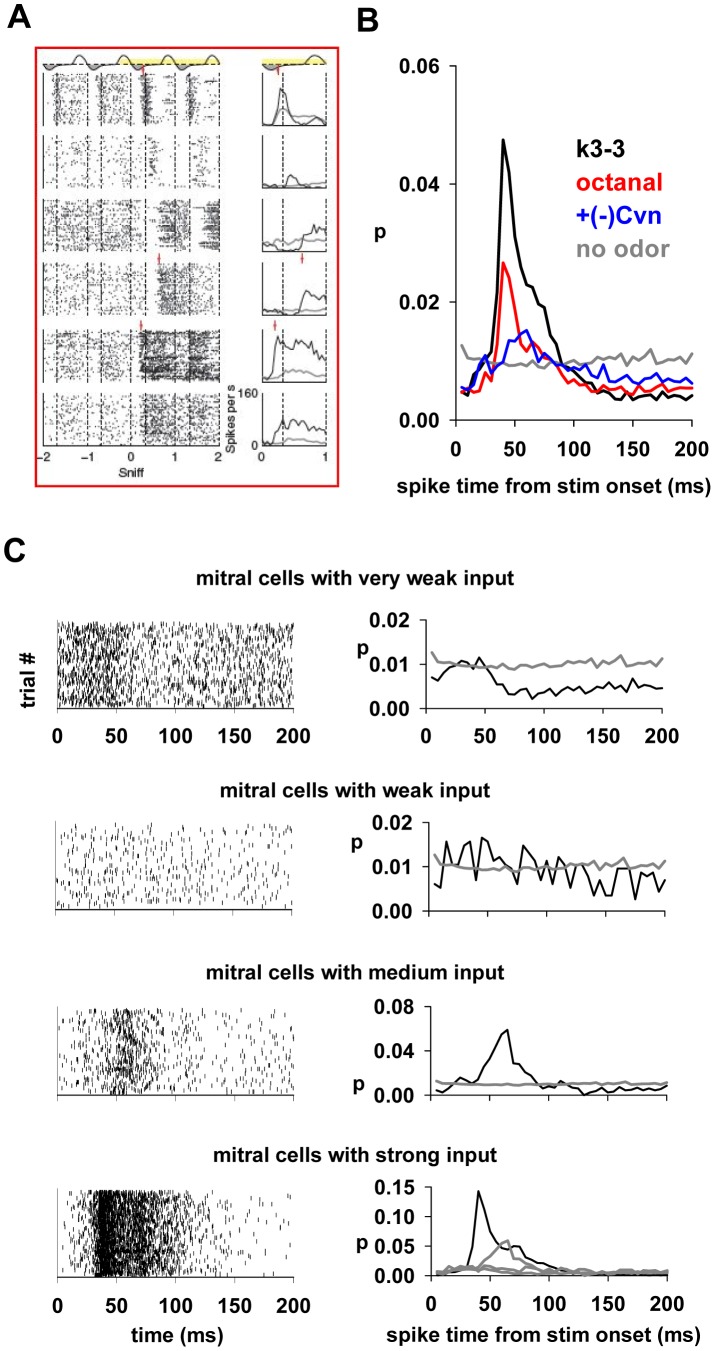
In the olfactory bulb, lateral inhibition mediated by granule cells has been suggested to modulate the timing of mitral cell firing, thereby shaping the representation of input odorants. Current experimental techniques, however, do not enable a clear study of how the mitral-granule cell network sculpts odor inputs to represent odor information spatially and temporally. To address this critical step in the neural basis of odor recognition, we built a biophysical network model of mitral and granule cells, corresponding to 1/100th of the real system in the rat, and used direct experimental imaging data of glomeruli activated by various odors. The model allows the systematic investigation and generation of testable hypotheses of the functional mechanisms underlying odor representation in the olfactory bulb circuit. Specifically, we demonstrate that lateral inhibition emerges within the olfactory bulb network through recurrent dendrodendritic synapses when constrained by a range of balanced excitatory and inhibitory conductances. We find that the spatio-temporal dynamics of lateral inhibition plays a critical role in building the glomerular-related cell clusters observed in experiments, through the modulation of synaptic weights during odor training. Lateral inhibition also mediates the development of sparse and synchronized spiking patterns of mitral cells related to odor inputs within the network, with the frequency of these synchronized spiking patterns also modulated by the sniff cycle.
在嗅球中,颗粒细胞介导的侧抑制作用被认为可以调节神经元放电的时间,从而对输入气味的表示进行塑形。然而,目前的实验技术无法清晰地研究嗅球中神经元网络如何对气味输入进行调整,以空间和时间的方式来表示气味信息。为了解决这一气味识别神经基础中的关键步骤,我们构建了一个包含神经元和颗粒细胞的生物物理网络模型,其对应于大鼠真实系统的 1/100,并使用了各种气味激活的嗅球中特定神经纤维的直接实验成像数据。该模型允许对气味在嗅球电路中表示的功能机制进行系统的研究和生成可测试的假设。具体而言,我们证明了当受到一系列平衡的兴奋性和抑制性电导约束时,侧抑制作用会在嗅球网络中通过树突-树突突触的反复作用而出现。我们发现,侧抑制作用通过在气味训练期间调节突触权重,在构建实验中观察到的与嗅球相关的细胞簇的时空动力学方面起着关键作用。侧抑制还介导了与网络内气味输入相关的神经元的稀疏和同步放电模式的发展,这些同步放电模式的频率也受到嗅探周期的调节。