Laboratory of Natural Products and Chromatography, Chemistry Institute, Federal University of Uberlândia, Uberlândia 38408-144, Brazil.
Molecules. 2013 Apr 18;18(4):4588-98. doi: 10.3390/molecules18044588.
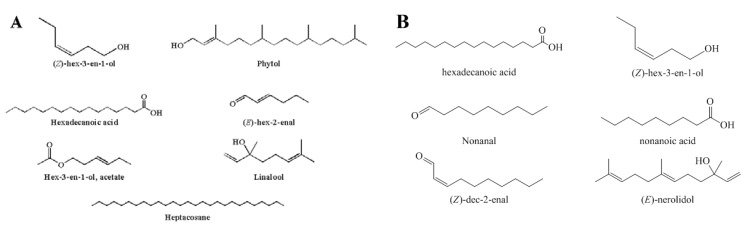
The chemical composition of the essential oils from leaves, bark and wood of Cassia bakeriana Craib. was determined by gas chromatography (GC) and gas chromatography-mass spectrometry (GC-MS). Alcohols, aldehydes and fatty acids were the major components in leaf and bark oil, while wood essential oil was rich in fatty acids. Terpenes such as linalool, (E)-nerolidol and phytol were present in low concentrations. The antimicrobial activity against aerobic and anaerobic oral bacteria was evaluated using the microdilution method, as was the cell viability test carried out with Vero cells. The oils from leaves and bark showed high antimicrobial activity, with minimum inhibitory concentrations between 62.5 and 125 µg·mL⁻¹ for most of the tested bacteria, including Streptococcus mutans, the main etiological agent of dental caries. Leaves oil displayed the lowest cytotoxic effect (EC₅₀ of 153 µg·mL⁻¹), while wood oil exhibited the highest toxicity to Vero cells. C. bakeriana oils are thus a source of biologically active compounds against aerobic and anaerobic oral microorganisms. This study is the first report on the chemical composition, antimicrobial activity and cytotoxicity of C. bakeriana.
采用气相色谱(GC)和气相色谱-质谱联用(GC-MS)法分析了双荚决明叶、皮和木材的精油化学成分。醇类、醛类和脂肪酸是叶皮油的主要成分,而木精油富含脂肪酸。低浓度存在萜烯,如芳樟醇、(E)-橙花叔醇和植醇。采用微量稀释法评估了对需氧和厌氧口腔细菌的抗菌活性,并使用 Vero 细胞进行了细胞活力测试。叶皮油对大多数测试细菌(包括龋齿的主要病原体变形链球菌)显示出高抗菌活性,最低抑菌浓度在 62.5 和 125 µg·mL⁻¹之间。叶油显示出最低的细胞毒性作用(EC₅₀为 153 µg·mL⁻¹),而木油对 Vero 细胞的毒性最高。因此,双荚决明油是针对需氧和厌氧口腔微生物的具有生物活性化合物的来源。本研究首次报道了双荚决明的化学成分、抗菌活性和细胞毒性。