Department of General Internal Medicine, Nijmegen Institute for International Health (456), Radboud University Medical Center, Geert Grooteplein Zuid 8, PO Box 9101, 6500 HB Nijmegen, The Netherlands.
Trends Parasitol. 2013 May;29(5):220-7. doi: 10.1016/j.pt.2013.03.006. Epub 2013 Apr 16.
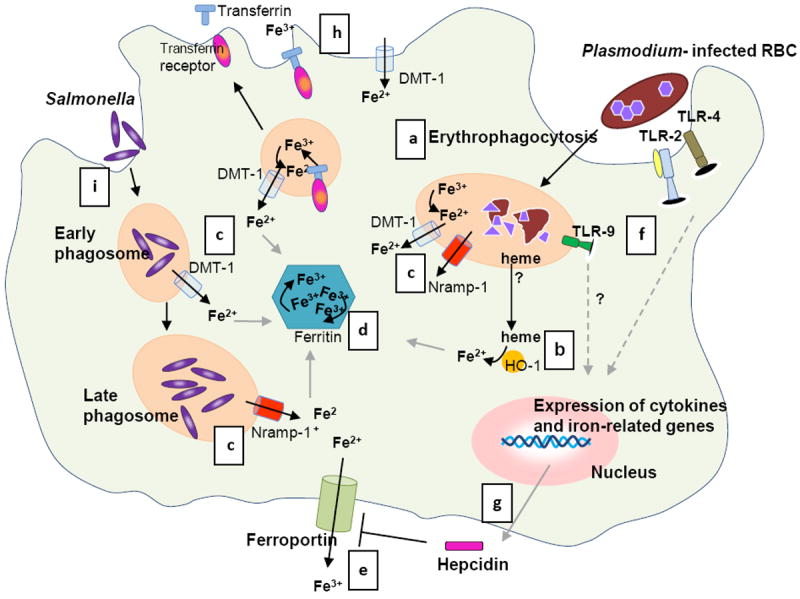
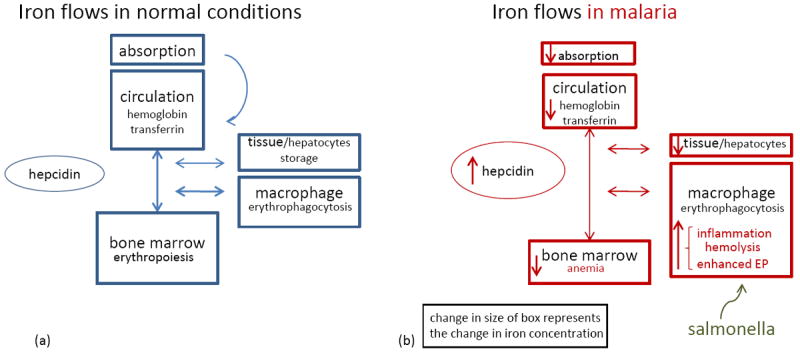
Epidemiological studies have demonstrated an association between malaria and invasive non-typhoid Salmonella (NTS) infections, especially in children. We explore the role of iron as a possible cofactor in this association. Malarial disease, among others, is associated with enhanced erythrophagocytosis and inflammation, which increases the iron content of macrophages and thereby also the survival of Salmonella spp. within macrophages. Whether iron supplementation programs augment the risk of invasive NTS infections in malaria-endemic regions is an important global health issue that still needs to be determined.
流行病学研究表明,疟疾与侵袭性非伤寒沙门氏菌(NTS)感染之间存在关联,尤其是在儿童中。我们探讨了铁作为这种关联的可能辅助因子的作用。疟疾等疾病与增强的红细胞吞噬作用和炎症有关,这增加了巨噬细胞中的铁含量,从而也增加了沙门氏菌属在巨噬细胞内的存活。在疟疾流行地区,铁补充计划是否会增加侵袭性 NTS 感染的风险,这是一个重要的全球健康问题,仍有待确定。