Findlay Leanne C, Langlois Kellie A, Kohen Dafna E
Health Analysis Division, Statistics Canada, Ottawa, Canada.
Int J Circumpolar Health. 2013 Apr 23;72. doi: 10.3402/ijch.v72i0.20324. Print 2013.
Inuit populations may be at increased risk for experiencing poor nutrition or hunger due to limited access and availability to food. The prevalence and correlates of parental perceptions of hunger among a nationally representative sample of Inuit children in Canada have not yet been reported.
Data are from the 2006 Aboriginal Children's Survey (ACS). Sociodemographic information, dietary behaviours and hunger status were parent-reported via a household interview for Inuit children aged 2-5 years (n=1,234). Prevalence of hunger was calculated among Inuit children by sociodemographic factors and by dietary behaviours. In addition, a multivariate logistic regression model was conducted to determine factors associated with parental perception of ever experiencing hunger.
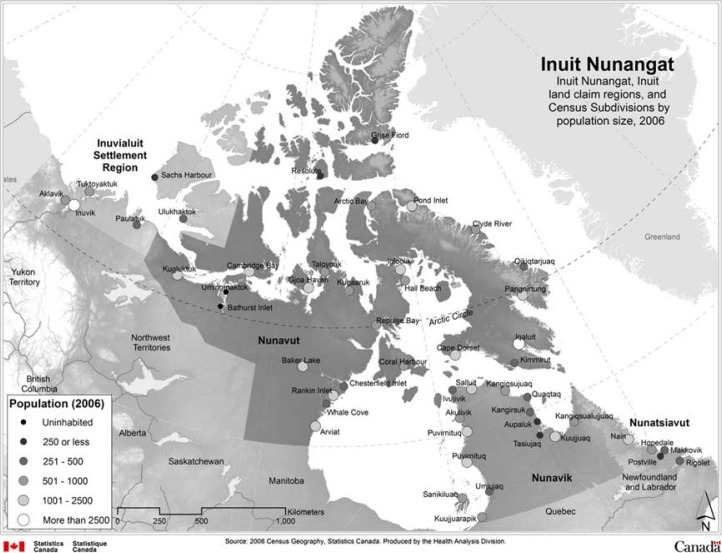
The prevalence of Inuit children in Canada aged 2-5 years ever experiencing hunger was 24.4%. Children who were reported to have experienced hunger consumed milk and milk products (p<0.001); fish, eggs and meat (p<0.05); fruits (p<0.001); and vegetables (p<0.001) significantly less often than never-hungry children. Fast food and processed foods, soft drinks and juice, and salty snacks, sweets and desserts were consumed as often as never-hungry children (all p>0.05). The majority (81%) of Inuit parents/guardians of ever-hungry children sought help from family or friends. Factors associated with an increased likelihood of experiencing hunger include sociodemographic characteristics (such as income and household size), living in an Inuit region and living in a community with cultural activities.
About 1 in 4 Inuit children were reported by their parents to have experienced hunger, and hunger was associated with region, sociodemographic and community factors. Future research could further examine the impact of ever experiencing hunger on the health status of Inuit children and their families in Canada.
因纽特人群可能因食物获取和供应受限而面临营养不良或饥饿风险增加的情况。加拿大全国代表性因纽特儿童样本中,父母对饥饿的认知情况及其相关因素尚未见报道。
数据来自2006年原住民儿童调查(ACS)。通过对2至5岁因纽特儿童(n = 1234)进行家庭访谈,由父母报告社会人口学信息、饮食行为和饥饿状况。按社会人口学因素和饮食行为计算因纽特儿童的饥饿患病率。此外,进行多变量逻辑回归模型以确定与父母认为曾经历饥饿相关的因素。
加拿大2至5岁曾经历饥饿的因纽特儿童患病率为24.4%。据报告曾经历饥饿的儿童食用牛奶及奶制品(p < 0.001)、鱼类、蛋类和肉类(p < 0.05)、水果(p < 0.001)和蔬菜(p < 0.001)的频率明显低于从未饥饿的儿童。快餐和加工食品、软饮料和果汁以及咸味小吃、糖果和甜点的食用频率与从未饥饿的儿童相同(所有p > 0.05)。大多数(81%)曾饥饿儿童的因纽特父母/监护人向家人或朋友寻求帮助。与饥饿可能性增加相关的因素包括社会人口学特征(如收入和家庭规模)、居住在因纽特地区以及居住在有文化活动的社区。
父母报告约四分之一的因纽特儿童曾经历饥饿,饥饿与地区、社会人口学和社区因素有关。未来研究可进一步探讨曾经历饥饿对加拿大因纽特儿童及其家庭健康状况的影响。