Bhat Sumrita, Kumar Ashok
Department of Biological Science and Bioengineering; Indian Institute of Technology; Kanpur, India.
Biomatter. 2013 Jul-Sep;3(3). doi: 10.4161/biom.24717. Epub 2013 Apr 1.
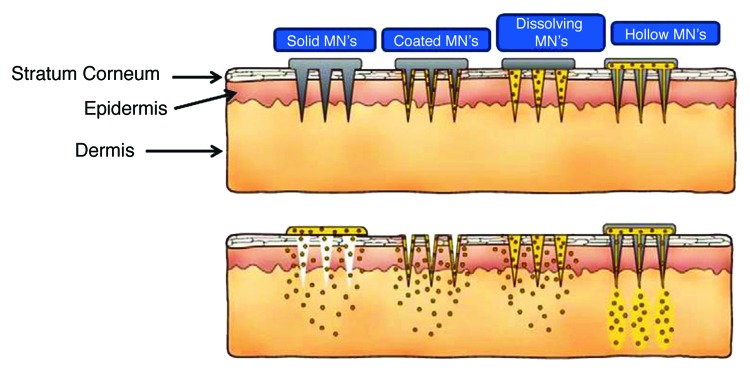
Biomaterials are being used for the healthcare applications from ancient times. But subsequent evolution has made them more versatile and has increased their utility. Biomaterials have revolutionized the areas like bioengineering and tissue engineering for the development of novel strategies to combat life threatening diseases. Together with biomaterials, stem cell technology is also being used to improve the existing healthcare facilities. These concepts and technologies are being used for the treatment of different diseases like cardiac failure, fractures, deep skin injuries, etc. Introduction of nanomaterials on the other hand is becoming a big hope for a better and an affordable healthcare. Technological advancements are underway for the development of continuous monitoring and regulating glucose levels by the implantation of sensor chips. Lab-on-a-chip technology is expected to modernize the diagnostics and make it more easy and regulated. Other area which can improve the tomorrow's healthcare is drug delivery. Micro-needles have the potential to overcome the limitations of conventional needles and are being studied for the delivery of drugs at different location in human body. There is a huge advancement in the area of scaffold fabrication which has improved the potentiality of tissue engineering. Most emerging scaffolds for tissue engineering are hydrogels and cryogels. Dynamic hydrogels have huge application in tissue engineering and drug delivery. Furthermore, cryogels being supermacroporous allow the attachment and proliferation of most of the mammalian cell types and have shown application in tissue engineering and bioseparation. With further developments we expect these technologies to hit the market in near future which can immensely improve the healthcare facilities.
从古代起,生物材料就被用于医疗保健应用。但随后的发展使其更加通用,并增加了其用途。生物材料已经彻底改变了生物工程和组织工程等领域,用于开发对抗危及生命疾病的新策略。与生物材料一起,干细胞技术也被用于改善现有的医疗设施。这些概念和技术正被用于治疗不同的疾病,如心力衰竭、骨折、深度皮肤损伤等。另一方面,纳米材料的引入正成为实现更好且负担得起的医疗保健的巨大希望。目前正在进行技术进步,以通过植入传感器芯片来持续监测和调节血糖水平。芯片实验室技术有望使诊断现代化,并使其更简便且规范。另一个可以改善未来医疗保健的领域是药物递送。微针有潜力克服传统针头的局限性,并且正在研究用于在人体不同部位递送药物。支架制造领域有了巨大进展,这提高了组织工程的潜力。组织工程中最新兴的支架是水凝胶和冷冻凝胶。动态水凝胶在组织工程和药物递送中有巨大应用。此外,冷冻凝胶具有超大孔结构,允许大多数哺乳动物细胞类型附着和增殖,并已在组织工程和生物分离中显示出应用。随着进一步发展,我们预计这些技术将在不久的将来进入市场,这将极大地改善医疗设施。