Wang Meizhen, Liu Chen, Li Shixue, Zhu Dengyun, Zhao Qian, Yu Jingjuan
State Key Laboratory of Agrobiotechnology, College of Biological Sciences, China Agricultural University, No. 2 Yuanmingyuan West Road, Haidian District, Beijing 100193, China.
Int J Mol Sci. 2013 Apr 29;14(5):9459-74. doi: 10.3390/ijms14059459.
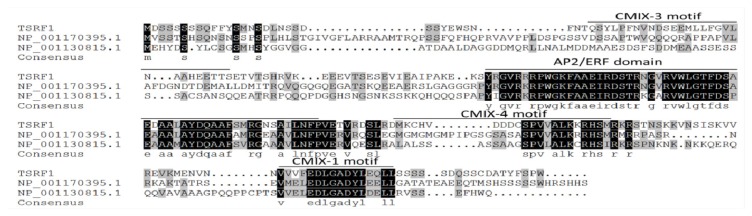
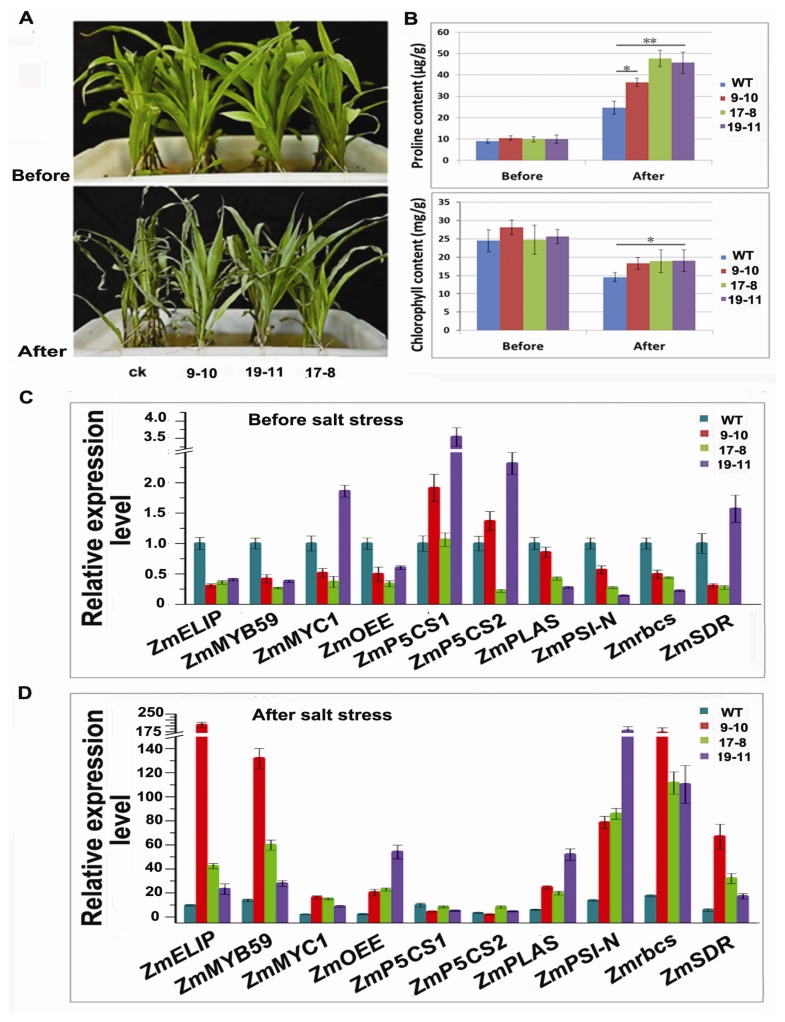
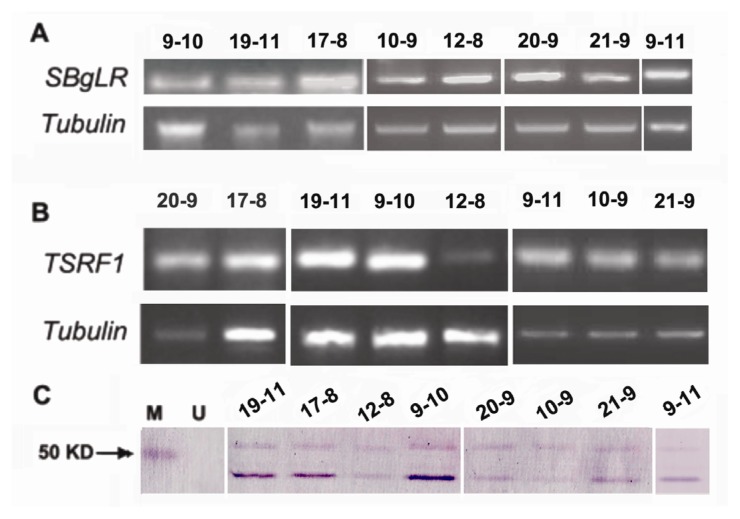
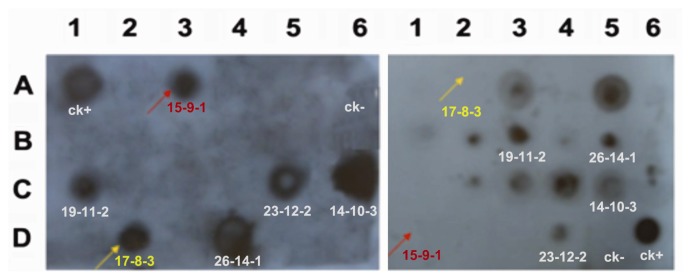
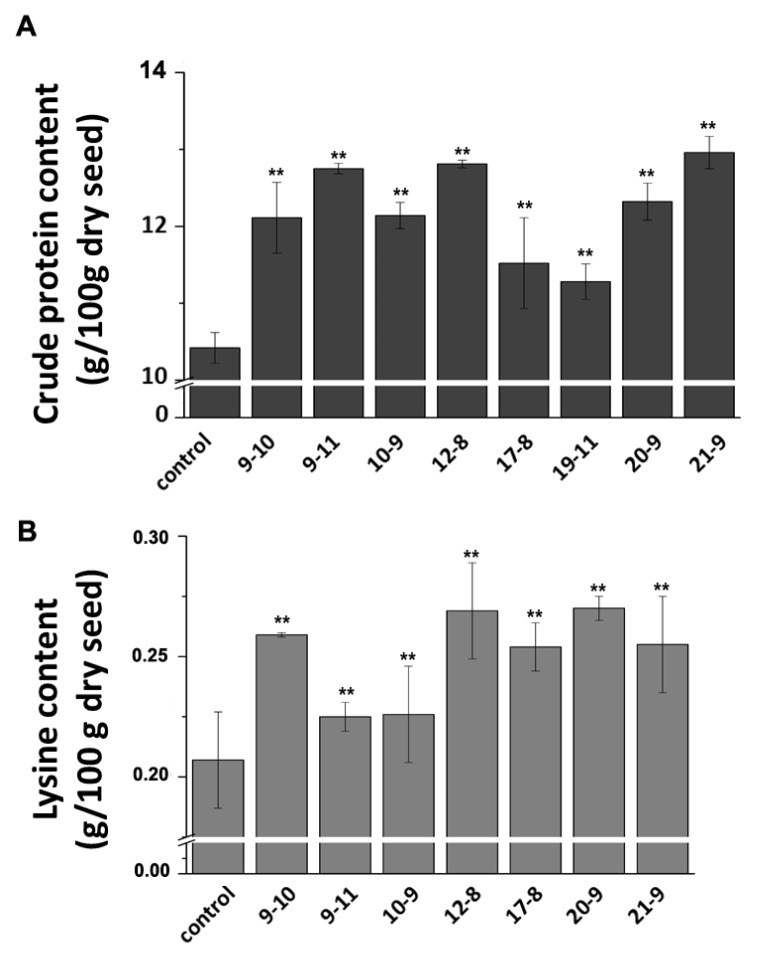
Maize (Zea mays L.), as one of the most important crops in the world, is deficient in lysine and tryptophan. Environmental conditions greatly impact plant growth, development and productivity. In this study, we used particle bombardment mediated co-transformation to obtain marker-free transgenic maize inbred X178 lines harboring a lysine-rich protein gene SBgLR from potato and an ethylene responsive factor (ERF) transcription factor gene, TSRF1, from tomato. Both of the target genes were successfully expressed and showed various expression levels in different transgenic lines. Analysis showed that the protein and lysine content in T1 transgenic maize seeds increased significantly. Compared to non-transformed maize, the protein and lysine content increased by 7.7% to 24.38% and 8.70% to 30.43%, respectively. Moreover, transgenic maize exhibited more tolerance to salt stress. When treated with 200 mM NaCl for 48 h, both non-transformed and transgenic plant leaves displayed wilting and losing green symptoms and dramatic increase of the free proline contents. However, the degree of control seedlings was much more serious than that of transgenic lines and much more increases of the free proline contents in the transgenic lines than that in the control seedlings were observed. Meanwhile, lower extent decreases of the chlorophyll contents were detected in the transgenic seedlings. Quantitative RT-PCR was performed to analyze the expression of ten stress-related genes, including stress responsive transcription factor genes, ZmMYB59 and ZmMYC1, proline synthesis related genes, ZmP5CS1 and ZmP5CS2, photosynthesis-related genes, ZmELIP, ZmPSI-N, ZmOEE, Zmrbcs and ZmPLAS, and one ABA biosynthesis related gene, ZmSDR. The results showed that with the exception of ZmP5CS1 and ZmP5CS2 in line 9-10 and 19-11, ZmMYC1 in line 19-11 and ZmSDR in line 19-11, the expression of other stress-related genes were inhibited in transgenic lines under normal conditions. After salt treatment, the expressions of the ten stress-related genes were significantly induced in both wild-type (WT) and transgenic lines. However, compared to WT, the increases of ZmP5CS1 in all these three transgenic lines and ZmP5CS2 in line 9-10 were less than WT plants. This study provides an effective approach of maize genetic engineering for improved nutritive quality and salt tolerance.
玉米(Zea mays L.)作为世界上最重要的作物之一,缺乏赖氨酸和色氨酸。环境条件对植物的生长、发育和生产力有很大影响。在本研究中,我们利用粒子轰击介导的共转化方法,获得了不含选择标记的转基因玉米自交系X178,其携带来自马铃薯的富含赖氨酸的蛋白质基因SBgLR和来自番茄的乙烯响应因子(ERF)转录因子基因TSRF1。两个目标基因均成功表达,且在不同转基因系中表现出不同的表达水平。分析表明,T1代转基因玉米种子中的蛋白质和赖氨酸含量显著增加。与未转化的玉米相比,蛋白质和赖氨酸含量分别增加了7.7%至24.38%和8.70%至30.43%。此外,转基因玉米对盐胁迫表现出更强的耐受性。用200 mM NaCl处理48小时后,未转化和转基因植株的叶片均出现萎蔫和失绿症状,游离脯氨酸含量显著增加。然而,对照幼苗的症状比转基因系严重得多,且转基因系中游离脯氨酸含量的增加幅度比对照幼苗大得多。同时,转基因幼苗中叶绿素含量的降低程度较小。进行了定量RT-PCR分析十个与胁迫相关基因的表达,包括胁迫响应转录因子基因ZmMYB59和ZmMYC1、脯氨酸合成相关基因ZmP5CS1和ZmP5CS2、光合作用相关基因ZmELIP、ZmPSI-N、ZmOEE、Zmrbcs和ZmPLAS,以及一个ABA生物合成相关基因ZmSDR。结果表明,除了9-10和19-11系中的ZmP5CS1和ZmP5CS2、19-11系中的ZmMYC1以及19-11系中的ZmSDR外,其他胁迫相关基因在正常条件下的转基因系中表达受到抑制。盐处理后,野生型(WT)和转基因系中十个胁迫相关基因的表达均被显著诱导。然而,与WT相比,这三个转基因系中的ZmP5CS1以及9-10系中的ZmP5CS2的增加幅度均小于WT植株。本研究为通过玉米基因工程提高营养品质和耐盐性提供了一种有效方法。