Department of Psychiatry, VU University Medical Center, Amsterdam, The Netherlands.
PLoS One. 2013 Apr 24;8(4):e59600. doi: 10.1371/journal.pone.0059600. Print 2013.
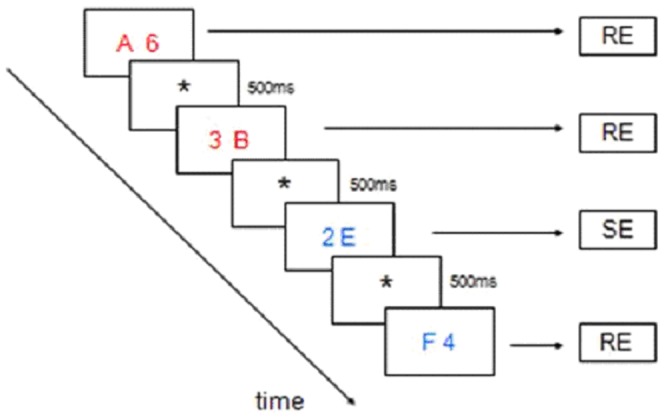
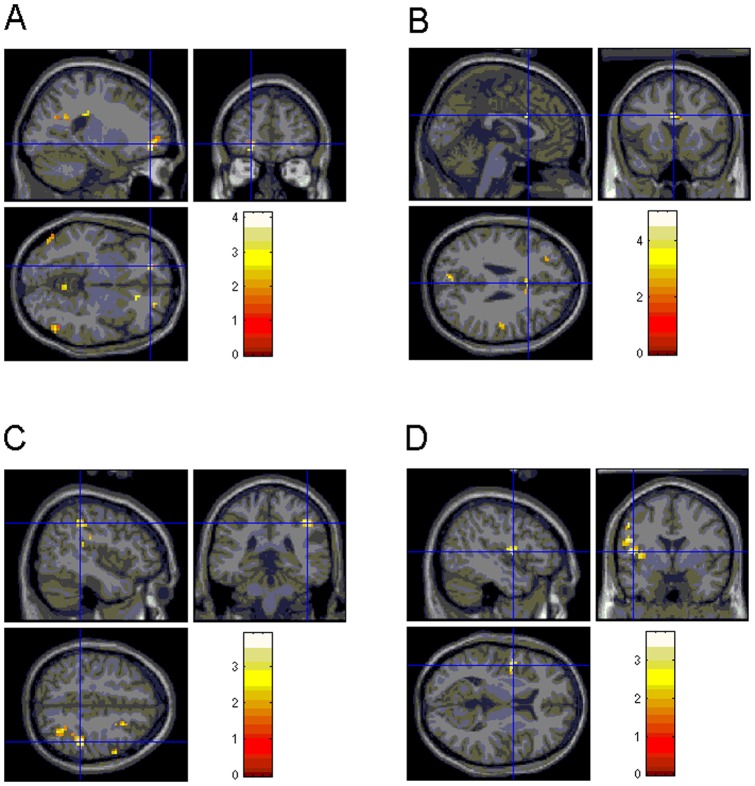
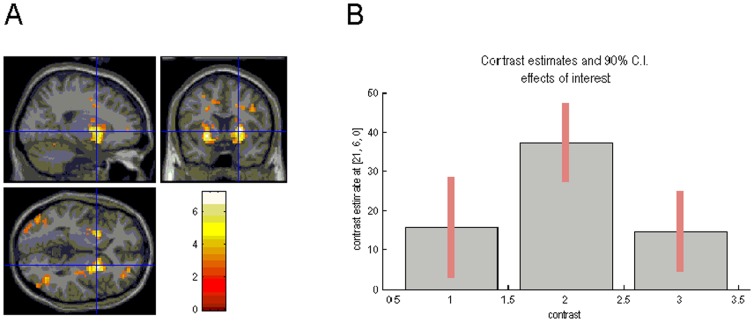
Obsessive-compulsive disorder (OCD) and major depressive disorder (MDD) are frequently co-morbid, and dysfunctional frontal-striatal circuits have been implicated in both disorders. Neurobiological distinctions between OCD and MDD are insufficiently clear, and comparative neuroimaging studies are extremely scarce. OCD and MDD may be characterized by cognitive rigidity at the phenotype level, and frontal-striatal brain circuits constitute the neural substrate of intact cognitive flexibility. In the present study, 18 non-medicated MDD-free patients with OCD, 19 non-medicated OCD-free patients with MDD, and 29 matched healthy controls underwent functional magnetic resonance imaging during performance of a self-paced letter/digit task switching paradigm. Results showed that both patient groups responded slower relative to controls during repeat events, but only in OCD patients slowing was associated with decreased error rates. During switching, patients with OCD showed increased activation of the putamen, anterior cingulate and insula, whereas MDD patients recruited inferior parietal cortex and precuneus to a lesser extent. Patients with OCD and MDD commonly failed to reveal anterior prefrontal cortex activation during switching. This study shows subtle behavioral abnormalities on a measure of cognitive flexibility in MDD and OCD, associated with differential frontal-striatal brain dysfunction in both disorders. These findings may add to the development of biological markers that more precisely characterize frequently co-morbid neuropsychiatric disorders such as OCD and MDD.
强迫症(OCD)和重度抑郁症(MDD)常常并发,功能失调的额纹状体回路与这两种疾病都有关。OCD 和 MDD 之间的神经生物学区别不够清楚,比较性神经影像学研究极其稀缺。OCD 和 MDD 可能在表型水平上表现出认知僵化,而额纹状体脑回路构成了完整认知灵活性的神经基础。在本研究中,18 名未服用药物的无 MDD 的强迫症患者、19 名未服用药物的无 OCD 的 MDD 患者和 29 名匹配的健康对照者在执行自我调节字母/数字任务转换范式时接受了功能磁共振成像。结果表明,两组患者在重复事件中相对于对照组反应较慢,但只有强迫症患者的反应较慢与错误率降低有关。在转换期间,强迫症患者的纹状体、前扣带和脑岛活动增加,而 MDD 患者则较少募集顶下小叶和楔前叶。强迫症和 MDD 患者在转换期间通常未能显示出前额叶皮层的激活。本研究表明,在认知灵活性的测量中,MDD 和 OCD 存在细微的行为异常,这与两种疾病的额纹状体大脑功能障碍不同有关。这些发现可能有助于开发更精确地描述强迫症和 MDD 等经常并发的神经精神疾病的生物标志物。