Ansary Stem Cell Institute, and Department of Genetic Medicine, Weill Cornell Medical College, New York, New York, USA.
PLoS One. 2013 Apr 25;8(4):e62150. doi: 10.1371/journal.pone.0062150. Print 2013.
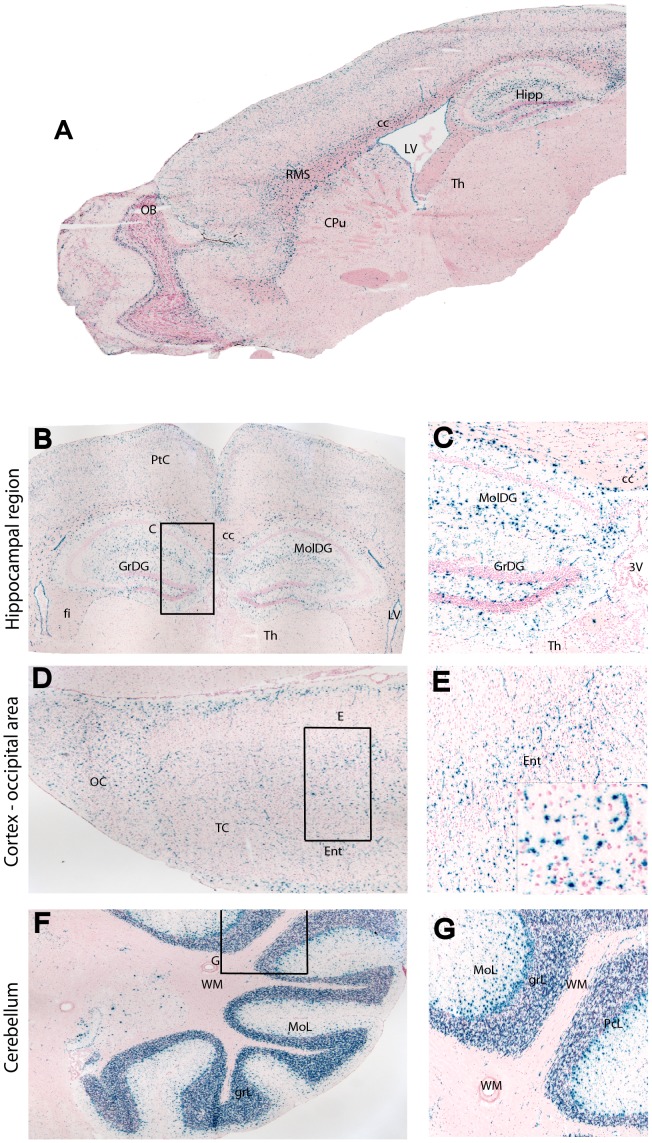
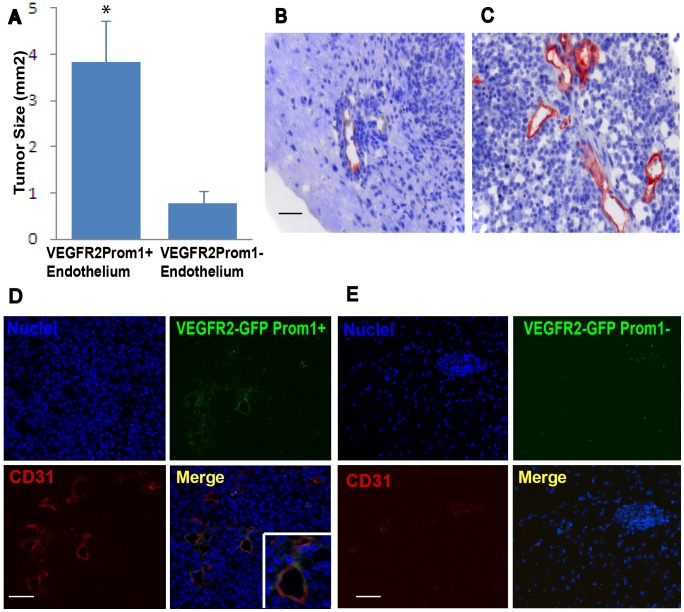
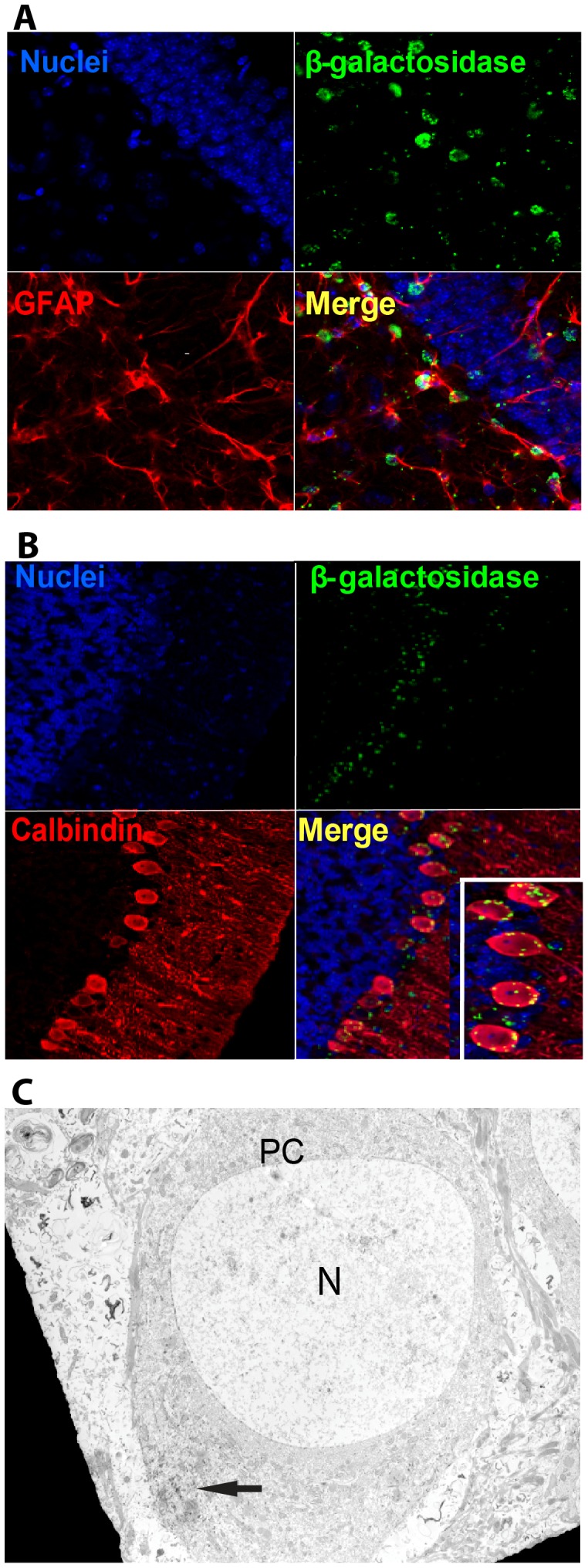
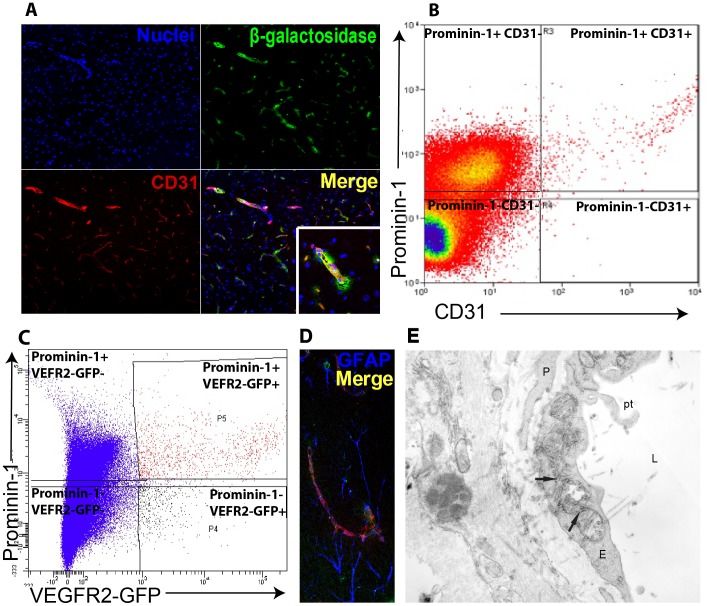
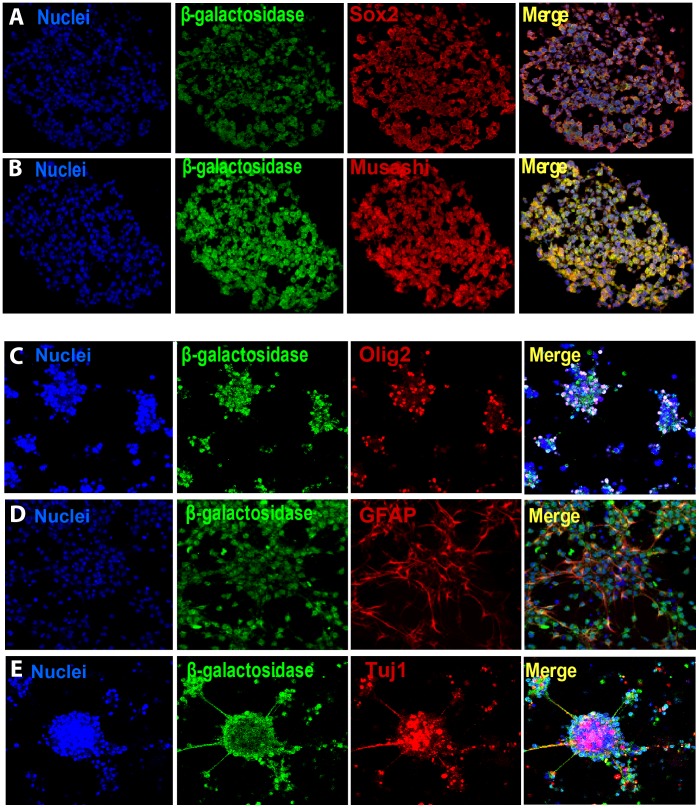
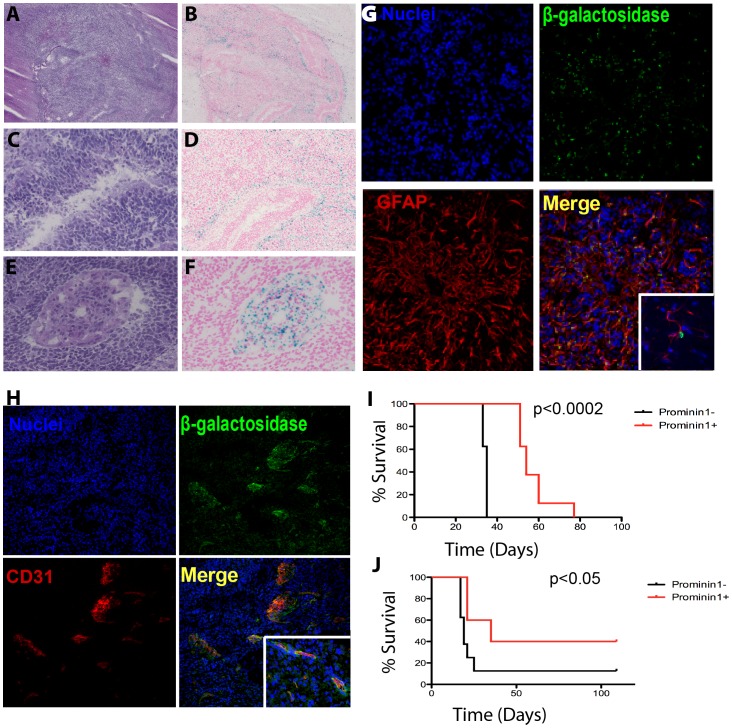
In glioblastoma high expression of the CD133 gene, also called Prominin1, is associated with poor prognosis. The PDGF-driven proneural group represents a subset of glioblastoma in which CD133 is not overexpressed. Interestingly, this particular subset shows a relatively good prognosis. As with many other tumors, gliobastoma is believed to arise and be maintained by a restricted population of stem-like cancer cells that express the CD133 transmembrane protein. The significance of CD133(+) cells for gliomagenesis is controversial because of conflicting supporting evidence. Contributing to this inconsistency is the fact that the isolation of CD133(+) cells has largely relied on the use of antibodies against ill-defined glycosylated epitopes of CD133. To overcome this problem, we used a knock-in lacZ reporter mouse, Prom1(lacZ/+) , to track Prom1(+) cells in the brain. We found that Prom1 (prominin1, murine CD133 homologue) is expressed by cells that express markers characteristic of the neuronal, glial or vascular lineages. In proneural tumors derived from injection of RCAS-PDGF into the brains of tv-a;Ink4a-Arf(-/-) Prom1(lacZ/+) mice, Prom1(+) cells expressed markers for astrocytes or endothelial cells. Mice co-transplanted with proneural tumor sphere cells and Prom1(+) endothelium had a significantly increased tumor burden and more vascular proliferation (angiogenesis) than those co-transplanted with Prom1(-) endothelium. We also identified specific genes in Prom1(+) endothelium that code for endothelial signaling modulators that were not overexpressed in Prom1(-) endothelium. These factors may support proneural tumor progression and could be potential targets for anti-angiogenic therapy.
在胶质母细胞瘤中,CD133 基因(也称为 Prominin1)的高表达与预后不良有关。PDGF 驱动的神经前体细胞亚群是胶质母细胞瘤的一个亚群,其中 CD133 没有过度表达。有趣的是,这个特定的亚群表现出相对较好的预后。与许多其他肿瘤一样,胶质母细胞瘤被认为是由一小部分具有干细胞样特性的癌细胞产生和维持的,这些癌细胞表达 CD133 跨膜蛋白。CD133(+)细胞对胶质瘤发生的意义存在争议,因为支持证据相互矛盾。导致这种不一致的一个事实是,CD133(+)细胞的分离在很大程度上依赖于使用针对 CD133 未定义糖基化表位的抗体。为了解决这个问题,我们使用了一个带有 lacZ 报告基因的敲入小鼠 Prom1(lacZ/+)来追踪大脑中的 Prom1(+)细胞。我们发现 Prom1(prominin1,鼠 CD133 同源物)表达在表达神经元、胶质或血管谱系特征性标志物的细胞中。在由 RCAS-PDGF 注射到 tv-a;Ink4a-Arf(-/-) Prom1(lacZ/+) 小鼠脑中诱导的神经前体细胞肿瘤中,Prom1(+)细胞表达星形胶质细胞或内皮细胞标志物。与共移植神经前体细胞球体细胞和 Prom1(+)内皮细胞的小鼠相比,共移植 Prom1(-)内皮细胞的小鼠肿瘤负担显著增加,血管增殖(血管生成)更多。我们还在 Prom1(+)内皮细胞中鉴定了特定的基因,这些基因编码内皮信号调节剂,在 Prom1(-)内皮细胞中没有过度表达。这些因子可能支持神经前体细胞肿瘤的进展,并且可能成为抗血管生成治疗的潜在靶点。