Department of Veterinary Biosciences, University of Helsinki, Finland.
Laboratory of Microbiology, Wageningen University, Wageningen, Netherlands.
PeerJ. 2013 Feb 26;1:e32. doi: 10.7717/peerj.32. Print 2013.
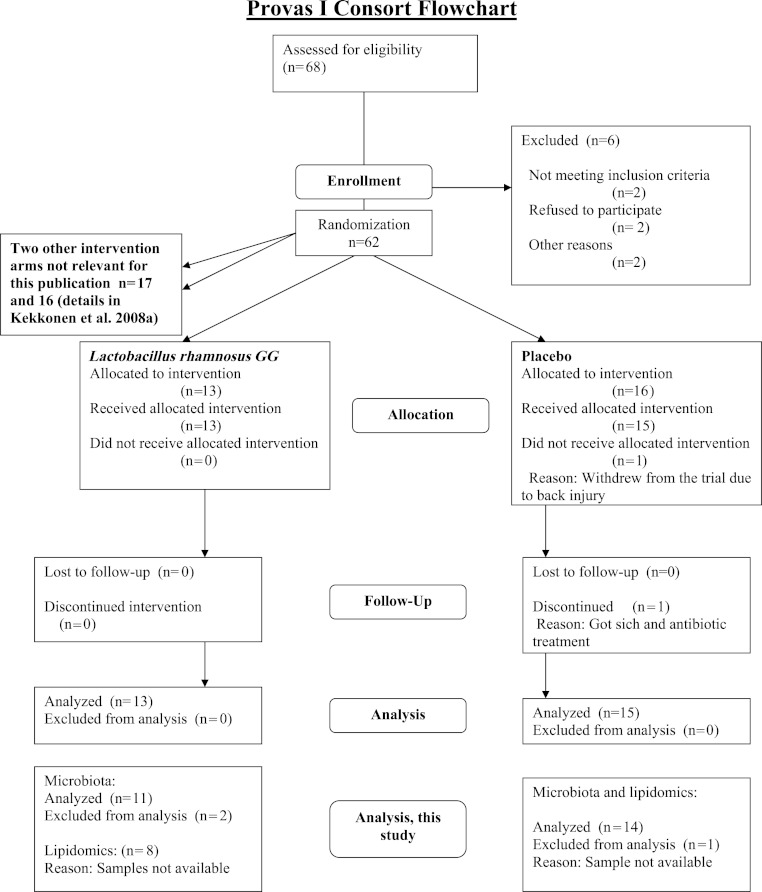
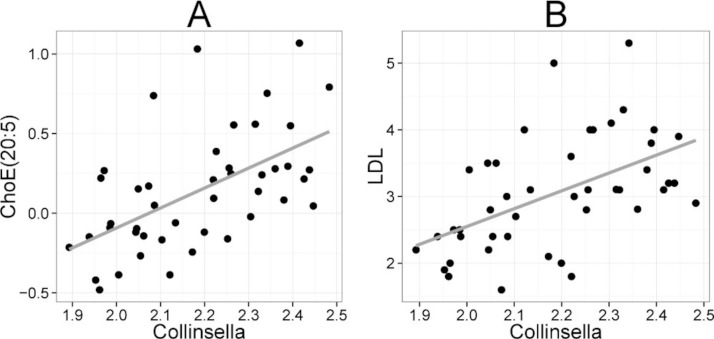
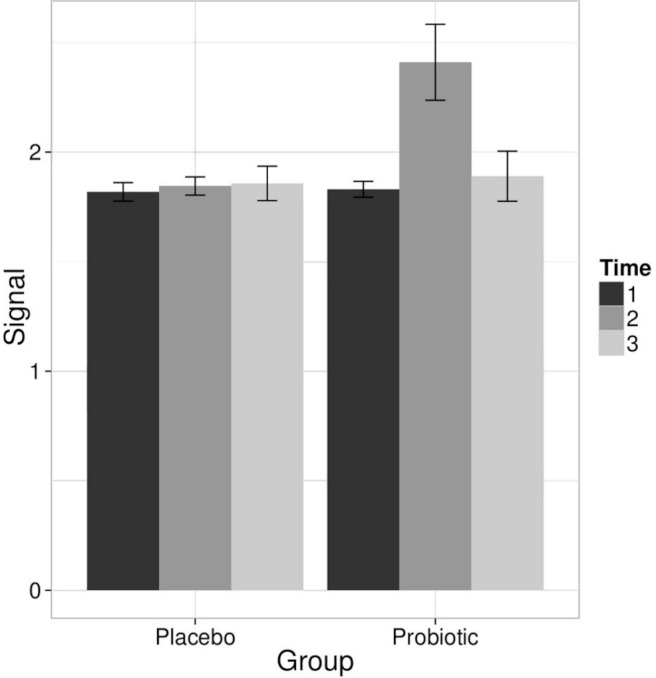
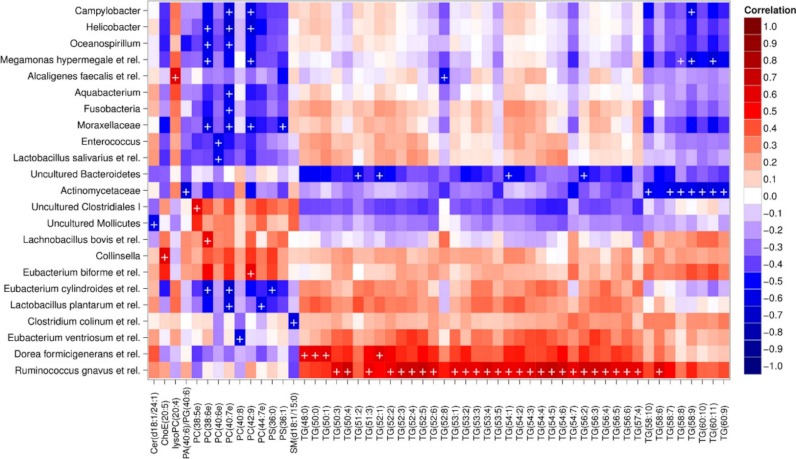
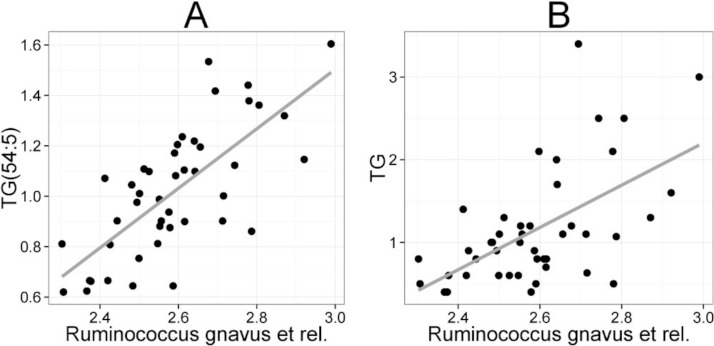
Accumulating evidence indicates that the intestinal microbiota regulates our physiology and metabolism. Bacteria marketed as probiotics confer health benefits that may arise from their ability to affect the microbiota. Here high-throughput screening of the intestinal microbiota was carried out and integrated with serum lipidomic profiling data to study the impact of probiotic intervention on the intestinal ecosystem, and to explore the associations between the intestinal bacteria and serum lipids. We performed a comprehensive intestinal microbiota analysis using a phylogenetic microarray before and after Lactobacillus rhamnosus GG intervention. While a specific increase in the L. rhamnosus-related bacteria was observed during the intervention, no other changes in the composition or stability of the microbiota were detected. After the intervention, lactobacilli returned to their initial levels. As previously reported, also the serum lipid profiles remained unaltered during the intervention. Based on a high-resolution microbiota analysis, intake of L. rhamnosus GG did not modify the composition of the intestinal ecosystem in healthy adults, indicating that probiotics confer their health effects by other mechanisms. The most prevailing association between the gut microbiota and lipid profiles was a strong positive correlation between uncultured phylotypes of Ruminococcus gnavus-group and polyunsaturated serum triglycerides of dietary origin. Moreover, a positive correlation was detected between serum cholesterol and Collinsella (Coriobacteriaceae). These associations identified with the spectrometric lipidome profiling were corroborated by enzymatically determined cholesterol and triglyceride levels. Actinomycetaceae correlated negatively with triglycerides of highly unsaturated fatty acids while a set of Proteobacteria showed negative correlation with ether phosphatidylcholines. Our results suggest that several members of the Firmicutes, Actinobacteria and Proteobacteria may be involved in the metabolism of dietary and endogenous lipids, and provide a scientific rationale for further human studies to explore the role of intestinal microbes in host lipid metabolism.
越来越多的证据表明,肠道微生物群调节着我们的生理和代谢。作为益生菌出售的细菌通过影响微生物群而发挥有益健康的作用。在这里,我们对肠道微生物群进行了高通量筛选,并将其与血清脂质组学分析数据相结合,以研究益生菌干预对肠道生态系统的影响,并探索肠道细菌与血清脂质之间的关联。在进行干预之前和之后,我们使用系统发生微阵列对肠道微生物群进行了全面分析。在干预期间,观察到特定的 L. rhamnosus 相关细菌增加,但未检测到微生物群组成或稳定性的其他变化。干预后,乳杆菌恢复到初始水平。正如之前报道的那样,干预期间血清脂质谱也保持不变。基于高分辨率微生物群分析,摄入 L. rhamnosus GG 并未改变健康成年人肠道生态系统的组成,表明益生菌通过其他机制发挥其健康作用。肠道微生物群与脂质谱之间最普遍的关联是 Ruminococcus gnavus-group 的未培养菌型与膳食来源的多不饱和血清甘油三酯之间的强烈正相关。此外,还检测到血清胆固醇与柯林斯菌(柯里伯氏菌科)之间存在正相关。这些与光谱脂质组学分析鉴定的关联通过酶法测定的胆固醇和甘油三酯水平得到了证实。放线菌科与高度不饱和脂肪酸的甘油三酯呈负相关,而一组变形菌与醚磷脂酰胆碱呈负相关。我们的结果表明,厚壁菌门、放线菌门和变形菌门的几个成员可能参与了膳食和内源性脂质的代谢,并为进一步的人类研究提供了科学依据,以探索肠道微生物在宿主脂质代谢中的作用。