Center for Cardiovascular and Respiratory Sciences, Robert C. Byrd Health Sciences Center, West Virginia University School of Medicine, 1 Medical Center Drive, PO Box 9105, Morgantown, WV, 26506-9105, USA.
Cardiovasc Toxicol. 2013 Dec;13(4):323-37. doi: 10.1007/s12012-013-9213-3.
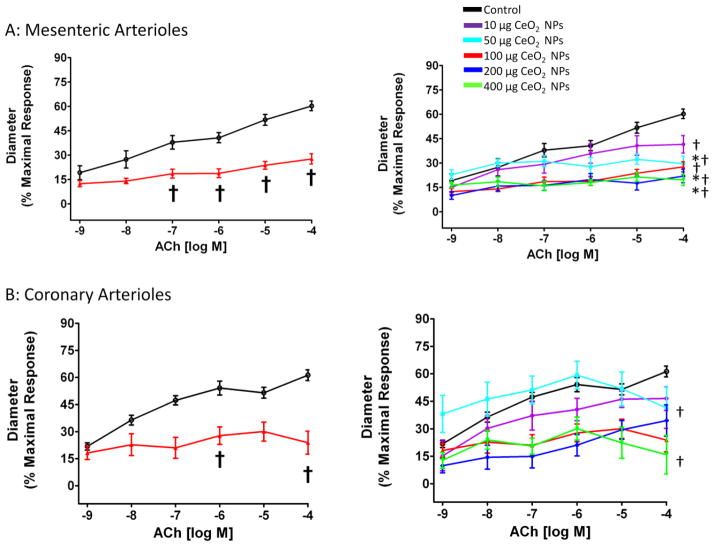
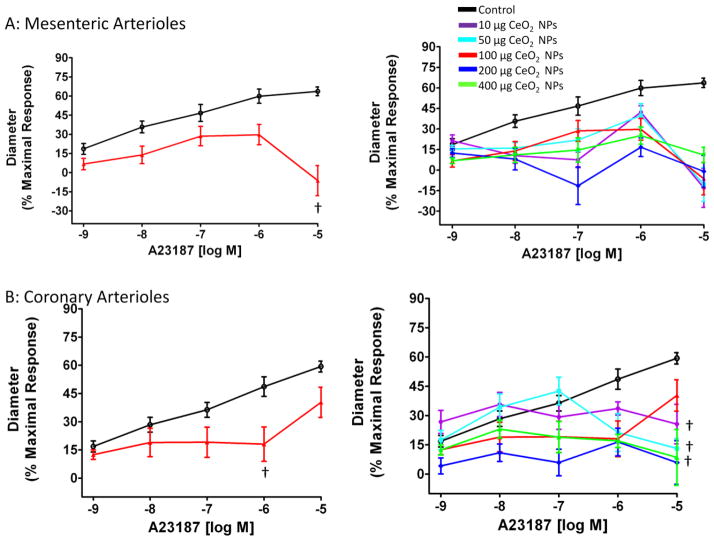
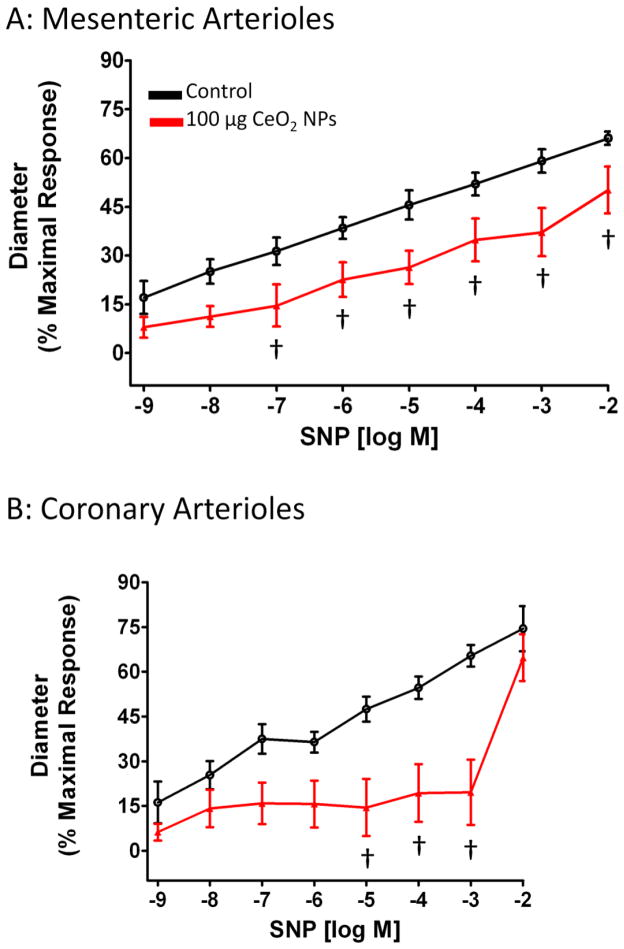
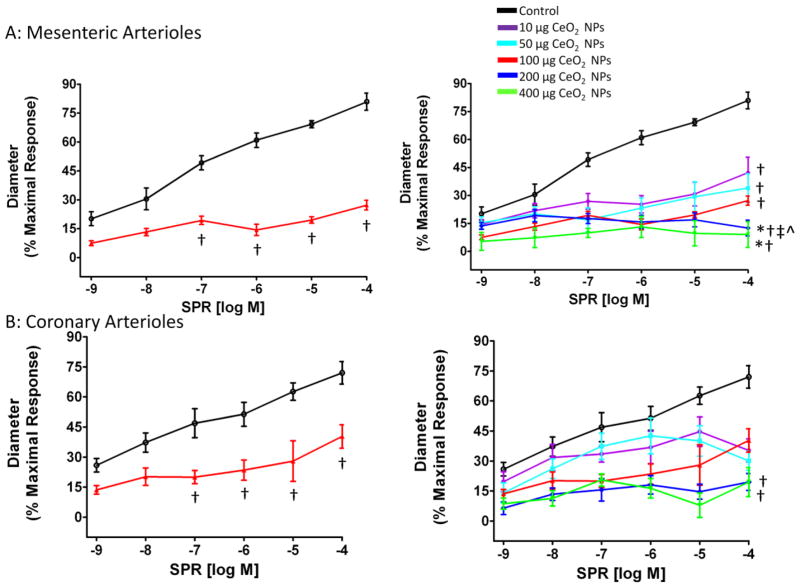
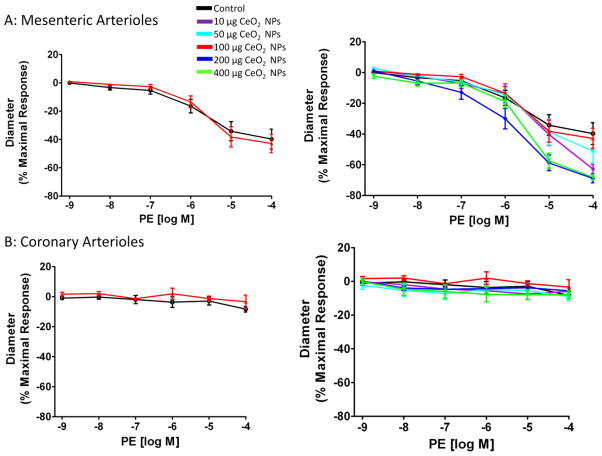
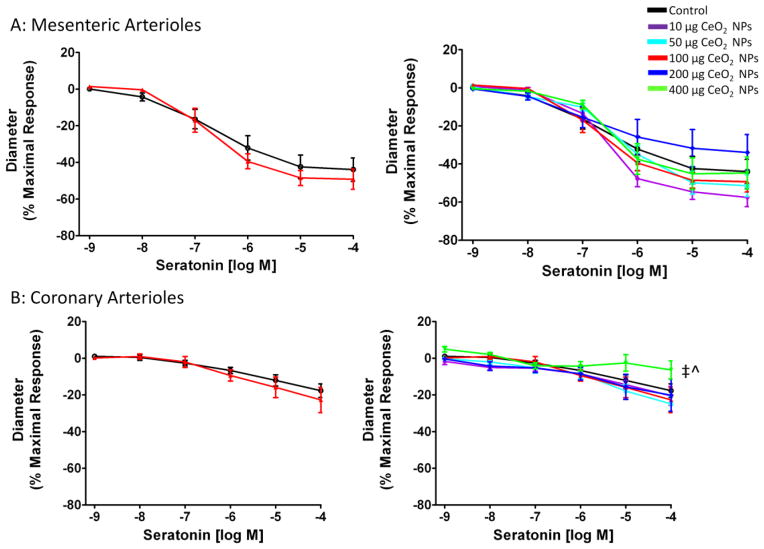
Cerium dioxide nanoparticles (CeO2 NPs) are an engineered nanomaterial (ENM) that possesses unique catalytic, oxidative, and reductive properties. Currently, CeO2 NPs are being used as a fuel catalyst but these properties are also utilized in the development of potential drug treatments for radiation and stroke protection. These uses of CeO2 NPs present a risk for human exposure; however, to date, no studies have investigated the effects of CeO2 NPs on the microcirculation following pulmonary exposure. Previous studies in our laboratory with other nanomaterials have shown impairments in normal microvascular function after pulmonary exposures. Therefore, we predicted that CeO2 NP exposure would cause microvascular dysfunction that is dependent on the tissue bed and dose. Twenty-four-hour post-exposure to CeO2 NPs (0-400 μg), mesenteric, and coronary arterioles was isolated and microvascular function was assessed. Our results provided evidence that pulmonary CeO2 NP exposure impairs endothelium-dependent and endothelium-independent arteriolar dilation in a dose-dependent manner. The CeO2 NP exposure dose which causes a 50 % impairment in arteriolar function (EC50) was calculated and ranged from 15 to 100 μg depending on the chemical agonist and microvascular bed. Microvascular assessments with acetylcholine revealed a 33-75 % reduction in function following exposure. Additionally, there was a greater sensitivity to CeO2 NP exposure in the mesenteric microvasculature due to the 40 % decrease in the calculated EC50 compared to the coronary microvasculature EC50. CeO2 NP exposure increased mean arterial pressure in some groups. Taken together, these observed microvascular changes may likely have detrimental effects on local blood flow regulation and contribute to cardiovascular dysfunction associated with particle exposure.
氧化铈纳米颗粒(CeO2 NPs)是一种工程纳米材料(ENM),具有独特的催化、氧化和还原特性。目前,CeO2 NPs 被用作燃料催化剂,但这些特性也被用于开发辐射和中风保护的潜在药物治疗。这些 CeO2 NPs 的用途给人类暴露带来了风险;然而,迄今为止,尚无研究调查 CeO2 NPs 对肺暴露后微循环的影响。我们实验室以前对其他纳米材料的研究表明,肺暴露后正常微血管功能受损。因此,我们预测 CeO2 NP 暴露会导致依赖于组织床和剂量的微血管功能障碍。在暴露于 CeO2 NPs(0-400μg)24 小时后,分离出肠系膜和冠状小动脉,并评估微血管功能。我们的研究结果提供了证据,表明肺 CeO2 NP 暴露以剂量依赖的方式损害内皮依赖性和非内皮依赖性小动脉扩张。引起小动脉功能 50%损伤的 CeO2 NP 暴露剂量(EC50)计算得出,范围为 15-100μg,取决于化学激动剂和微血管床。乙酰胆碱的微血管评估显示,暴露后功能降低 33-75%。此外,由于肠系膜微血管 EC50 与冠状微血管 EC50 相比降低了 40%,因此 CeO2 NP 暴露对肠系膜微血管的敏感性更高。CeO2 NP 暴露增加了一些组的平均动脉压。总之,这些观察到的微血管变化可能对局部血流调节产生不利影响,并导致与颗粒暴露相关的心血管功能障碍。