Ecobiomaterial Research Laboratory, School of Biological Sciences, Universiti Sains Malaysia, Penang, 11800, Malaysia.
AMB Express. 2013 May 8;3(1):22. doi: 10.1186/2191-0855-3-22.
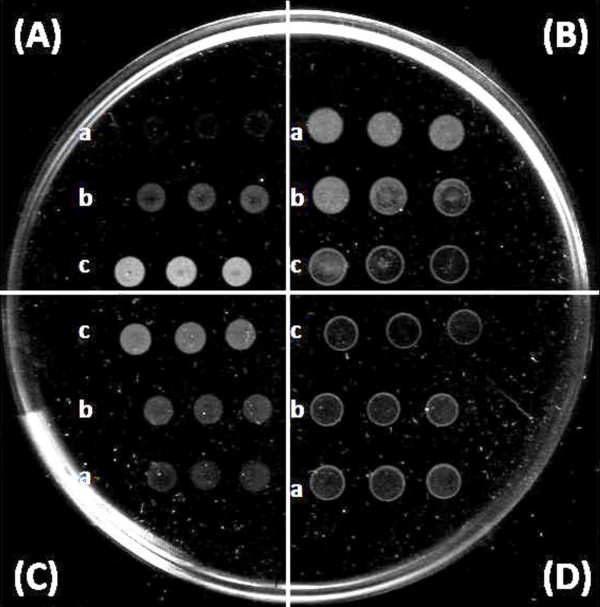
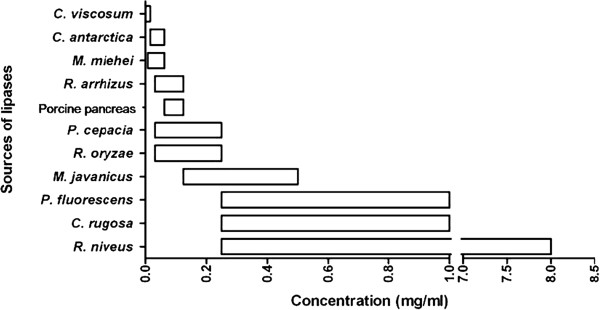
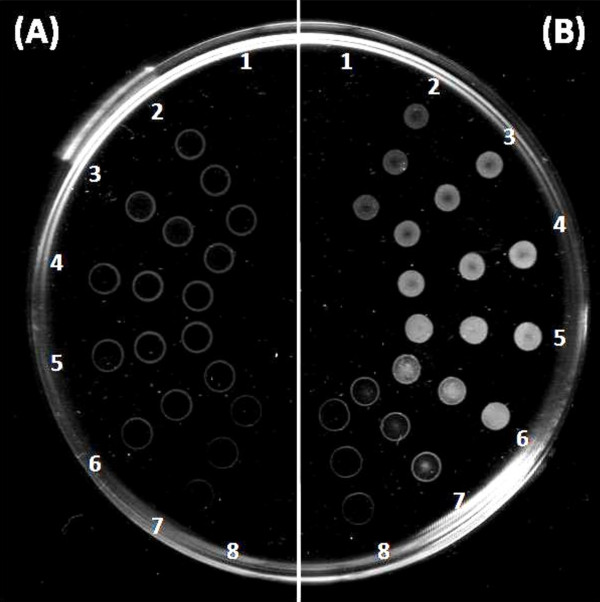
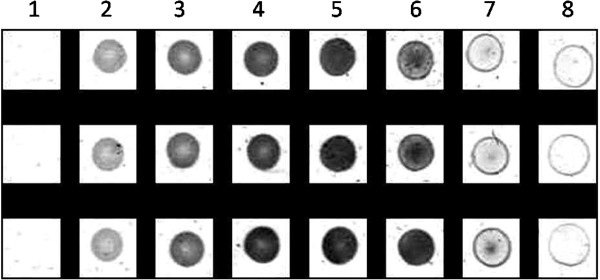
A novel method for the assay of polyhydroxyalkanoate (PHA)-degrading ability of triacylglycerol lipases was developed. By applying the natural affinity of lipases towards hydrophobic interfaces, a sensitive and rapid densitometry analysis for the evaluation of hydrolytic activity of lipase droplets towards PHA-coated surface was successfully carried out. We found that 12 out of 14 tested lipases which are of fungal, bacterial and animal origin were able to hydrolyze P(3HB-co-92 mol% 4HB) thin film. The patterns and opacity of the hydrolysis spots of lipases on PHA films allowed easy comparison of PHA-hydrolytic strength of lipases. Lipase from the bacterium Chromobacterium viscosum exhibited the highest PHA-degrading activity. The hydrolytic activity of lipases on water insoluble PHA, emulsified p-nitrophenyl laurate and olive oil were also compared and interestingly some lipases showed better activity when PHA was used as a substrate.
开发了一种测定三酰基甘油脂肪酶聚羟基烷酸(PHA)降解能力的新方法。通过应用脂肪酶对疏水性界面的天然亲和力,成功地进行了灵敏快速的密度测定分析,以评估脂肪酶液滴对 PHA 涂层表面的水解活性。我们发现,在所测试的 14 种真菌、细菌和动物来源的脂肪酶中,有 12 种能够水解 P(3HB-co-92 mol%4HB)薄膜。脂肪酶在 PHA 薄膜上的水解斑点的形态和不透明度使得易于比较脂肪酶的 PHA 水解强度。来自粘质沙雷氏菌的脂肪酶表现出最高的 PHA 降解活性。还比较了脂肪酶在不溶于水的 PHA、乳化的对硝基苯棕榈酸酯和橄榄油上的水解活性,有趣的是,当 PHA 用作底物时,一些脂肪酶表现出更好的活性。