Department of Plant Pathology and Microbiology, Texas A&M University, College Station, Texas, 77843, USA.
J Integr Plant Biol. 2013 Jul;55(7):586-96. doi: 10.1111/jipb.12064.
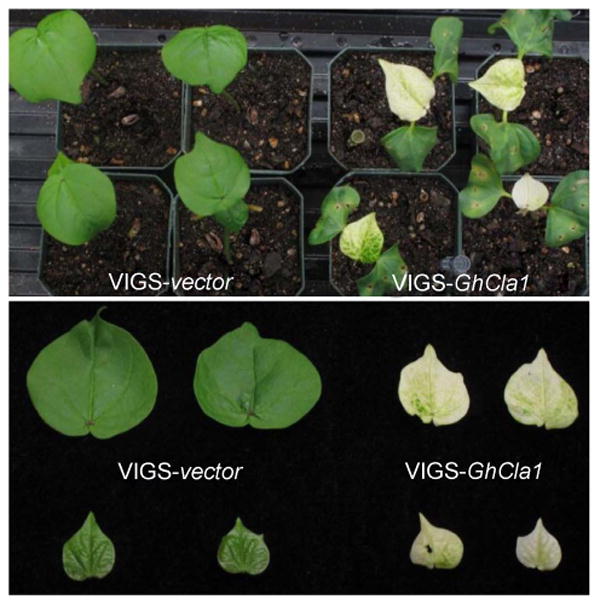
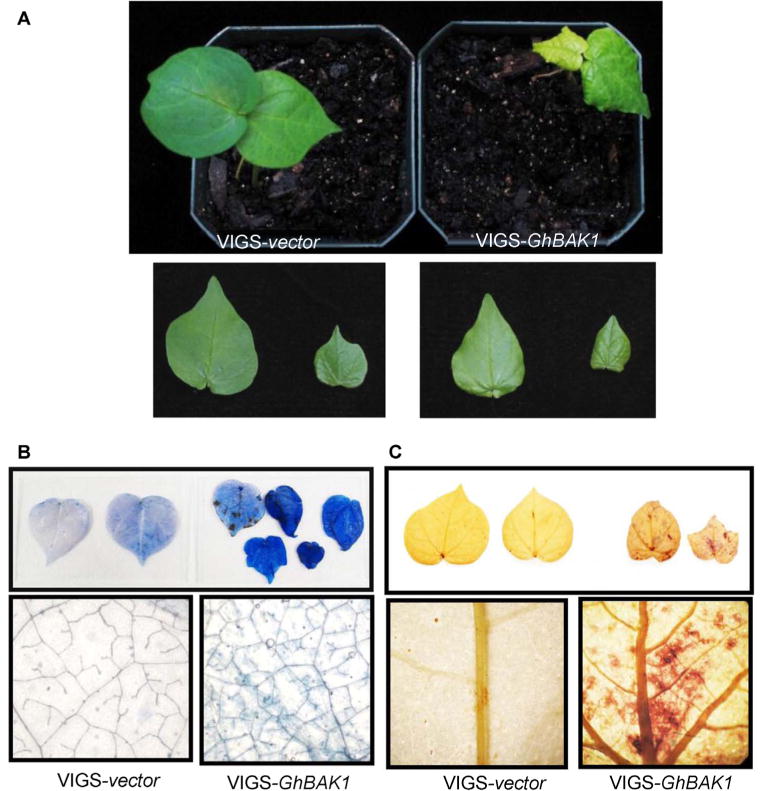
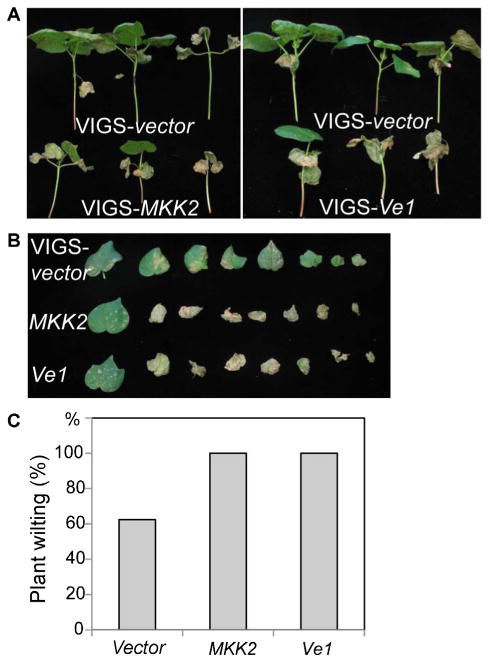
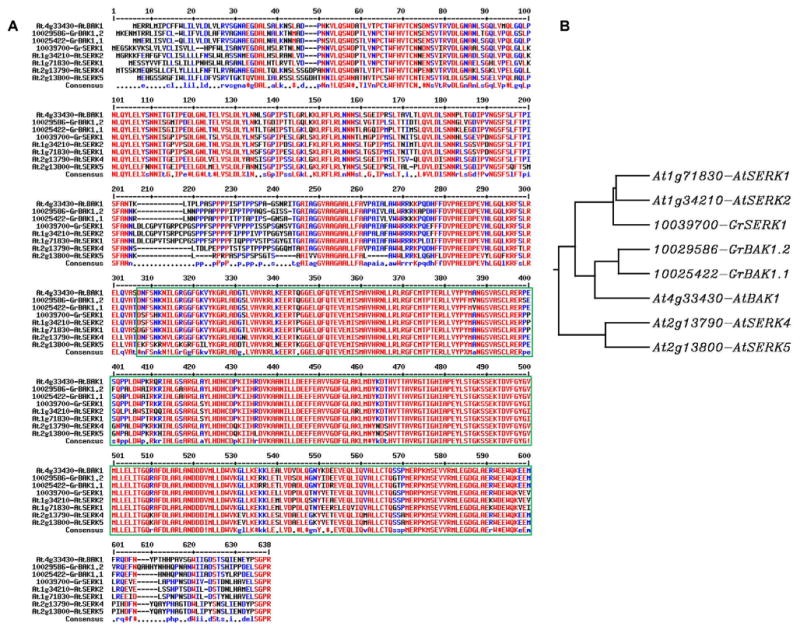
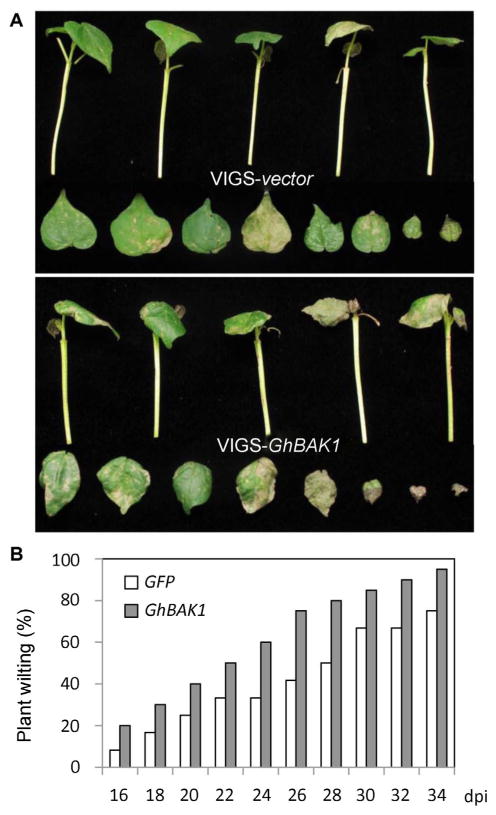
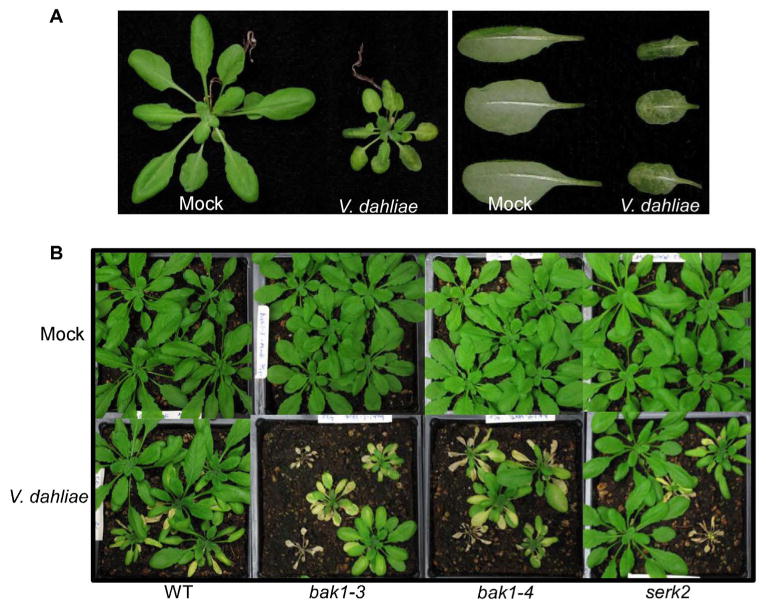
Virus-induced gene silencing (VIGS) offers a powerful approach for functional analysis of individual genes by knocking down their expression. We have adopted this approach to dissect gene functions in cotton resistant to Verticillium wilt, one of the most devastating diseases worldwide. We showed here that highly efficient VIGS was obtained in a cotton breeding line (CA4002) with partial resistance to Verticillium wilt, and GhMKK2 and GhVe1 are required for its resistance to Verticillium wilt. Arabidopsis AtBAK1/SERK3, a central regulator in plant disease resistance, belongs to a subfamily of somatic embryogenesis receptor kinases (SERKs) with five members, AtSERK1 to AtSERK5. Two BAK1 orthologs and one SERK1 ortholog were identified in the cotton genome. Importantly, GhBAK1 is required for CA4002 resistance to Verticillium wilt. Surprisingly, silencing of GhBAK1 is sufficient to trigger cell death accompanied with production of reactive oxygen species in cotton. This result is distinct from Arabidopsis in which AtBAK1 and AtSERK4 play redundant functions in cell death control. Apparently, cotton has only evolved SERK1 and BAK1 whereas AtSERK4/5 are newly evolved genes in Arabidopsis. Our studies indicate the functional importance of BAK1 in Verticillium wilt resistance and suggest the dynamic evolution of SERK family members in different plant species.
病毒诱导的基因沉默 (VIGS) 通过敲低基因表达提供了一种强大的方法来分析单个基因的功能。我们采用这种方法来剖析对黄萎病具有部分抗性的棉花中的基因功能,黄萎病是世界范围内最具破坏性的疾病之一。我们在这里表明,在具有黄萎病部分抗性的棉花育种系 (CA4002) 中获得了高效的 VIGS,并且 GhMKK2 和 GhVe1 是其对黄萎病抗性所必需的。拟南芥 AtBAK1/SERK3 是植物抗病反应中的一个中央调控因子,属于体细胞胚胎发生受体激酶 (SERKs) 的一个亚家族,有五个成员,分别是 AtSERK1 到 AtSERK5。在棉花基因组中鉴定出两个 BAK1 同源物和一个 SERK1 同源物。重要的是,GhBAK1 是 CA4002 对黄萎病抗性所必需的。令人惊讶的是,沉默 GhBAK1 足以在棉花中引发细胞死亡,并伴随着活性氧的产生。这一结果与拟南芥不同,其中 AtBAK1 和 AtSERK4 在细胞死亡调控中发挥冗余功能。显然,棉花只进化出了 SERK1 和 BAK1,而 AtSERK4/5 是拟南芥中新进化的基因。我们的研究表明 BAK1 在黄萎病抗性中的功能重要性,并表明 SERK 家族成员在不同植物物种中的动态进化。