Xu Lian, Zhang Wenwen, He Xin, Liu Min, Zhang Kun, Shaban Muhammad, Sun Longqing, Zhu Jiachen, Luo Yijing, Yuan Daojun, Zhang Xianlong, Zhu Longfu
National Key Laboratory of Crop Genetic Improvement, Huazhong Agricultural University, Wuhan, Hubei 430070, P. R. China.
National Key Laboratory of Crop Genetic Improvement, Huazhong Agricultural University, Wuhan, Hubei 430070, P. R. China
J Exp Bot. 2014 Dec;65(22):6679-92. doi: 10.1093/jxb/eru393. Epub 2014 Oct 17.
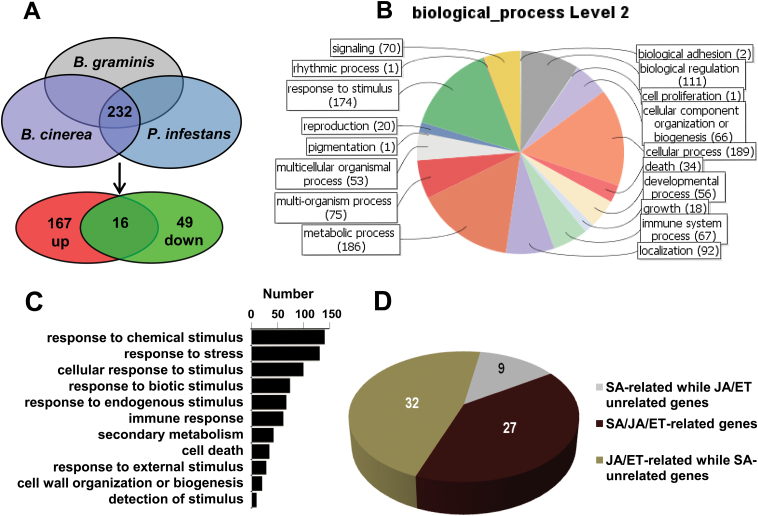
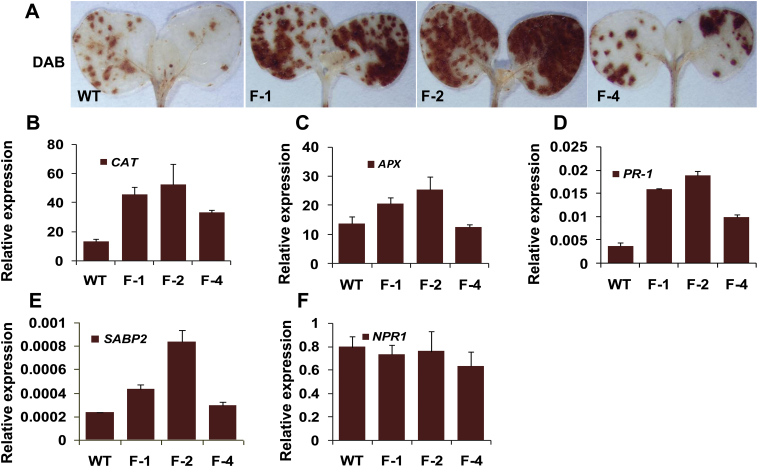
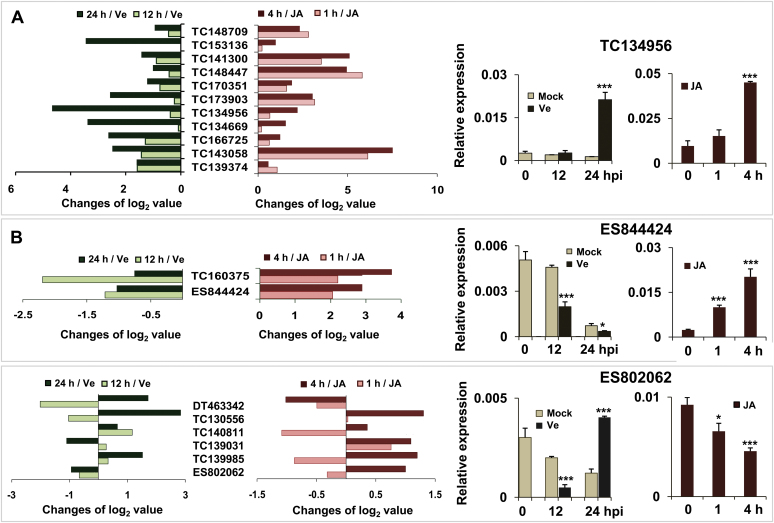
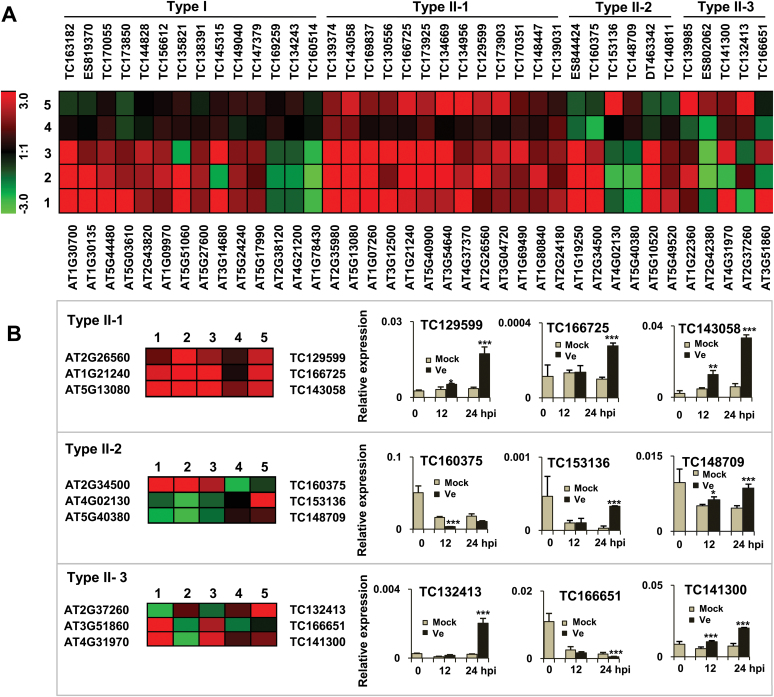
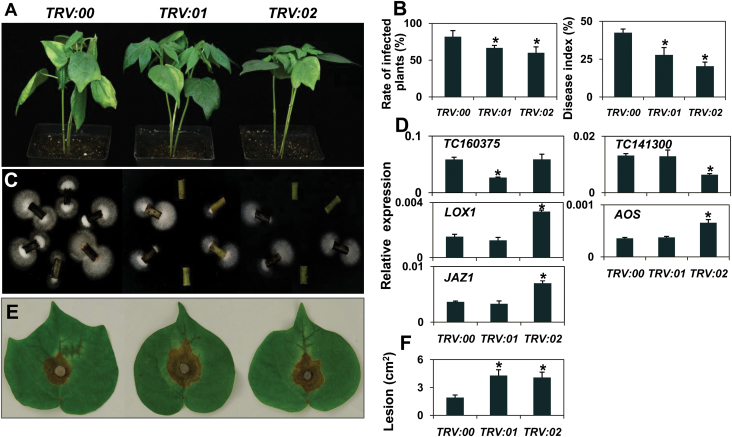
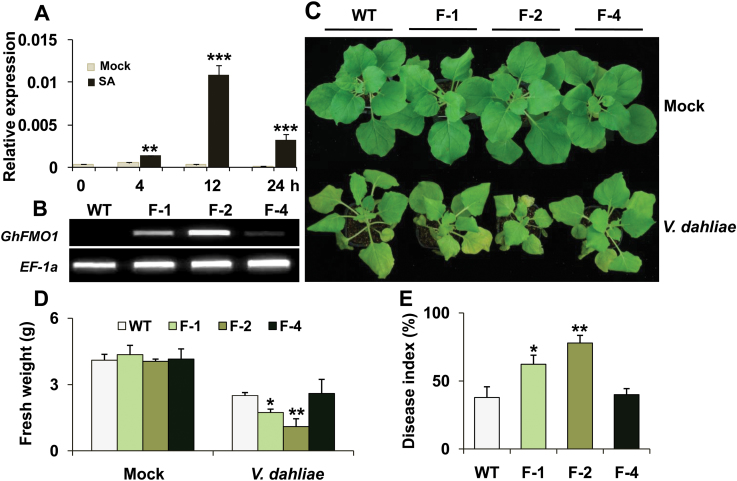
Verticillium wilt causes dramatic cotton yield loss in China. Although some genes or biological processes involved in the interaction between cotton and Verticillium dahliae have been identified, the molecular mechanism of cotton resistance to this disease is still poorly understood. The basic innate immune response for defence is somewhat conserved among plant species to defend themselves in complex environments, which makes it possible to characterize genes involved in cotton immunity based on information from model plants. With the availability of Arabidopsis databases, a data-mining strategy accompanied by virus-induced gene silencing (VIGS) and heterologous expression were adopted in cotton and tobacco, respectively, for global screening and gene function characterization. A total of 232 Arabidopsis genes putatively involved in basic innate immunity were screened as candidate genes, and bioinformatic analysis suggested a role of these genes in the immune response. In total, 38 homologous genes from cotton were singled out to characterize their response to V. dahliae and methyl jasmonate treatment through quantitative real-time PCR. The results revealed that 24 genes were differentially regulated by pathogen inoculation, and most of these genes responded to both Verticillium infection and jasmonic acid stimuli. Furthermore, the efficiency of the strategy was illustrated by the functional identification of six candidate genes via heterologous expression in tobacco or a knock-down approach using VIGS in cotton. Functional categorization of these 24 differentially expressed genes as well as functional analysis suggest that reactive oxygen species, salicylic acid- and jasmonic acid-signalling pathways are involved in the cotton disease resistance response to V. dahliae. Our data demonstrate how information from model plants can allow the rapid translation of information into non-model species without complete genome sequencing, via high-throughput screening and functional identification of target genes based on data-mining and VIGS.
黄萎病在中国导致棉花产量大幅损失。尽管已经鉴定出一些参与棉花与大丽轮枝菌相互作用的基因或生物学过程,但棉花对这种病害的抗性分子机制仍知之甚少。植物物种之间在复杂环境中自我防御的基本天然免疫反应在一定程度上是保守的,这使得基于模式植物的信息来鉴定参与棉花免疫的基因成为可能。随着拟南芥数据库的可得性,分别在棉花和烟草中采用了伴随病毒诱导基因沉默(VIGS)的数据挖掘策略和异源表达,用于全局筛选和基因功能表征。总共筛选了232个推测参与基本天然免疫的拟南芥基因作为候选基因,生物信息学分析表明这些基因在免疫反应中发挥作用。总共从棉花中挑选出38个同源基因,通过定量实时PCR来表征它们对大丽轮枝菌和茉莉酸甲酯处理的反应。结果显示,24个基因受到病原体接种的差异调节,其中大多数基因对大丽轮枝菌感染和茉莉酸刺激都有反应。此外,通过在烟草中的异源表达或在棉花中使用VIGS的敲低方法对六个候选基因进行功能鉴定,说明了该策略的有效性。对这24个差异表达基因的功能分类以及功能分析表明,活性氧、水杨酸和茉莉酸信号通路参与了棉花对大丽轮枝菌的抗病反应。我们的数据表明,通过基于数据挖掘和VIGS的高通量筛选和目标基因功能鉴定,模式植物的信息如何能够在没有完整基因组测序的情况下快速转化为非模式物种的信息。