Center for Public Health Nutrition, School of Public Health, University of Washington, Seattle, Washington, United States of America.
PLoS One. 2013 May 15;8(5):e63277. doi: 10.1371/journal.pone.0063277. Print 2013.
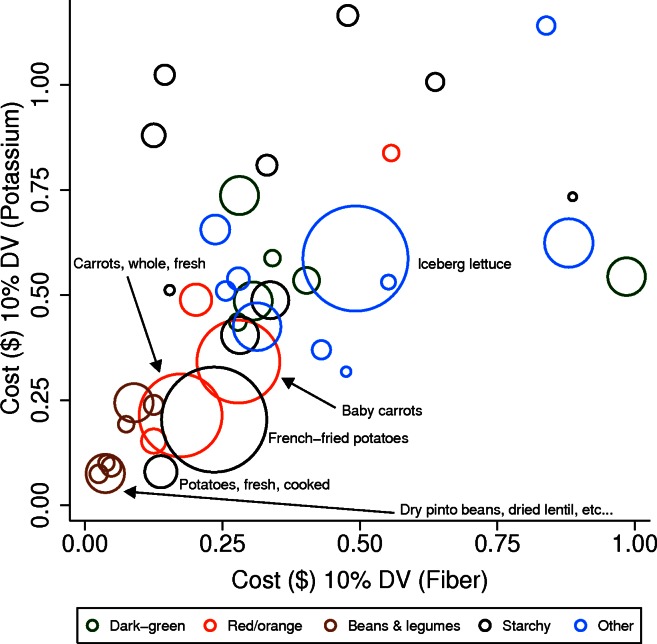
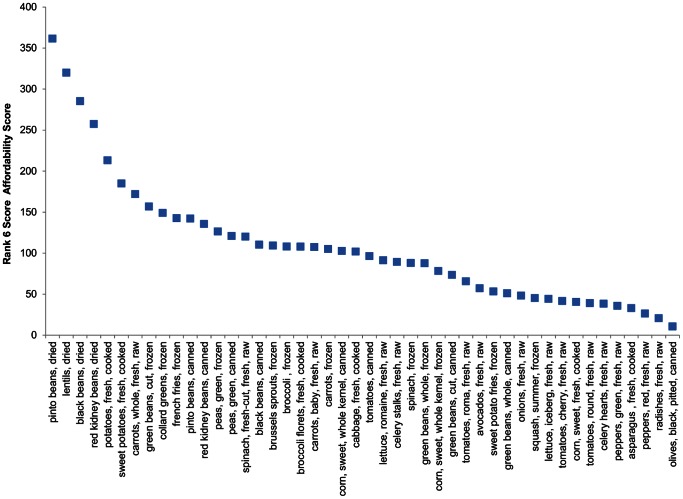
Vegetables are important sources of dietary fiber, vitamins and minerals in the diets of children. The United States Department of Agriculture (USDA) National School Lunch Program has new requirements for weekly servings of vegetable subgroups as well as beans and peas. This study estimated the cost impact of meeting the USDA requirements using 2008 national prices for 98 vegetables, fresh, frozen, and canned. Food costs were calculated per 100 grams, per 100 calories, and per edible cup. Rank 6 score, a nutrient density measure was based on six nutrients: dietary fiber; potassium; magnesium; and vitamins A, C, and K. Individual nutrient costs were measured as the monetary cost of 10% daily value of each nutrient per cup equivalent. ANOVAs with post hoc tests showed that beans and starchy vegetables, including white potatoes, were cheaper per 100 calories than were dark-green and deep-yellow vegetables. Fresh, frozen, and canned vegetables had similar nutrient profiles and provided comparable nutritional value. However, less than half (n = 46) of the 98 vegetables listed by the USDA were were consumed >5 times by children and adolescents in the 2003-4 National Health and Nutrition Examination Survey database. For the more frequently consumed vegetables, potatoes and beans were the lowest-cost sources of potassium and fiber. These new metrics of affordable nutrition can help food service and health professionals identify those vegetable subgroups in the school lunch that provide the best nutritional value per penny.
蔬菜是儿童饮食中膳食纤维、维生素和矿物质的重要来源。美国农业部(USDA)国家学校午餐计划对蔬菜亚组、豆类和豌豆的每周供应量有了新的要求。本研究使用 2008 年全国价格,对 98 种新鲜、冷冻和罐装蔬菜进行了成本评估,以估算满足 USDA 要求的成本影响。食品成本按每 100 克、每 100 卡路里和每可食杯计算。等级 6 评分是一种营养密度衡量标准,基于六种营养素:膳食纤维;钾;镁;以及维生素 A、C 和 K。单个营养素的成本是通过计算每杯相当于 10%日常价值的每种营养素的货币成本来衡量的。具有事后检验的方差分析显示,与深绿色和深黄色蔬菜相比,豆类和淀粉类蔬菜(包括白土豆)每 100 卡路里的价格更便宜。新鲜、冷冻和罐装蔬菜具有相似的营养成分,提供相当的营养价值。然而,在 2003-4 年全国健康和营养调查数据库中,只有不到一半(n=46)的 98 种 USDA 列出的蔬菜被儿童和青少年消费超过 5 次。对于更常食用的蔬菜,土豆和豆类是钾和纤维的最低成本来源。这些负担得起的营养新指标可以帮助餐饮服务和健康专业人员确定学校午餐中提供最佳每分钱营养价值的蔬菜亚组。