Centro de Química Estrutural, Instituto Superior Técnico, Universidade Técnica de Lisboa, 1049-001 Lisboa, Portugal.
Molecules. 2013 May 8;18(5):5251-64. doi: 10.3390/molecules18055251.
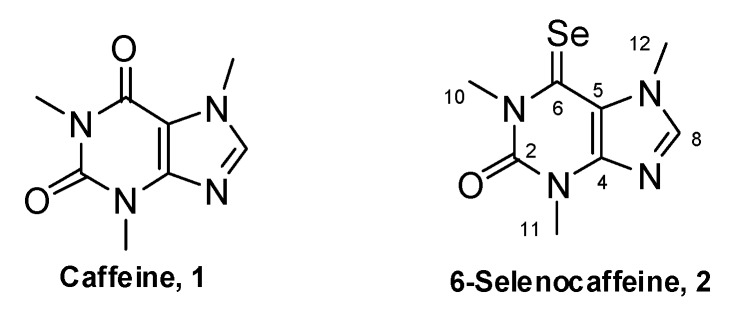
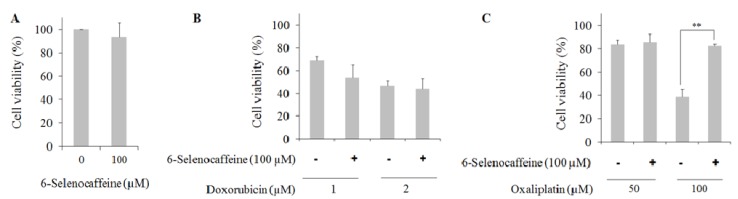
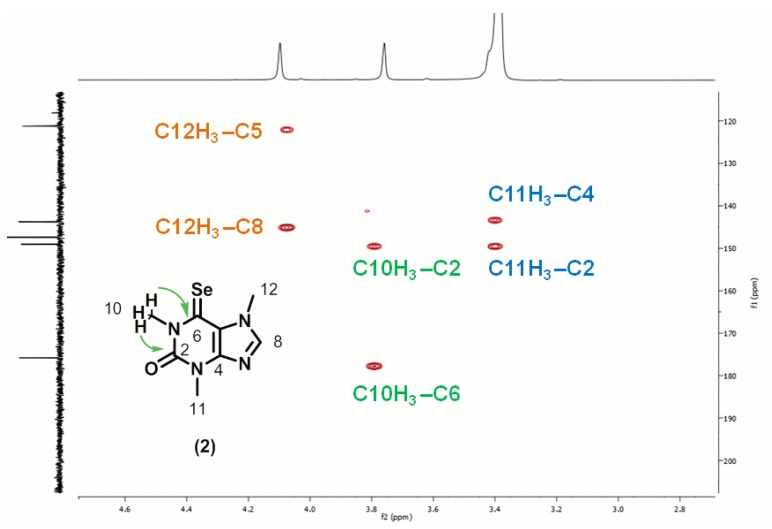
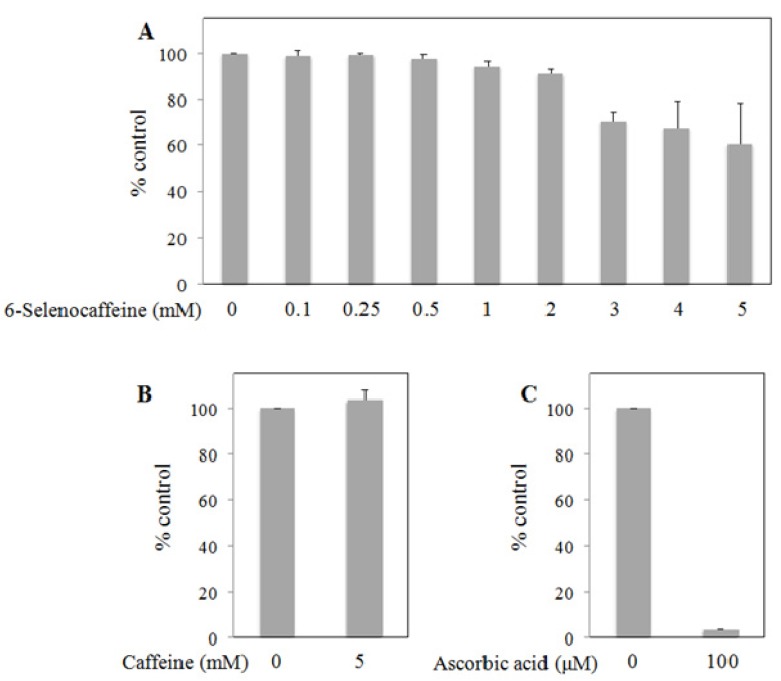
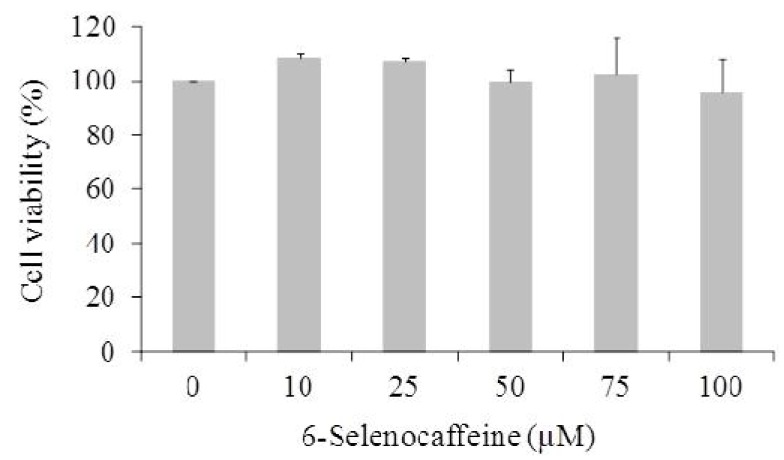
We report the development of a new microwave-based synthetic methodology mediated by Woollins' reagent that allowed an efficient conversion of caffeine into 6-selenocaffeine. A preliminary evaluation on the modulation of antioxidant activity upon selenation of caffeine, using the DPPH assay, indicated a mild antioxidant activity for 6-selenocaffeine, contrasting with caffeine, that exhibited no antioxidant activity under the same experimental conditions. Interestingly, whereas 6-selenocaffeine has revealed to have a low cytotoxic potential in both MCF10A and MCF-7 breast cells (24 h, up to 100 µM, MTT assay), a differential effect was observed when used in combination with the anticancer agents doxorubicin and oxaliplatin in MCF-7 breast cancer cells. The co-treatment of doxorubicin (1 µM) and 6-selenocaffeine (100 µM) resulted in a slight decrease in cellular viability when compared to doxorubicin (1 µM) alone. Conversely, the seleno-caffeine derivative at the same concentration markedly increased the viability of oxaliplatin (100 µM)-treated cells (p < 0.01). Overall, this work highlights an emerging methodology to synthesize organoselenium compounds and points out the differential roles of 6-selenocaffeine in the modulation of the cytotoxicity of anticancer agents.
我们报告了一种新的微波合成方法的发展,该方法由 Woollins 试剂介导,可以有效地将咖啡因转化为 6-硒代咖啡因。使用 DPPH 测定法对咖啡因硒化后抗氧化活性的初步评估表明,6-硒代咖啡因具有温和的抗氧化活性,与在相同实验条件下没有抗氧化活性的咖啡因形成对比。有趣的是,尽管 6-硒代咖啡因在 MCF10A 和 MCF-7 乳腺细胞中表现出低细胞毒性潜力(24 小时,高达 100 µM,MTT 测定法),但当与抗癌药物阿霉素和奥沙利铂联合使用时,在 MCF-7 乳腺癌细胞中观察到不同的作用。与单独使用阿霉素(1 µM)相比,当与 6-硒代咖啡因(100 µM)共同处理时,细胞活力略有下降。相反,在相同浓度下,该硒代咖啡因衍生物显着增加了奥沙利铂(100 µM)处理细胞的活力(p < 0.01)。总的来说,这项工作强调了一种新兴的合成有机硒化合物的方法,并指出了 6-硒代咖啡因在调节抗癌药物细胞毒性方面的不同作用。