UCT/MRC Research Unit for Exercise Science and Sports Medicine, Department of Human Biology, University of Cape Town, 3rd Floor, SSISA, Boundary Rd, Newlands, Cape Town 7700, South Africa.
Nutrients. 2013 May 21;5(5):1672-705. doi: 10.3390/nu5051672.
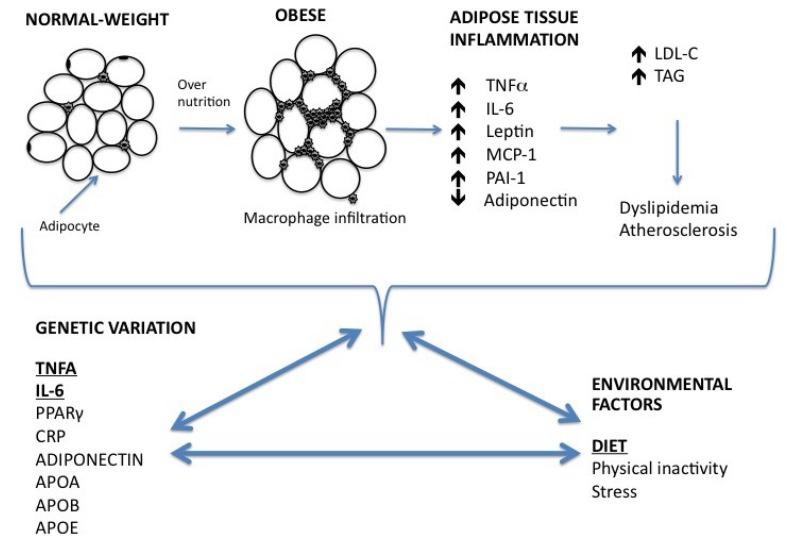
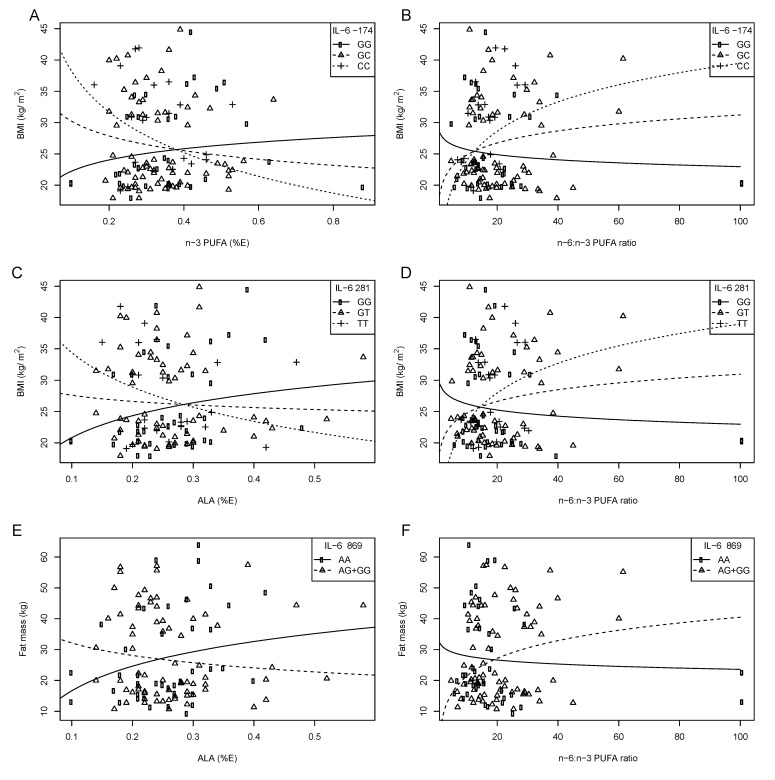
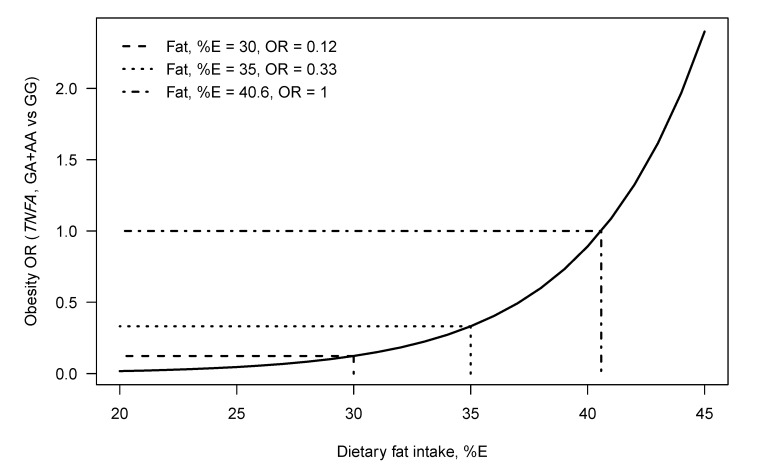
Obesity, a chronic low-grade inflammatory condition is associated with the development of many comorbidities including dyslipidemia. This review examines interactions between single nucleotide polymorphisms (SNP) in the inflammatory genes tumor necrosis alpha (TNFA) and interleukin-6 (IL-6) and dietary fatty acids, and their relationship with obesity and serum lipid levels. In summary, dietary fatty acids, in particular saturated fatty acids and the omega-3 and omega-6 polyunsaturated fatty acids, impact the expression of the cytokine genes TNFA and IL-6, and alter TNFα and IL-6 production. In addition, sequence variants in these genes have also been shown to alter their gene expression and plasma levels, and are associated with obesity, measures of adiposity and serum lipid concentrations. When interactions between dietary fatty acids and TNFA and IL-6 SNPs on obesity and serum lipid were analyzed, both the quantity and quality of dietary fatty acids modulated the relationship between TNFA and IL-6 SNPs on obesity and serum lipid profiles, thereby impacting the association between phenotype and genotype. Researching these diet-gene interactions more extensively, and understanding the role of ethnicity as a confounder in these relationships, may contribute to a better understanding of the inter-individual variability in the obese phenotype.
肥胖是一种慢性低度炎症状态,与许多合并症的发展有关,包括血脂异常。本综述研究了炎症基因肿瘤坏死因子-α(TNFA)和白细胞介素-6(IL-6)中的单核苷酸多态性(SNP)与膳食脂肪酸之间的相互作用,及其与肥胖和血清脂质水平的关系。总之,膳食脂肪酸,特别是饱和脂肪酸和ω-3 和 ω-6 多不饱和脂肪酸,会影响细胞因子基因 TNFA 和 IL-6 的表达,并改变 TNFα 和 IL-6 的产生。此外,这些基因中的序列变异也已被证明会改变它们的基因表达和血浆水平,并与肥胖、肥胖指标和血清脂质浓度有关。当分析膳食脂肪酸与 TNFA 和 IL-6 SNP 对肥胖和血清脂质的相互作用时,膳食脂肪酸的数量和质量都调节了 TNFA 和 IL-6 SNP 对肥胖和血清脂质谱的关系,从而影响了表型与基因型之间的关联。更广泛地研究这些饮食-基因相互作用,并了解种族作为这些关系中的混杂因素的作用,可能有助于更好地理解肥胖表型的个体间变异性。