Section for Plant and Soil Science, Department of Plant and Environmental Sciences, Faculty of Science, University of Copenhagen Frederiksberg, Denmark.
Front Plant Sci. 2013 May 16;4:127. doi: 10.3389/fpls.2013.00127. eCollection 2013.
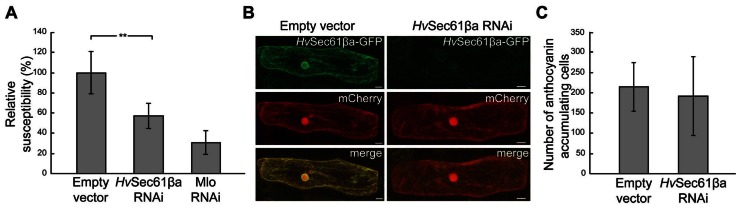
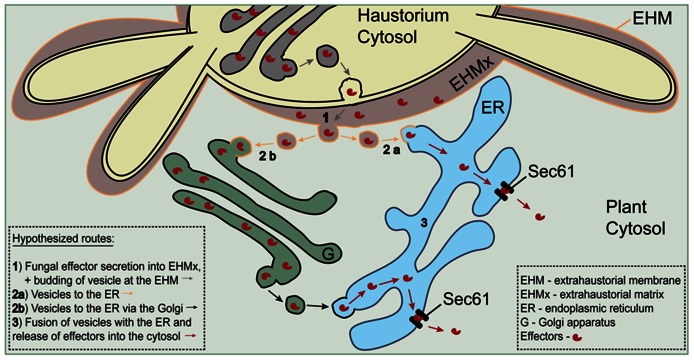
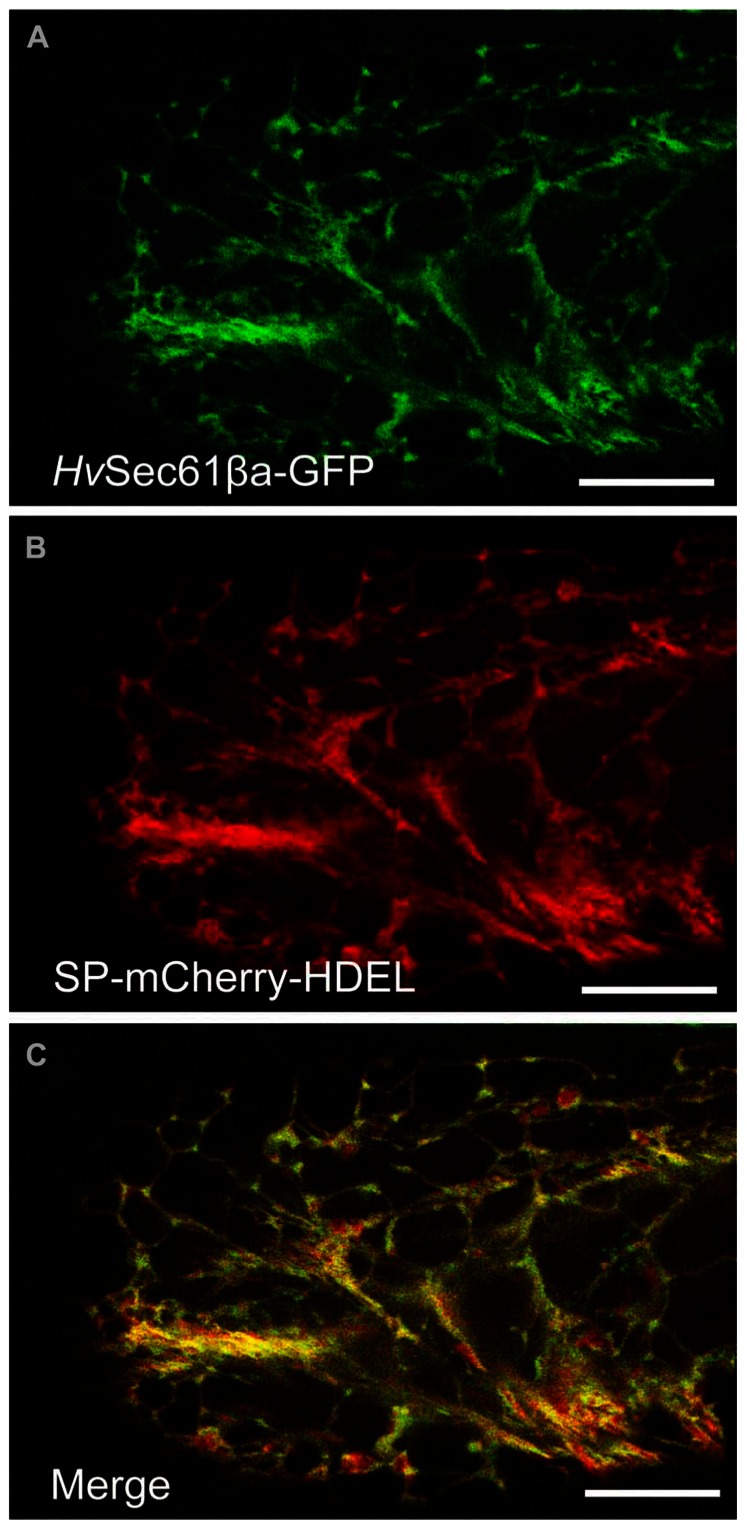
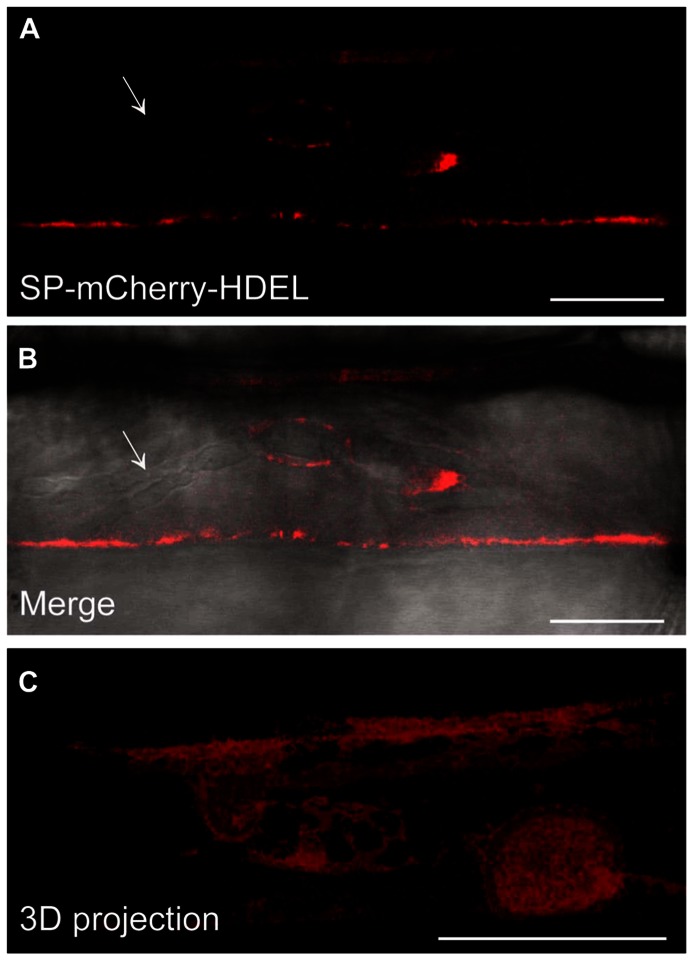
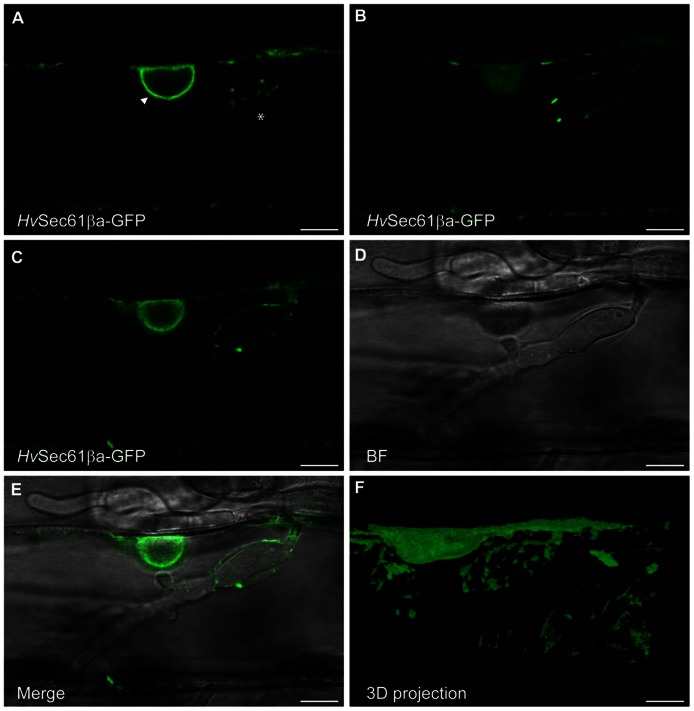
Biotrophic pathogens, like the powdery mildew fungi, require living plant cells for their growth and reproduction. During infection, a specialized structure called the haustorium is formed by the fungus. The haustorium is surrounded by a plant cell-derived extrahaustorial membrane (EHM). Over the EHM, the fungus obtains nutrients from and secretes effector proteins into the plant cell. In the plant cell these effectors interfere with cellular processes such as pathogen defense and membrane trafficking. However, the mechanisms behind effector delivery are largely unknown. This paper provides a model for and new insights into a putative transfer mechanism of effectors into the plant cell. We show that silencing of the barley Sec61βa transcript results in decreased susceptibility to the powdery mildew fungus. HvSec61βa is a component of both the endoplasmic reticulum (ER) translocon and retrotranslocon pores, the latter being part of the ER-associated protein degradation machinery. We provide support for a model suggesting that the retrotranslocon function of HvSec61βa is required for successful powdery mildew fungal infection. HvSec61βa-GFP and a luminal ER marker were co-localized to the ER, which was found to be in close proximity to the EHM around the haustorial body, but not the haustorial fingers. This differential EHM proximity suggests that the ER, including HvSec61βa, may be actively recruited by the haustorium, potentially to provide efficient effector transfer to the cytosol. Effector transport across this EHM-ER interface may occur by a vesicle-mediated process, while the Sec61 retrotranslocon pore potentially provides an escape route for these proteins to reach the cytosol.
生物营养型病原体,如白粉菌,需要活的植物细胞来生长和繁殖。在感染过程中,真菌会形成一种叫做吸器的特殊结构。吸器被植物细胞衍生的额外细胞外膜(EHM)包围。在 EHM 上,真菌从植物细胞中获取营养物质,并将效应蛋白分泌到植物细胞中。在植物细胞中,这些效应子会干扰细胞过程,如病原体防御和膜运输。然而,效应子输送的机制在很大程度上是未知的。本文提供了一个模型,并为效应子进入植物细胞的一种假设转移机制提供了新的见解。我们表明,大麦 Sec61βa 转录本的沉默导致对白粉菌的敏感性降低。HvSec61βa 是内质网(ER)转位体和反位体孔的组成部分,后者是 ER 相关蛋白降解机制的一部分。我们为一个模型提供了支持,该模型表明 HvSec61βa 的反位体功能对于成功的白粉菌真菌感染是必需的。HvSec61βa-GFP 和一个腔内 ER 标记物被共定位到 ER 上,ER 被发现与吸器体周围的 EHM 非常接近,但与吸器指不接近。这种不同的 EHM 接近度表明,ER,包括 HvSec61βa,可能被吸器主动招募,可能是为了有效地将效应子转移到细胞质中。这些蛋白质可能通过囊泡介导的过程穿过这个 EHM-ER 界面进行运输,而 Sec61 反位体孔则可能为这些蛋白质到达细胞质提供了一条逃逸途径。