Department of Experimental Psychology, University of Oxford, Oxford, OX1 4AU, UK.
Child Psychiatry Hum Dev. 2013 Oct;44(5):602-11. doi: 10.1007/s10578-013-0386-6.
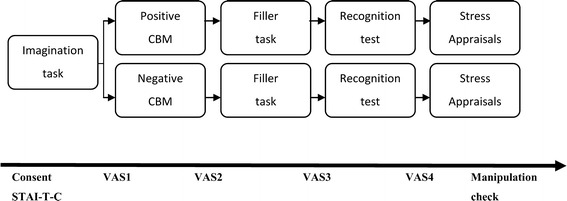
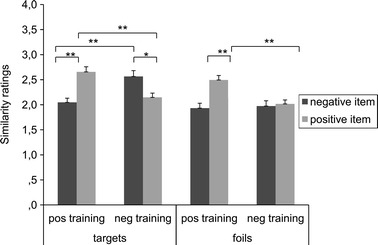
Adolescent anxiety is common, impairing and costly. Given the scale of adolescent anxiety and its impact, fresh innovations for therapy are in demand. Cognitive Bias Modification of Interpretations (CBM-I) studies of adults show that by training individuals to endorse benign interpretations of ambiguous situations can improve anxious mood-states particularly in response towards stress. While, these investigations have been partially extended to adolescents with success, inconsistent training effects on anxious mood-states have been found. The present study investigated whether positive versus negative CBM-I training influenced appraisals of stress, in forty-nine adolescents, aged 15-18. Data supported the plasticity of interpretational styles, with positively-trained adolescents selecting more benign resolutions of new ambiguous situations, than negatively-trained adolescents. Positively-trained adolescents also rated recent stressors as having less impact on their lives than negatively-trained adolescents. Thus, while negative styles may increase negative responses towards stress, positive styles may boost resilience.
青少年焦虑症较为常见,不仅会损害身心健康,还会带来沉重的经济负担。鉴于青少年焦虑症的严重程度及其影响,我们急需创新疗法。对成年人进行认知偏差修正(CBM-I)的研究表明,通过训练个体对模棱两可的情况做出良性解释,可以改善焦虑情绪,尤其是在应对压力时。虽然这些研究已经部分扩展到青少年群体并取得了一定成功,但在焦虑情绪状态方面的训练效果并不一致。本研究旨在探讨在 49 名 15-18 岁青少年中,进行积极和消极的 CBM-I 训练是否会影响他们对压力的评估。研究结果支持了解释风格的可塑型,与接受消极训练的青少年相比,接受积极训练的青少年在面对新的模棱两可的情况时,会选择更良性的解决方案。积极训练的青少年还认为最近的压力源对他们的生活影响较小,而消极训练的青少年则认为影响较大。因此,虽然消极的解释风格可能会增加对压力的负面反应,但积极的解释风格可能会增强韧性。