Scienze Radiologiche, Padiglione Barbieri, Azienda Ospealiero-Universitaria di Parma, V, Gramsci 14, 43100 Parma, Italy.
Respir Res. 2013;14 Suppl 1(Suppl 1):S3. doi: 10.1186/1465-9921-14-S1-S3. Epub 2013 Apr 16.
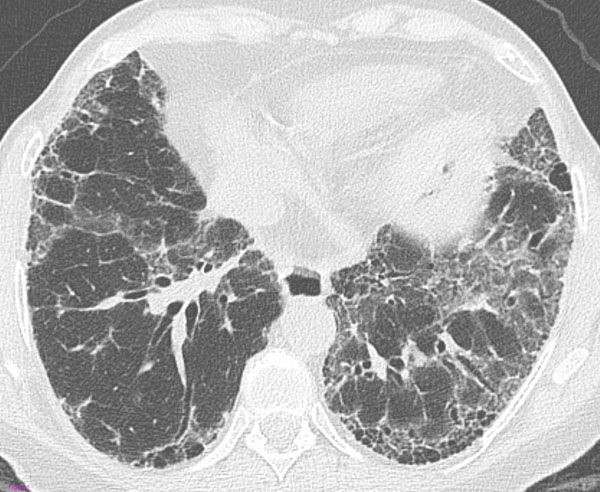
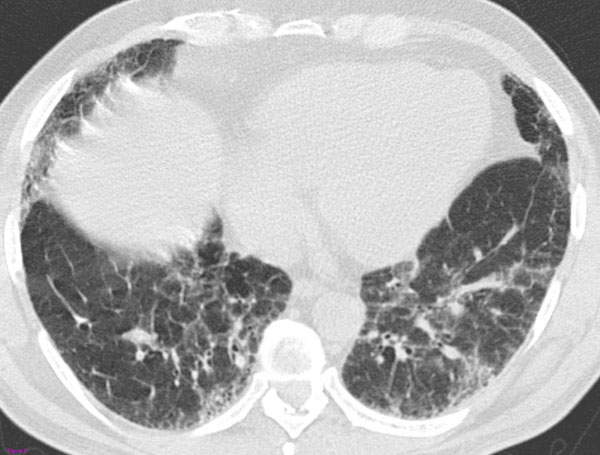
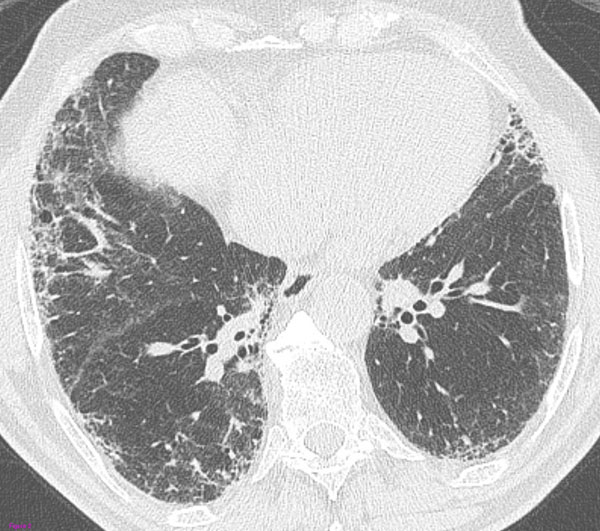
High-resolution computed tomography (HRCT) imaging has a central role in the diagnosis of interstitial lung diseases, particularly in the evaluation of patients with suspected idiopathic pulmonary fibrosis (IPF). In approximately half of cases, HRCT scans are sufficient to allow a confident IPF diagnosis. Advances in HRCT scanning and interpretation have facilitated improved accuracy for use in diagnosing IPF, eliminating the need for a surgical biopsy in many patients. HRCT may also have a role to play in predicting the prognosis of the disease;. The role of routine follow-up with HRCT to monitor patients with IPF remains unclear due to lack of sufficient evidence, although, sometimes follow-up HRCT might be necessary to rule out progressive disease in patients with undetermined diagnosis. Advances in the field of HRCT imaging are discussed, along with insights into the clinical utility of this procedure in the diagnosis and management of IPF.
高分辨率计算机断层扫描(HRCT)成像在间质性肺疾病的诊断中具有核心作用,特别是在疑似特发性肺纤维化(IPF)患者的评估中。大约一半的情况下,HRCT 扫描足以做出明确的 IPF 诊断。HRCT 扫描和解读的进步提高了诊断 IPF 的准确性,在许多患者中消除了对手术活检的需求。HRCT 也可能在预测疾病预后方面发挥作用;由于缺乏足够的证据,常规 HRCT 随访监测 IPF 患者的作用仍不清楚,尽管有时在诊断不确定的患者中,需要进行后续 HRCT 以排除进行性疾病。本文讨论了 HRCT 成像领域的进展,以及该程序在 IPF 的诊断和管理中的临床应用价值。