Department of Biochemistry and Howard Hughes Medical Institute, Stanford University School of Medicine, Stanford, California, USA.
PLoS One. 2013 May 30;8(5):e64710. doi: 10.1371/journal.pone.0064710. Print 2013.
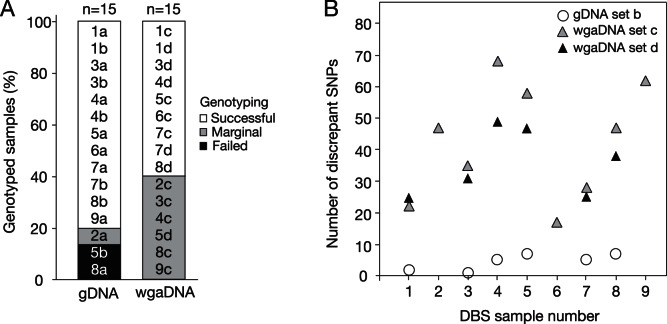
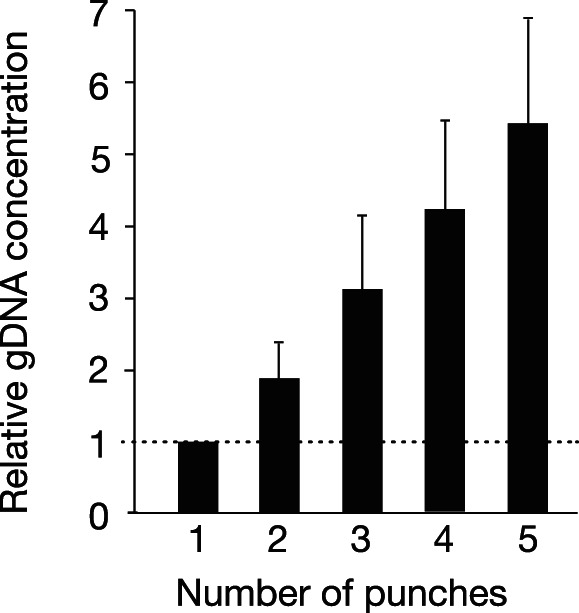
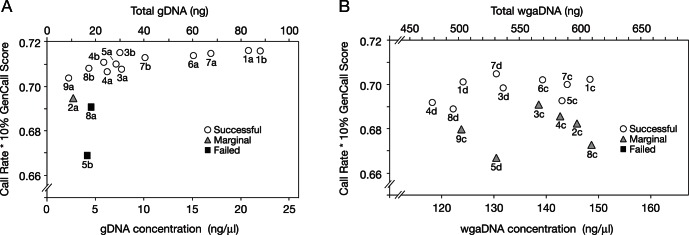
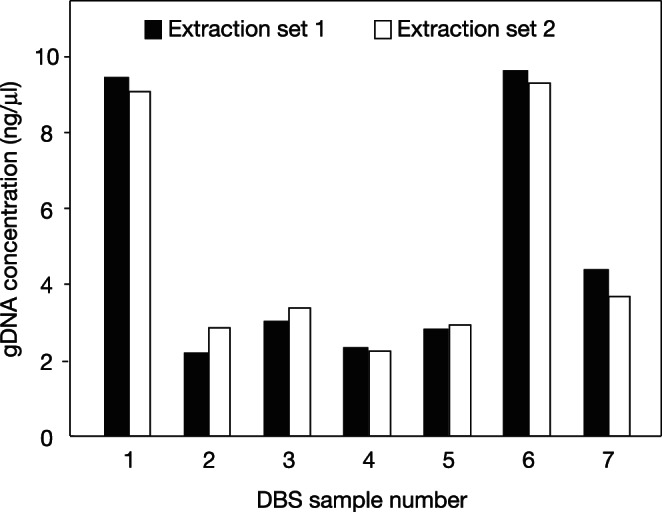
Spots of blood are routinely collected from newborn babies onto filter paper called Guthrie cards and used to screen for metabolic and genetic disorders. The archived dried blood spots are an important and precious resource for genomic research. Whole genome amplification of dried blood spot DNA has been used to provide DNA for genome-wide SNP genotyping. Here we describe a 96 well format procedure to extract DNA from a portion of a dried blood spot that provides sufficient unamplified genomic DNA for genome-wide single nucleotide polymorphism (SNP) genotyping. We show that SNP genotyping of the unamplified DNA is more robust than genotyping amplified dried blood spot DNA, is comparable in cost, and can be done with thousands of samples. This procedure can be used for genome-wide association studies and other large-scale genomic analyses that require robust, high-accuracy genotyping of dried blood spot DNA.
常规情况下,会从新生儿的血液中采集到一种叫做 Guthrie 卡的滤纸条上的血斑,并用于筛选代谢和遗传疾病。这些存档的干血斑是基因组研究的重要且宝贵的资源。已经使用全基因组扩增干燥血斑 DNA 来提供用于全基因组单核苷酸多态性 (SNP) 基因分型的 DNA。在这里,我们描述了一种 96 孔格式的程序,用于从干燥血斑的一部分中提取 DNA,该部分提供了足够的未扩增基因组 DNA 用于全基因组单核苷酸多态性 (SNP) 基因分型。我们表明,未扩增 DNA 的 SNP 基因分型比扩增干燥血斑 DNA 的基因分型更稳健,成本相当,并且可以对数千个样本进行基因分型。该程序可用于全基因组关联研究和其他需要对干燥血斑 DNA 进行稳健、高精度基因分型的大规模基因组分析。