Young Stephen P, Kapoor Sabrina R, Viant Mark R, Byrne Jonathan J, Filer Andrew, Buckley Christopher D, Kitas George D, Raza Karim
University of Birmingham, Birmingham, UK.
Arthritis Rheum. 2013 Aug;65(8):2015-23. doi: 10.1002/art.38021.
Inflammatory arthritis is associated with systemic manifestations including alterations in metabolism. We used nuclear magnetic resonance (NMR) spectroscopy-based metabolomics to assess metabolic fingerprints in serum from patients with established rheumatoid arthritis (RA) and those with early arthritis.
Serum samples were collected from newly presenting patients with established RA who were naive for disease-modifying antirheumatic drugs, matched healthy controls, and 2 groups of patients with synovitis of ≤3 months' duration whose outcomes were determined at clinical followup. Serum metabolomic profiles were assessed using 1-dimensional (1) H-NMR spectroscopy. Discriminating metabolites were identified, and the relationships between metabolomic profiles and clinical variables including outcomes were examined.
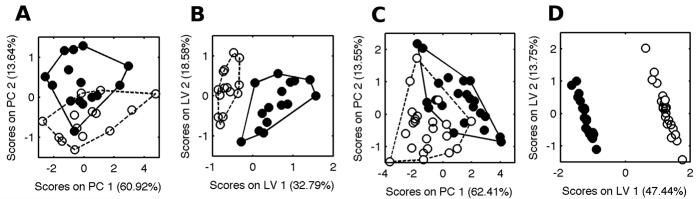
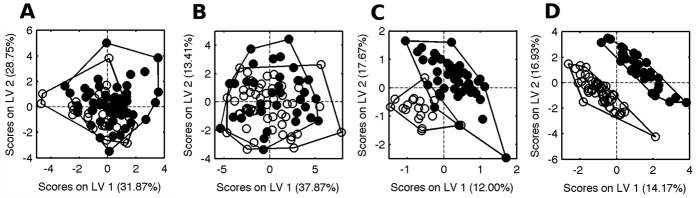
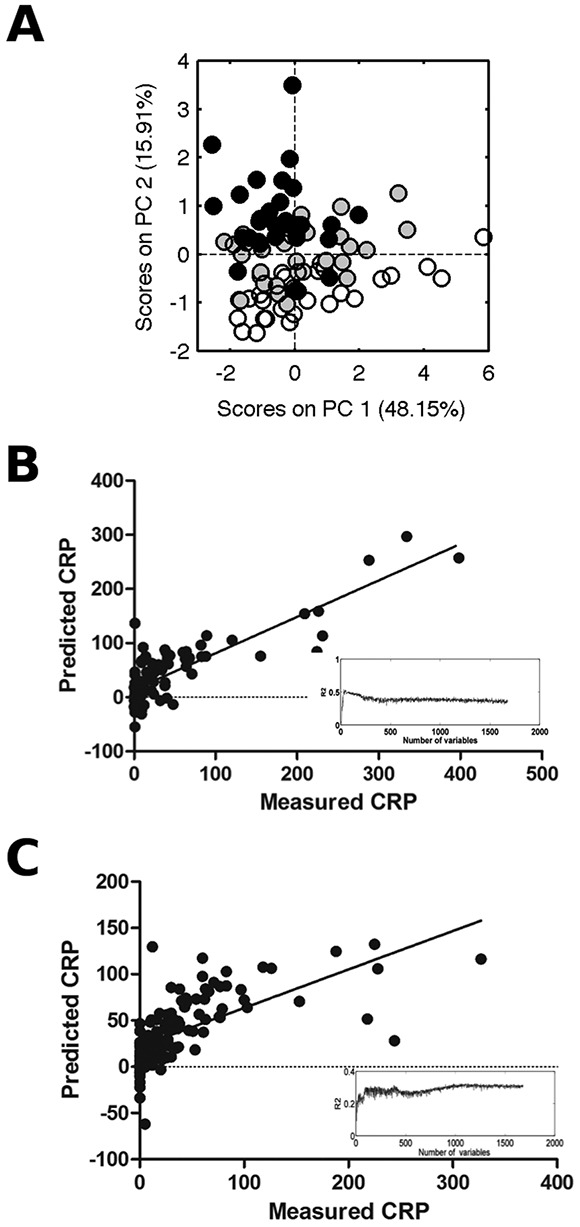
The serum metabolic fingerprint in established RA was clearly distinct from that of healthy controls. In early arthritis, we were able to stratify the patients according to the level of current inflammation, with C-reactive protein correlating with metabolic differences in 2 separate groups (P < 0.001). Lactate and lipids were important discriminators of inflammatory burden in both early arthritis patient groups. The sensitivities and specificities of models to predict the development of either RA or persistent arthritis in patients with early arthritis were low.
The metabolic fingerprint reflects inflammatory disease activity in patients with synovitis, demonstrating that underlying inflammatory processes drive significant changes in metabolism that can be measured in the peripheral blood. The identification of metabolic alterations may provide insights into disease mechanisms operating in patients with inflammatory arthritis.
炎症性关节炎与包括代谢改变在内的全身表现相关。我们使用基于核磁共振(NMR)波谱的代谢组学方法来评估类风湿关节炎(RA)确诊患者和早期关节炎患者血清中的代谢指纹图谱。
收集新诊断的未使用过改善病情抗风湿药物的RA确诊患者、匹配的健康对照以及2组病程≤3个月的滑膜炎患者的血清样本,这些患者的结局在临床随访时确定。使用一维(1)H-NMR波谱评估血清代谢组学谱。识别有鉴别意义的代谢物,并检查代谢组学谱与包括结局在内的临床变量之间的关系。
确诊RA患者的血清代谢指纹图谱与健康对照明显不同。在早期关节炎患者中,我们能够根据当前炎症水平对患者进行分层,C反应蛋白与两个不同组的代谢差异相关(P<0.001)。乳酸和脂质是两个早期关节炎患者组炎症负担的重要判别指标。预测早期关节炎患者发生RA或持续性关节炎的模型的敏感性和特异性较低。
代谢指纹图谱反映了滑膜炎患者的炎症疾病活动,表明潜在的炎症过程驱动了可在外周血中测量的显著代谢变化。代谢改变的识别可能为炎症性关节炎患者的疾病机制提供见解。