School of Materials Science and Engineering, Nanyang Technological University, Singapore 639798, Singapore.
Nat Commun. 2013;4:1990. doi: 10.1038/ncomms2990.
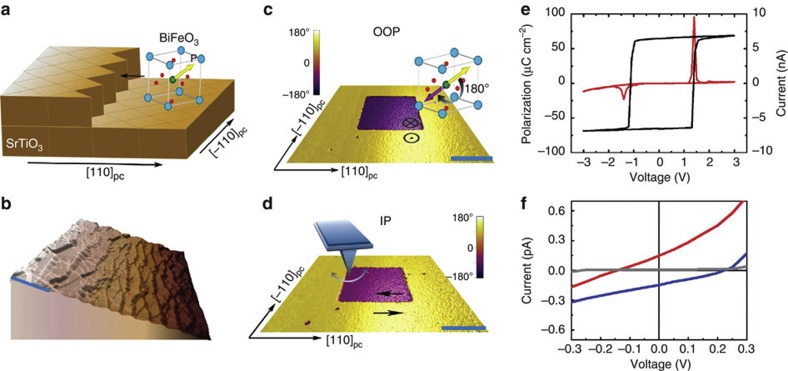
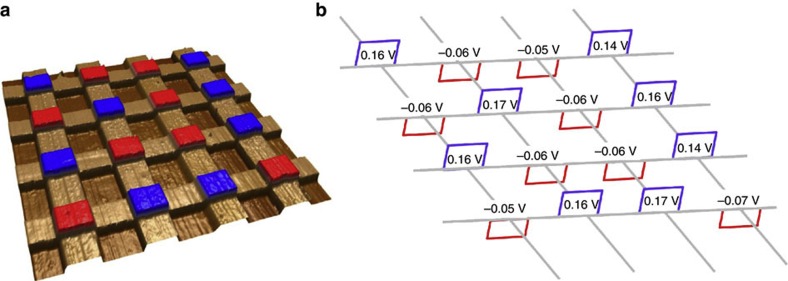
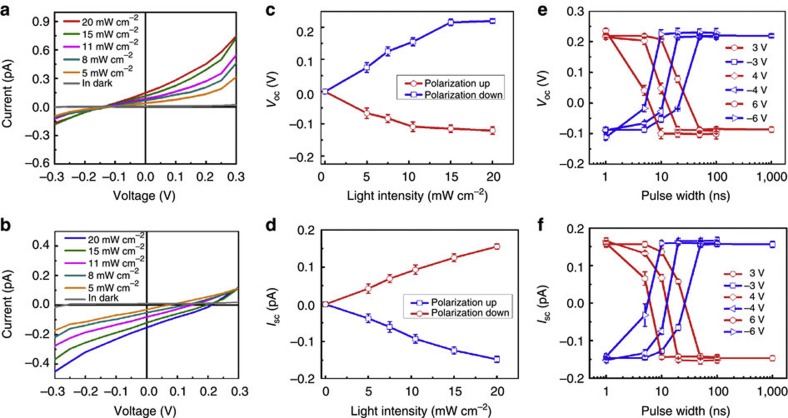
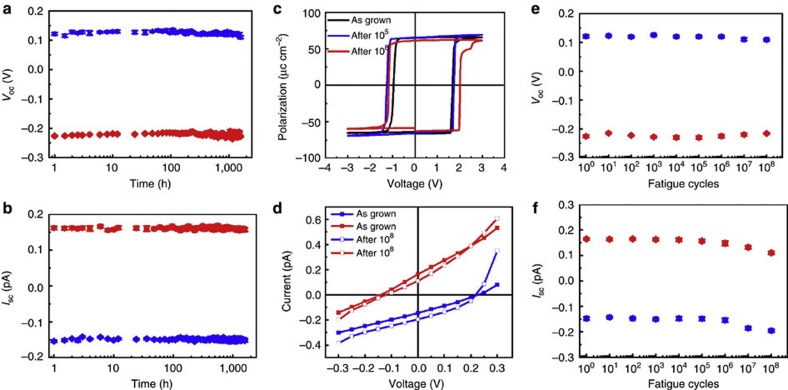
The quest for a solid state universal memory with high-storage density, high read/write speed, random access and non-volatility has triggered intense research into new materials and novel device architectures. Though the non-volatile memory market is dominated by flash memory now, it has very low operation speed with ~10 μs programming and ~10 ms erasing time. Furthermore, it can only withstand ~10(5) rewriting cycles, which prevents it from becoming the universal memory. Here we demonstrate that the significant photovoltaic effect of a ferroelectric material, such as BiFeO3 with a band gap in the visible range, can be used to sense the polarization direction non-destructively in a ferroelectric memory. A prototype 16-cell memory based on the cross-bar architecture has been prepared and tested, demonstrating the feasibility of this technique.
对具有高存储密度、高读写速度、随机访问和非易失性的固态通用存储器的探索,促使人们对新材料和新型器件结构展开了激烈的研究。尽管闪存目前主导着非易失性存储器市场,但它的操作速度非常低,编程时间约为 10 μs,擦除时间约为 10 ms。此外,它只能承受约 10(5)次重写循环,这阻止了它成为通用存储器。在这里,我们证明了铁电材料(例如具有可见范围内带隙的 BiFeO3)的显著光伏效应可用于在铁电存储器中无损地感测极化方向。已经制备并测试了基于交叉棒结构的 16 单元存储器原型,证明了该技术的可行性。