School of Mechanical Engineering, Yonsei University, 50 Yonsei-ro, Seodaemun-gu, Seoul 120-749, Republic of Korea.
Nanoscale Res Lett. 2013 Jun 11;8(1):281. doi: 10.1186/1556-276X-8-281.
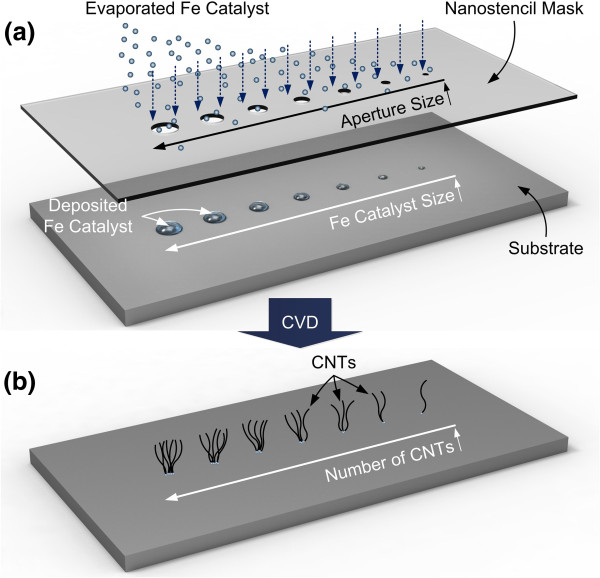
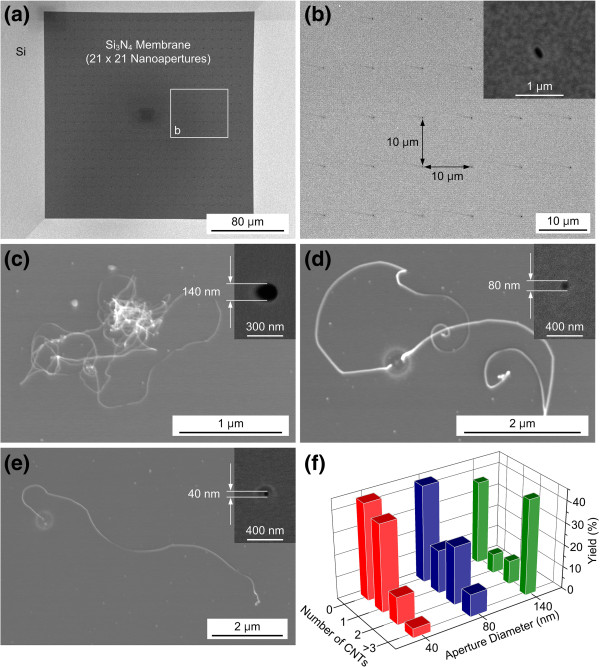
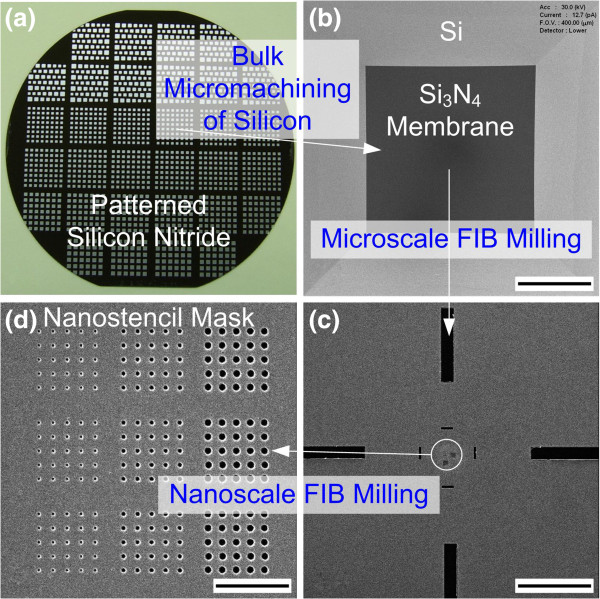
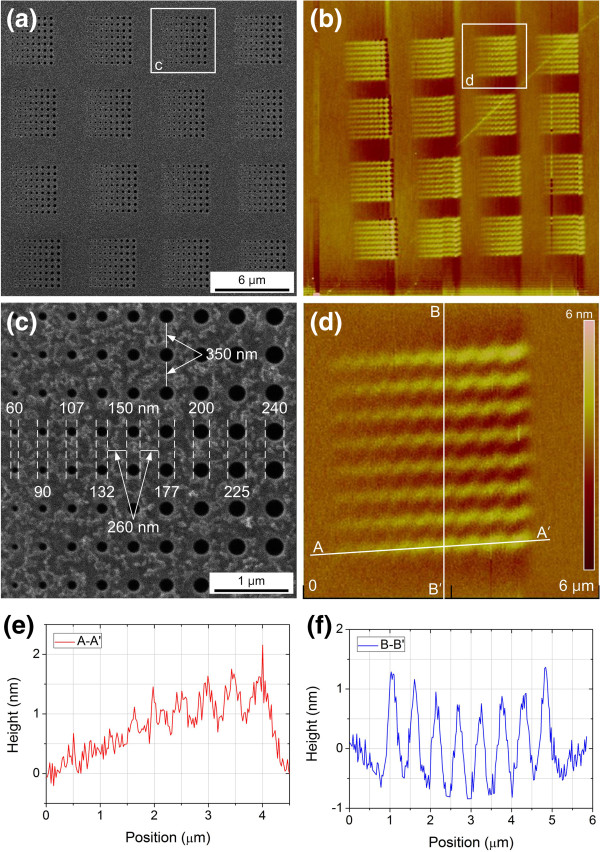
Controlled synthesis and integration of carbon nanotubes (CNTs) remain important areas of study to develop practical carbon-based nanodevices. A method of controlling the number of CNTs synthesized depending on the size of the catalyst was characterized using nanostencil lithography, and the critical dimension for the nanoaperture produced on a stencil mask used for growing individual CNTs was studied. The stencil mask was fabricated as a nanoaperture array down to 40 nm in diameter on a low-stress silicon nitride membrane. An iron catalyst used to synthesize CNTs was deposited through submicron patterns in the stencil mask onto a silicon substrate, and the profile of the patterned iron catalyst was analyzed using atomic force microscopy. The feasibility toward a scalable, number-, and location-controlled synthesis of CNTs was experimentally demonstrated based on the diameter and geometry of the apertures in the stencil mask.
控制合成和集成碳纳米管(CNTs)仍然是开发实用碳基纳米器件的重要研究领域。使用纳米模板光刻技术对根据催化剂尺寸控制合成的 CNT 数量的方法进行了表征,并研究了用于生长单个 CNT 的模板掩模上产生的纳米孔的临界尺寸。模板掩模是在低应变成分的氮化硅膜上制造的,直径小至 40nm 的纳米孔阵列。用于合成 CNT 的铁催化剂通过模板掩模中的亚微米图案沉积在硅衬底上,使用原子力显微镜分析图案化铁催化剂的轮廓。基于模板掩模中的孔径直径和几何形状,实验证明了 CNT 可扩展性、数量和位置控制合成的可行性。