Department of Biological Sciences, Virginia Tech , Blacksburg, VA , USA.
Front Oncol. 2013 Jun 7;3:148. doi: 10.3389/fonc.2013.00148. eCollection 2013.
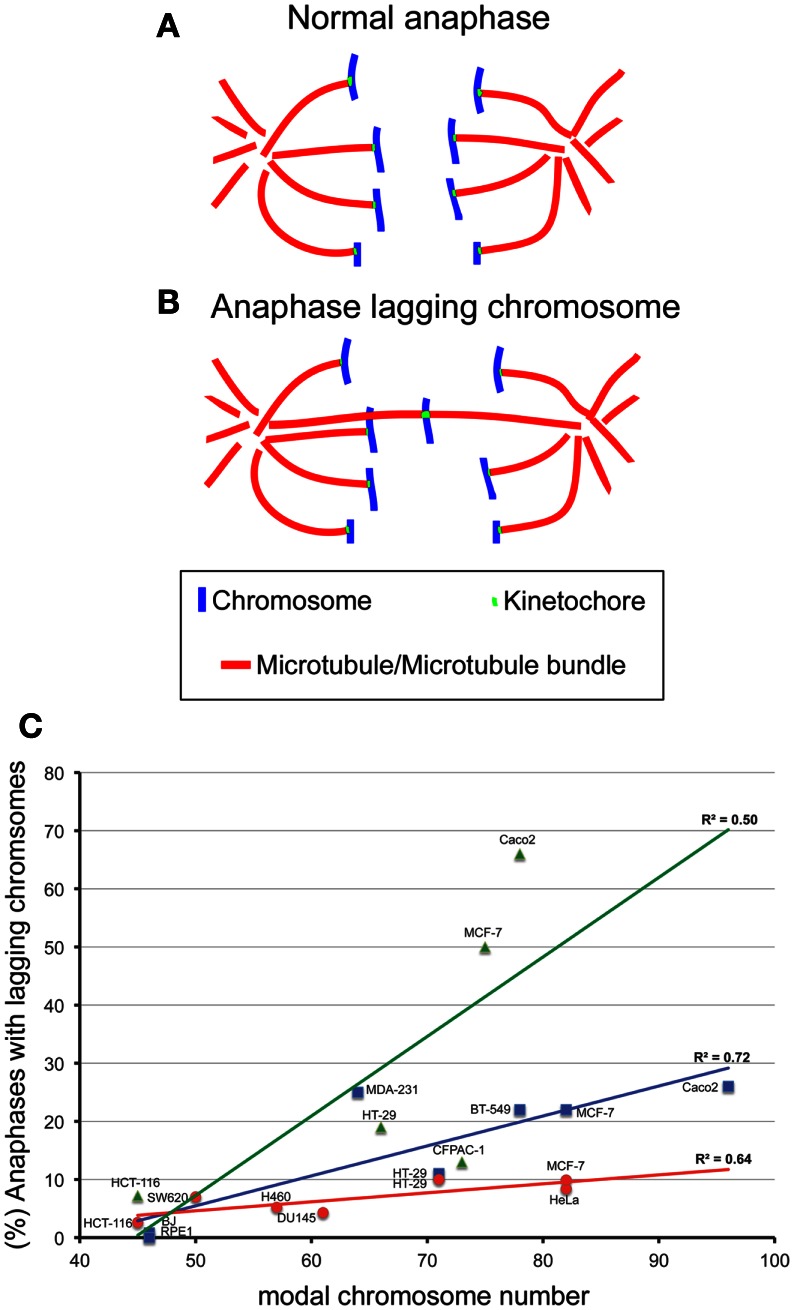
Cancer cells are typically characterized by complex karyotypes including both structural and numerical changes, with aneuploidy being a ubiquitous feature. It is becoming increasingly evident that aneuploidy per se can cause chromosome mis-segregation, which explains the higher rates of chromosome gain/loss observed in aneuploid cancer cells compared to normal diploid cells, a phenotype termed chromosomal instability (CIN). CIN can be caused by various mechanisms and results in extensive karyotypic heterogeneity within a cancer cell population. However, despite such karyotypic heterogeneity, cancer cells also display predominant karyotypic patterns. In this review we discuss the mechanisms of CIN, with particular emphasis on the role of aneuploidy on CIN. Further, we discuss the potential functional role of karyotypic patterns in cancer.
癌细胞通常具有复杂的核型,包括结构和数量的变化,非整倍体是其普遍特征。越来越明显的是,非整倍体本身可以导致染色体错误分离,这解释了与正常二倍体细胞相比,非整倍体癌细胞中染色体增益/丢失的更高比率,这种表型称为染色体不稳定性 (CIN)。CIN 可以由多种机制引起,并导致癌细胞群体中广泛的核型异质性。然而,尽管存在这种核型异质性,癌细胞也表现出主要的核型模式。在这篇综述中,我们讨论了 CIN 的机制,特别强调了非整倍体对 CIN 的作用。此外,我们还讨论了核型模式在癌症中的潜在功能作用。