Department of Genetics and Biotechnology, Faculty of Biology, National and Kapodistrian University of Athens, Panepistemiopolis, 15701 Athens, Greece.
Biomed Res Int. 2013;2013:260395. doi: 10.1155/2013/260395. Epub 2013 May 9.
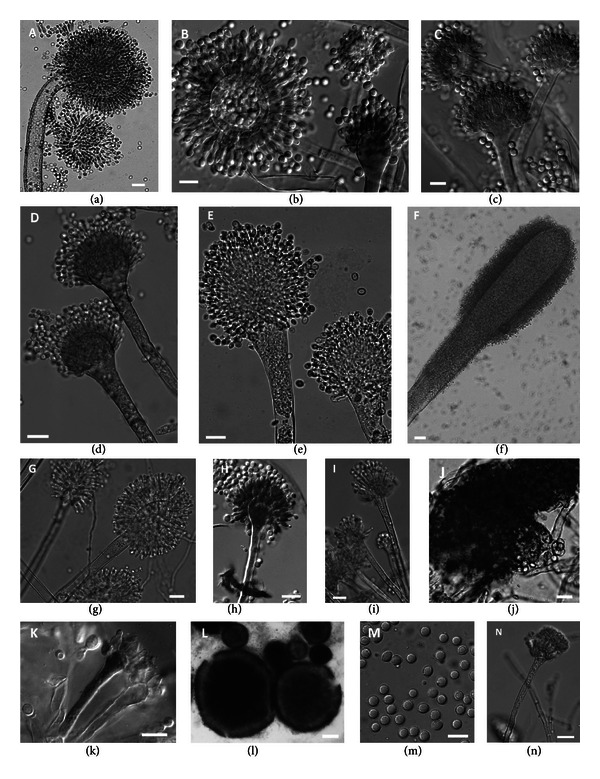
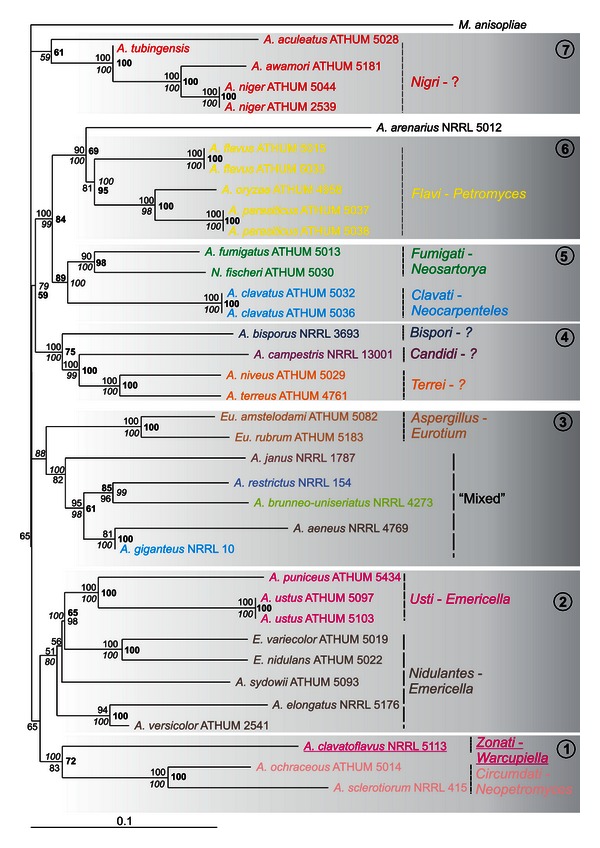
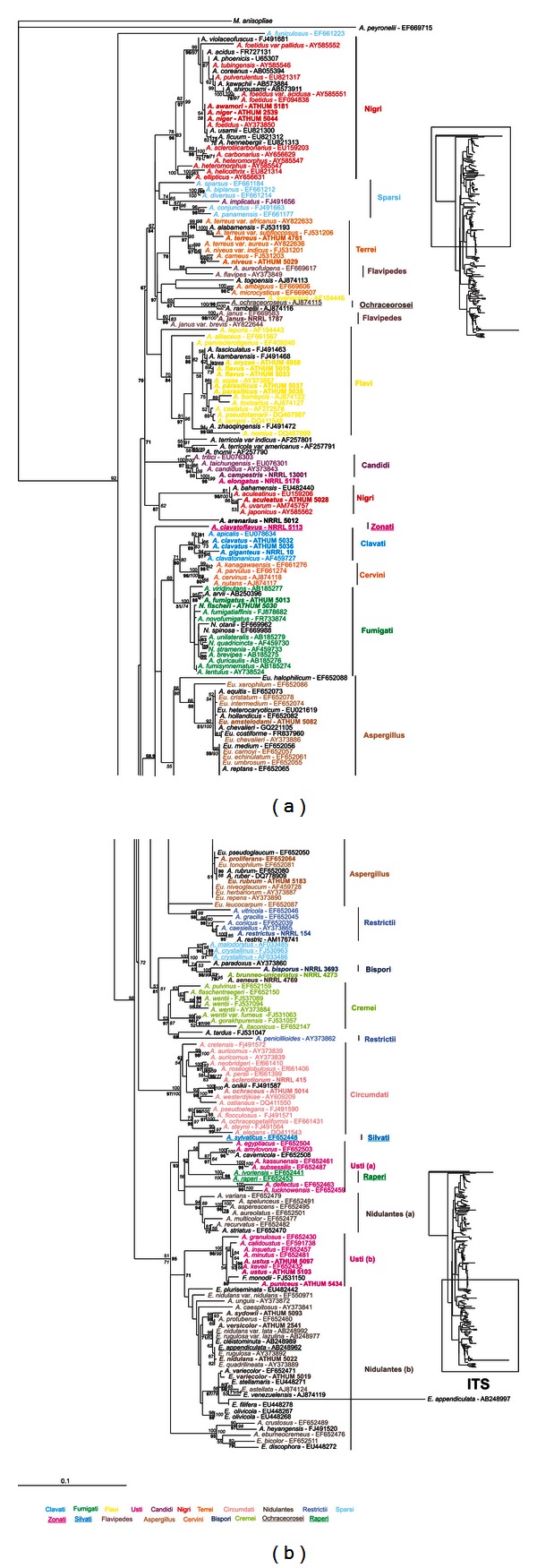
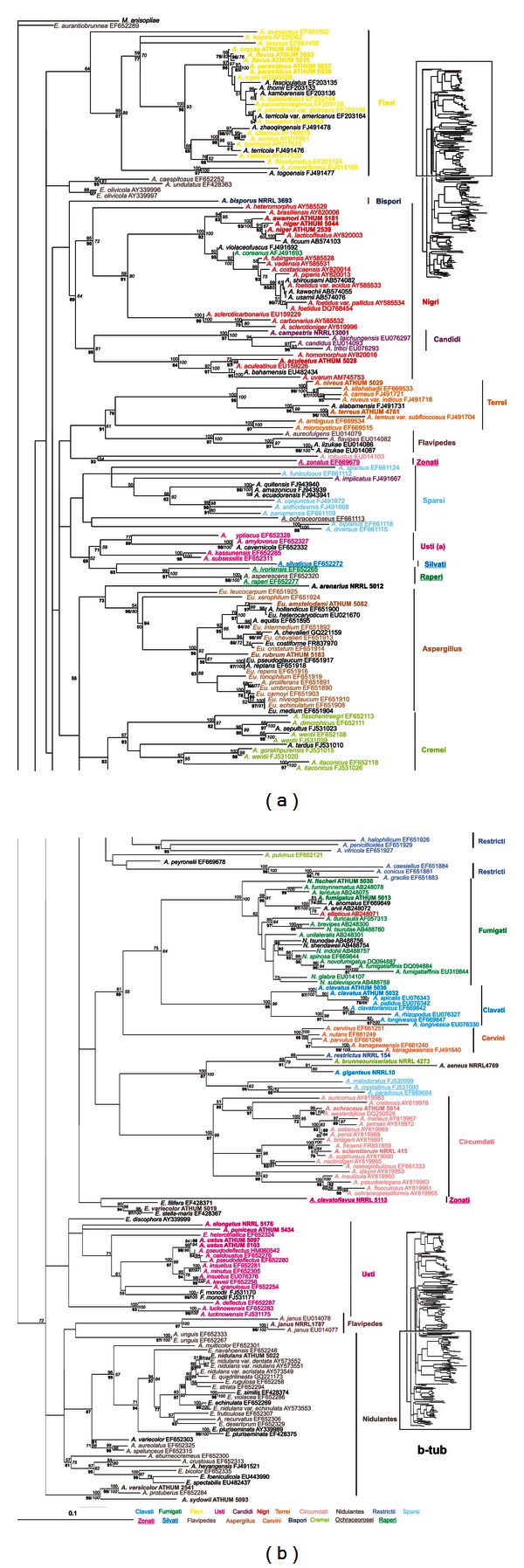
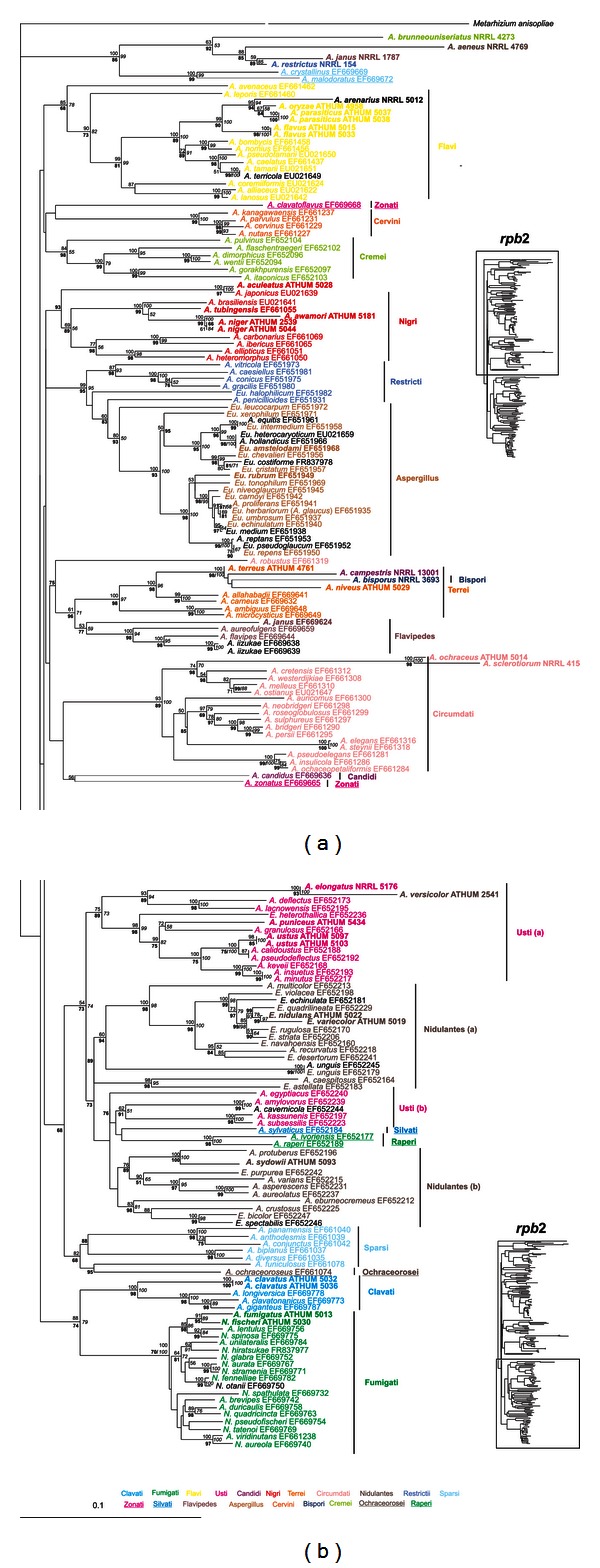
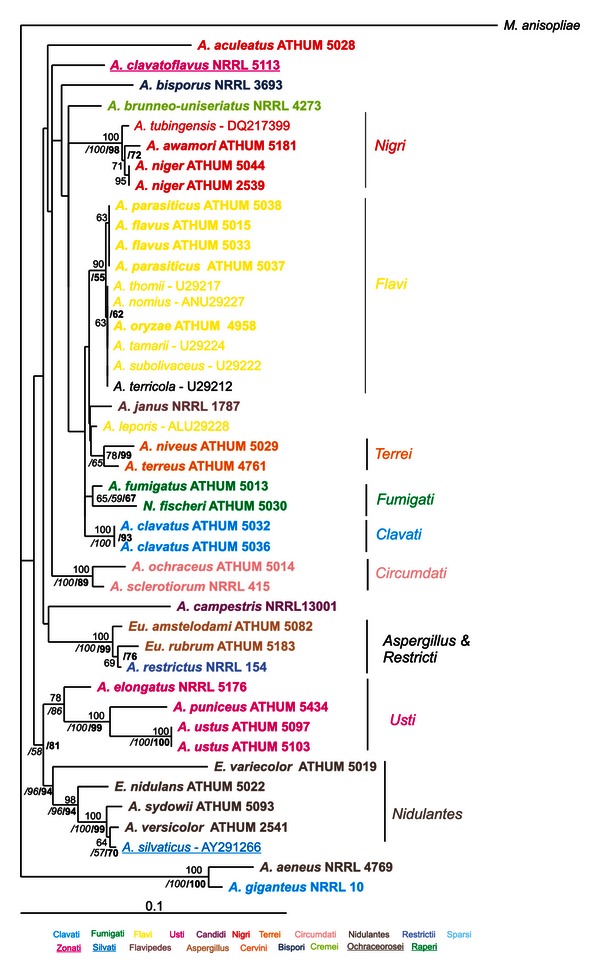
Aspergillus species originating from Greece were examined by morphological and molecular criteria to explore the diversity of this genus. The phylogenetic relationships of these species were determined using sequences from the ITS and IGS region of the nuclear rRNA gene complex, two nuclear genes ( β -tubulin (benA) and RNA polymerase II second largest subunit (rpb2)) and two mitochondrial genes (small rRNA subunit (rns) and cytochrome oxidase subunit I (cox1)) and, where available, related sequences from databases. The morphological characters of the anamorphs and teleomorphs, and the single gene phylogenetic trees, differentiated and placed the species examined in the well-supported sections of Aenei, Aspergillus, Bispori, Candidi, Circumdati, Clavati, Cremei, Flavi, Flavipedes, Fumigati, Nidulantes, Nigri, Restricti, Terrei, Usti, and Zonati, with few uncertainties. The combined use of the three commonly employed nuclear genes (benA, rpb2, and ITS), the IGS region, and two less often used mitochondrial gene sequences (rns and cox1) as a single unit resolved several taxonomic ambiguities. A phylogenetic tree was inferred using Neighbour-Joining, Maximum Parsimony, and Bayesian methods. The strains examined formed seven well-supported clades within the genus Aspergillus. Altogether, the concatenated nuclear and mitochondrial sequences offer additional tools for an improved understanding of phylogenetic relationships within this genus.
从希腊采集的曲霉菌种通过形态学和分子标准进行了检查,以探索该属的多样性。这些物种的系统发育关系是通过核 rRNA 基因复合物的 ITS 和 IGS 区域、两个核基因(β-微管蛋白(benA)和 RNA 聚合酶 II 第二大亚基(rpb2))以及两个线粒体基因(小 rRNA 亚基(rns)和细胞色素氧化酶亚基 I(cox1))以及数据库中可用的相关序列来确定的。同形和无性型的形态特征以及单基因系统发育树将所检查的物种区分开来,并将其放置在 Aenei、Aspergillus、Bispori、Candidi、Circumdati、Clavati、Cremei、Flavi、Flavipedes、Fumigati、Nidulantes、Nigri、Restricti、Terrei、Usti 和 Zonati 等具有良好支持的部分中,存在一些不确定性。三个常用核基因(benA、rpb2 和 ITS)、IGS 区域以及两个较少使用的线粒体基因序列(rns 和 cox1)的联合使用作为一个单元解决了几个分类学上的模糊问题。使用邻接法、最大简约法和贝叶斯法推断了系统发育树。所检查的菌株在曲霉菌属内形成了七个具有良好支持的分支。总的来说,串联的核和线粒体序列为更好地理解该属内的系统发育关系提供了额外的工具。