Chen A J, Frisvad J C, Sun B D, Varga J, Kocsubé S, Dijksterhuis J, Kim D H, Hong S-B, Houbraken J, Samson R A
Institute of Medicinal Plant Development, Chinese Academy of Medical Sciences and Peking Union Medical College, Beijing, 100193, PR China; CBS-KNAW Fungal Biodiversity Centre, Uppsalalaan 8, 3584 CT, Utrecht, The Netherlands.
Department of Systems Biology, Søltofts Plads B. 221, Technical University of Denmark, 2800, Kongens Lyngby, Denmark.
Stud Mycol. 2016 Jun;84:1-118. doi: 10.1016/j.simyco.2016.10.001. Epub 2016 Oct 19.
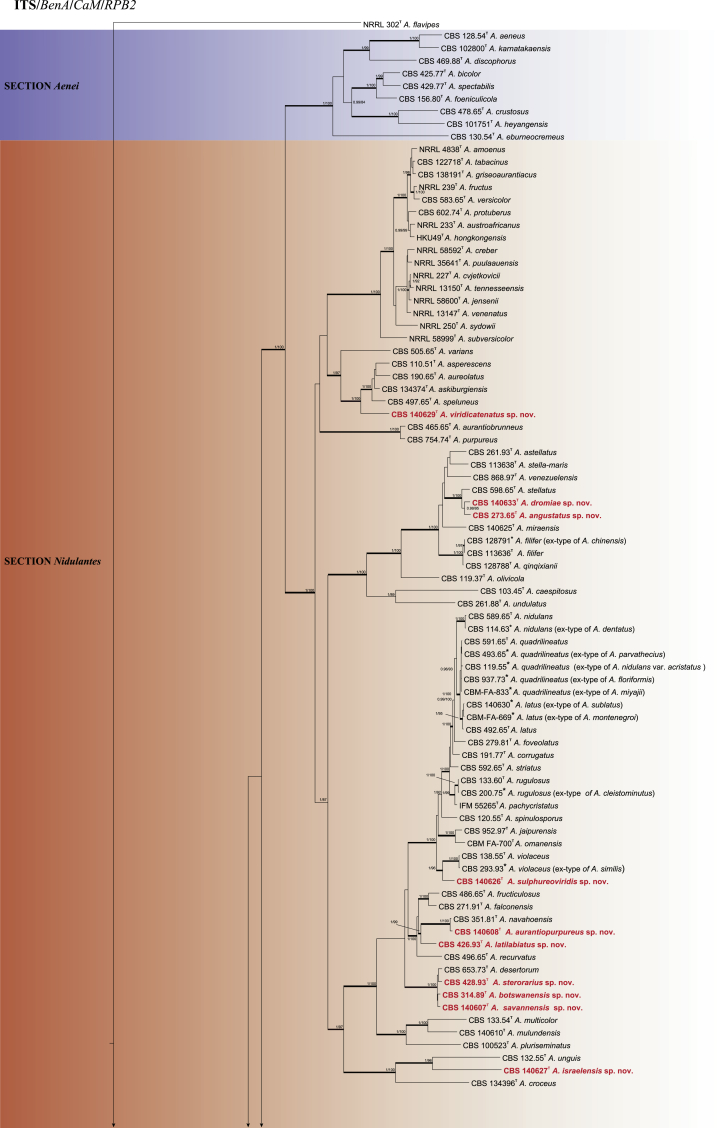
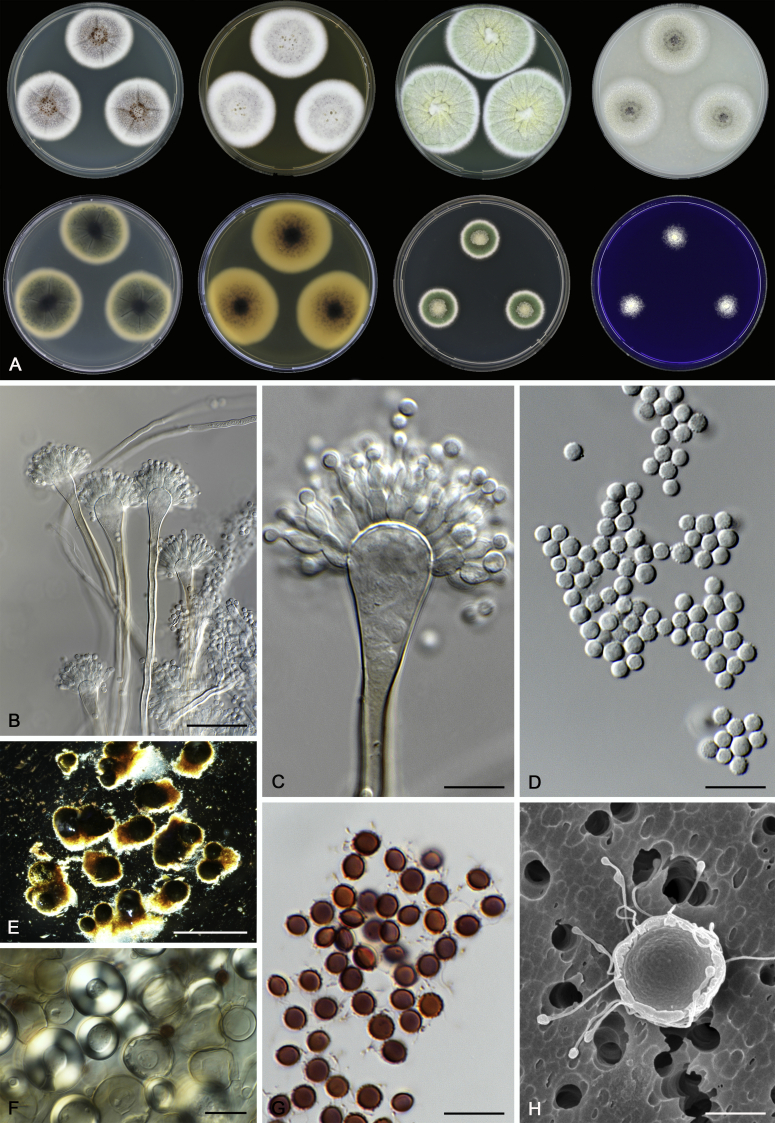
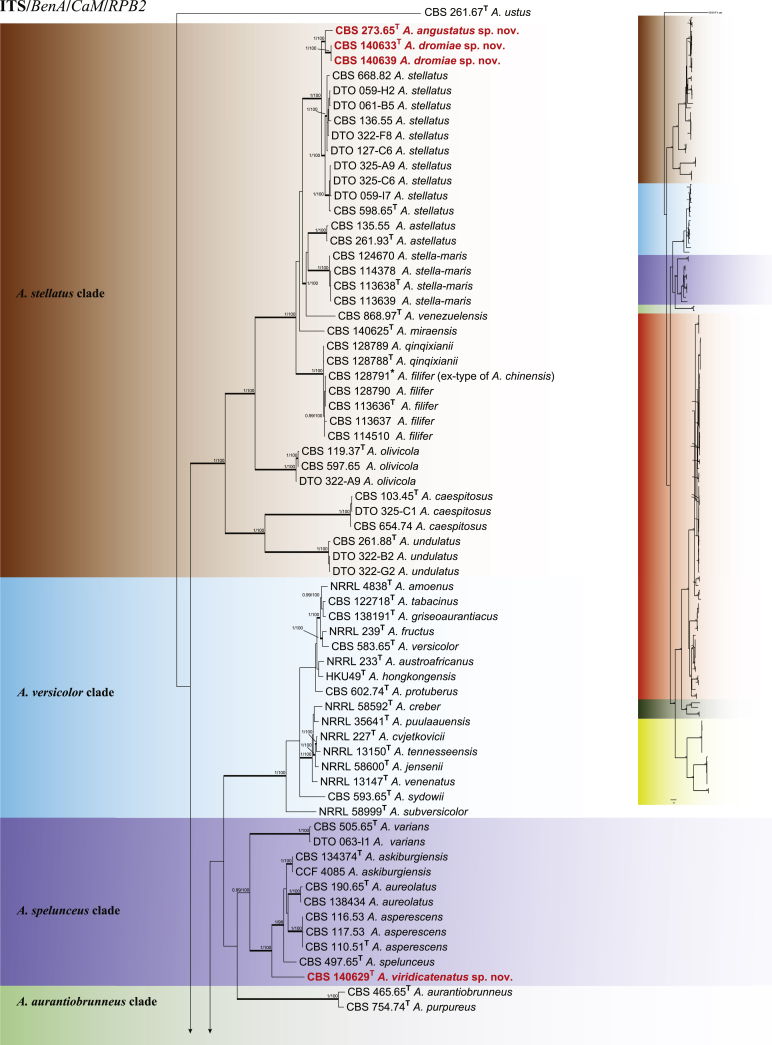
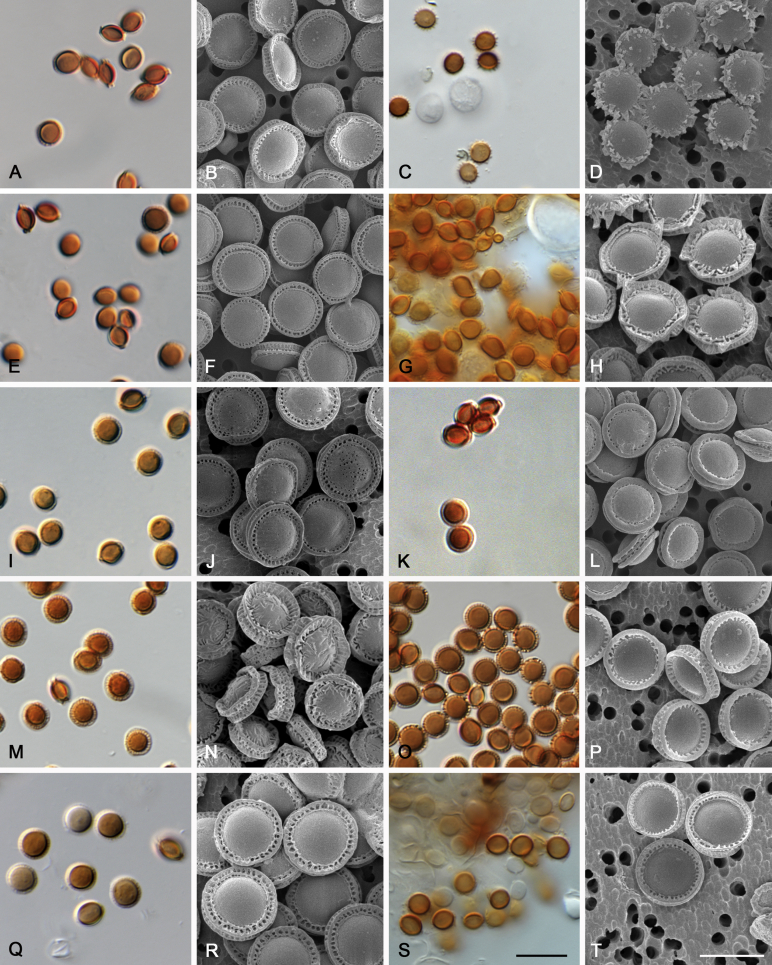
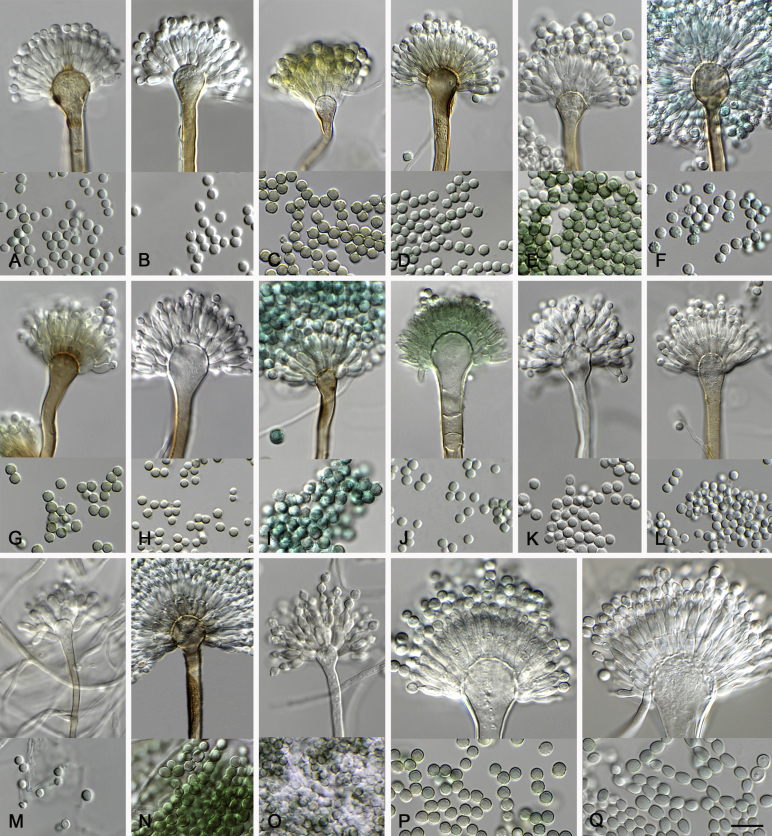
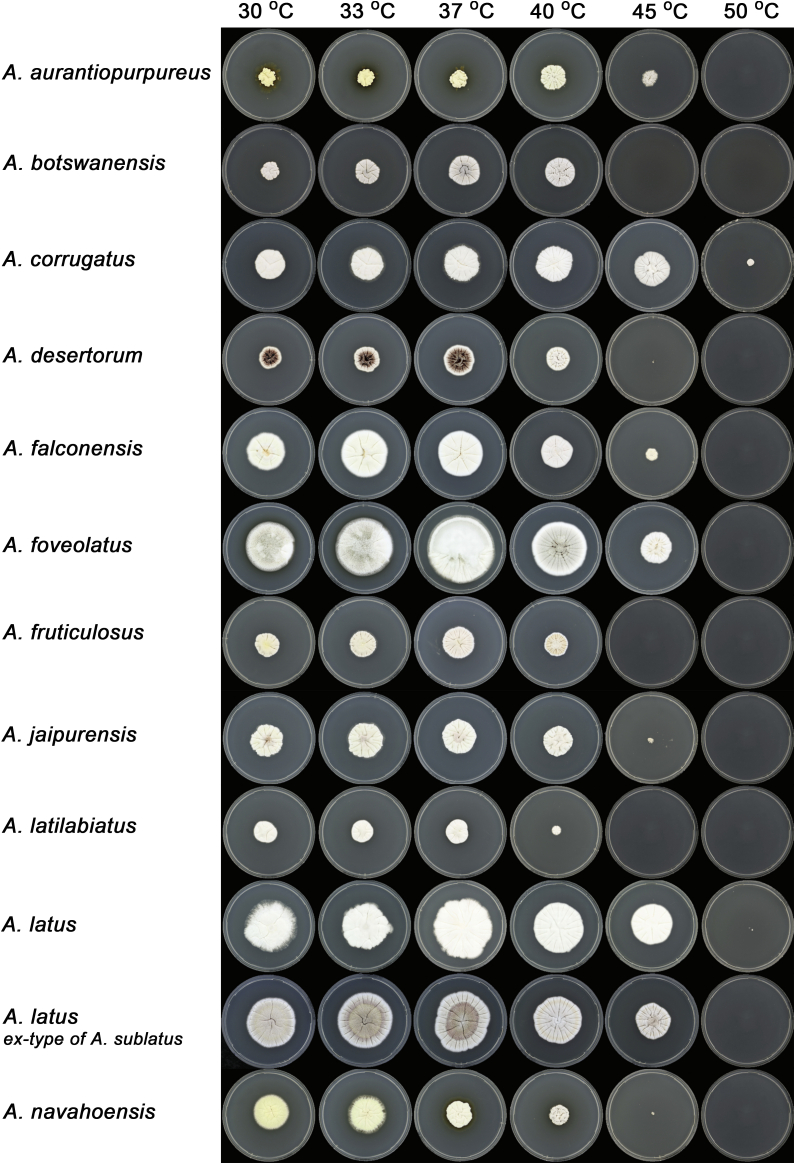
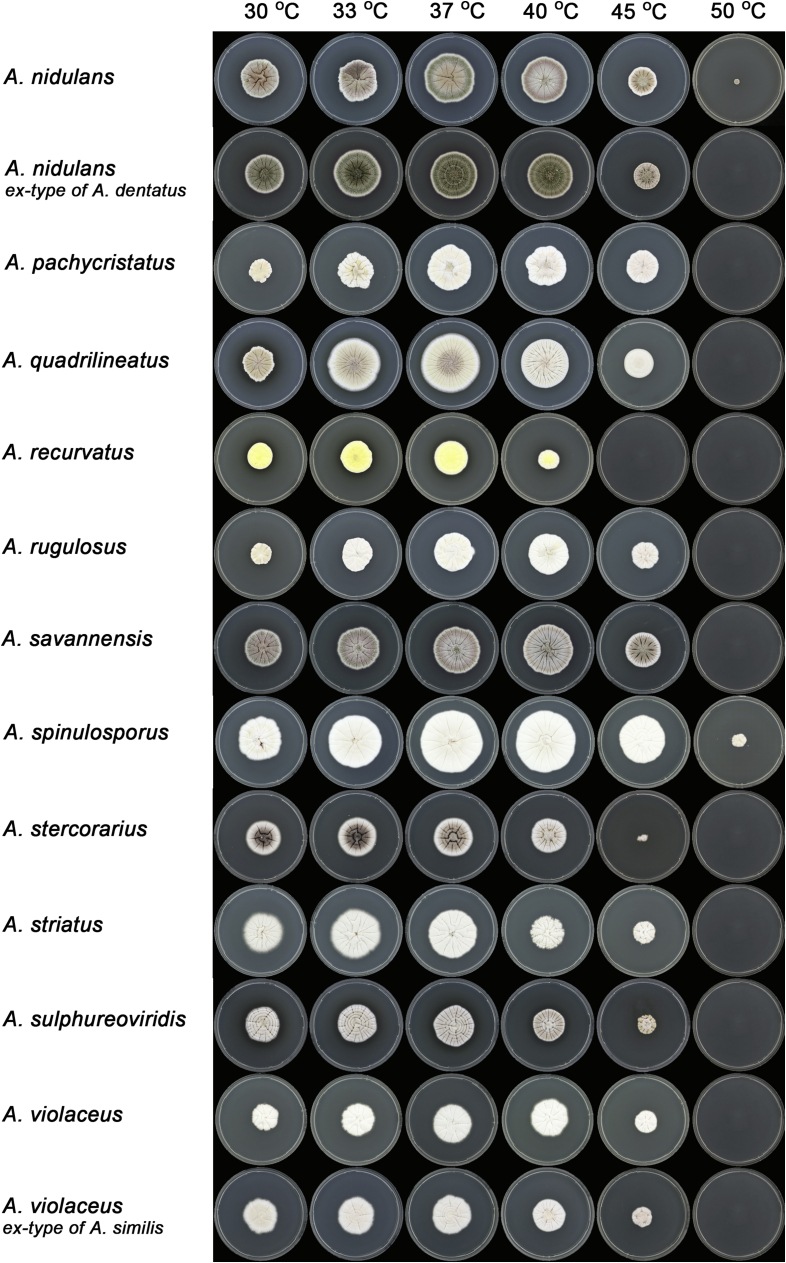
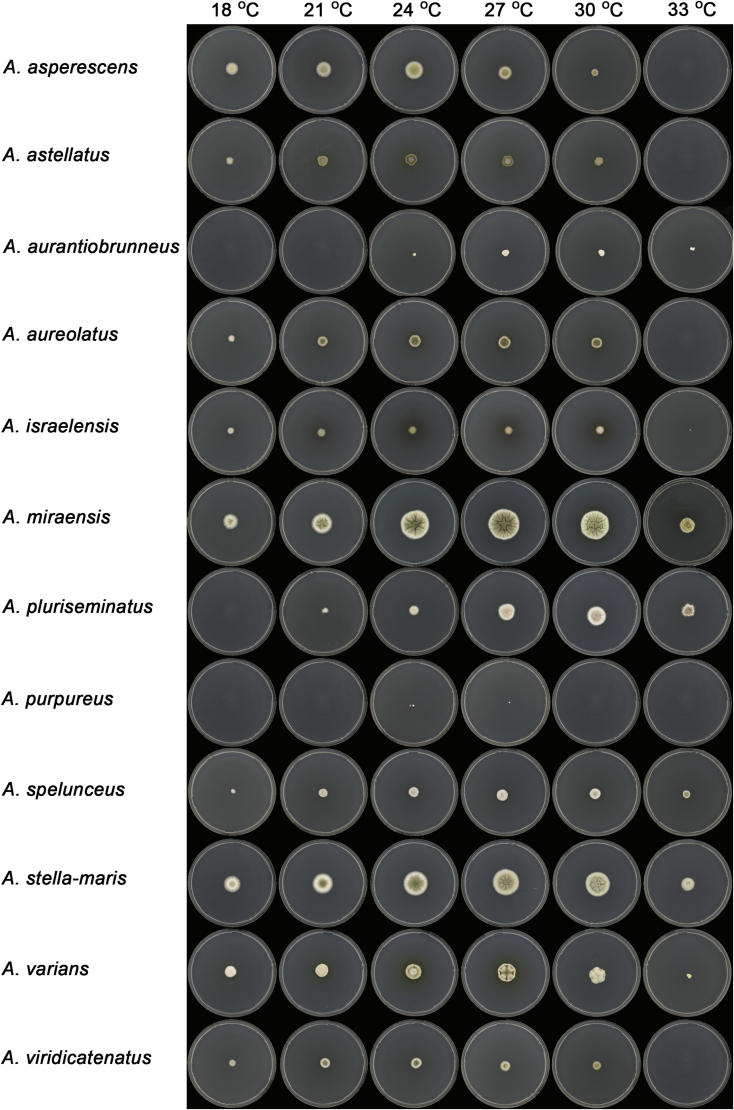
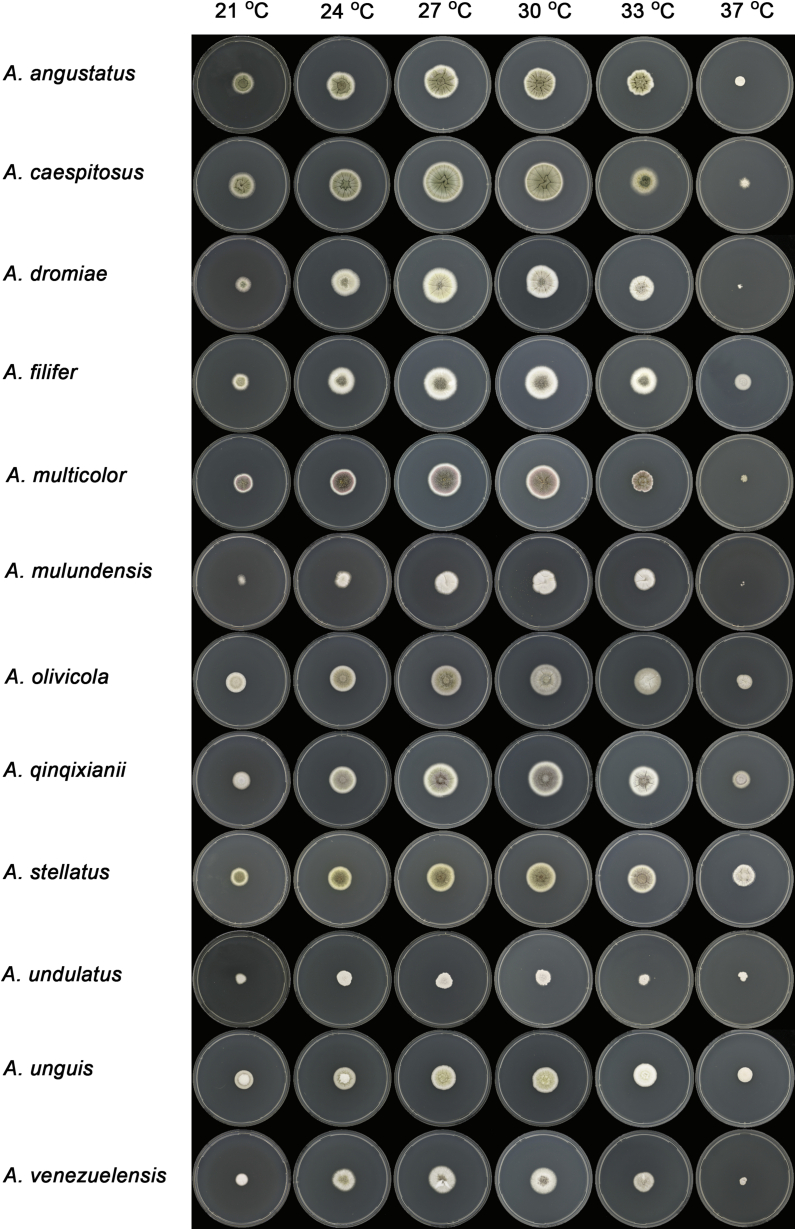
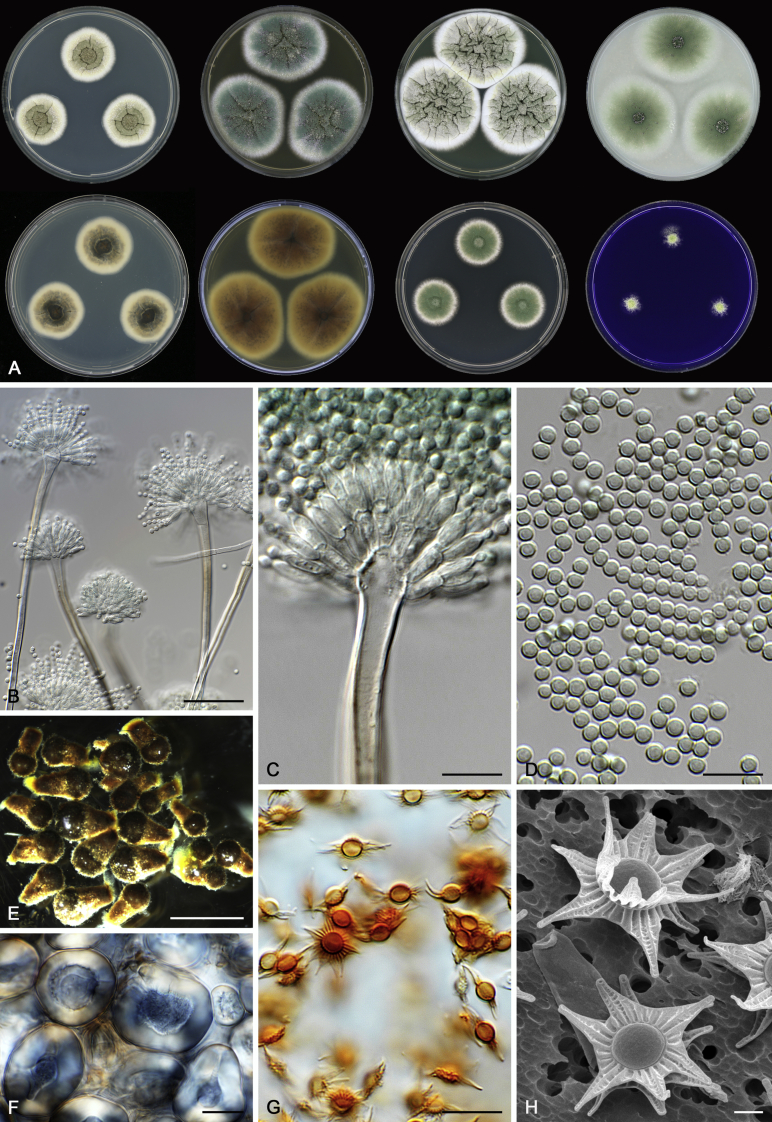
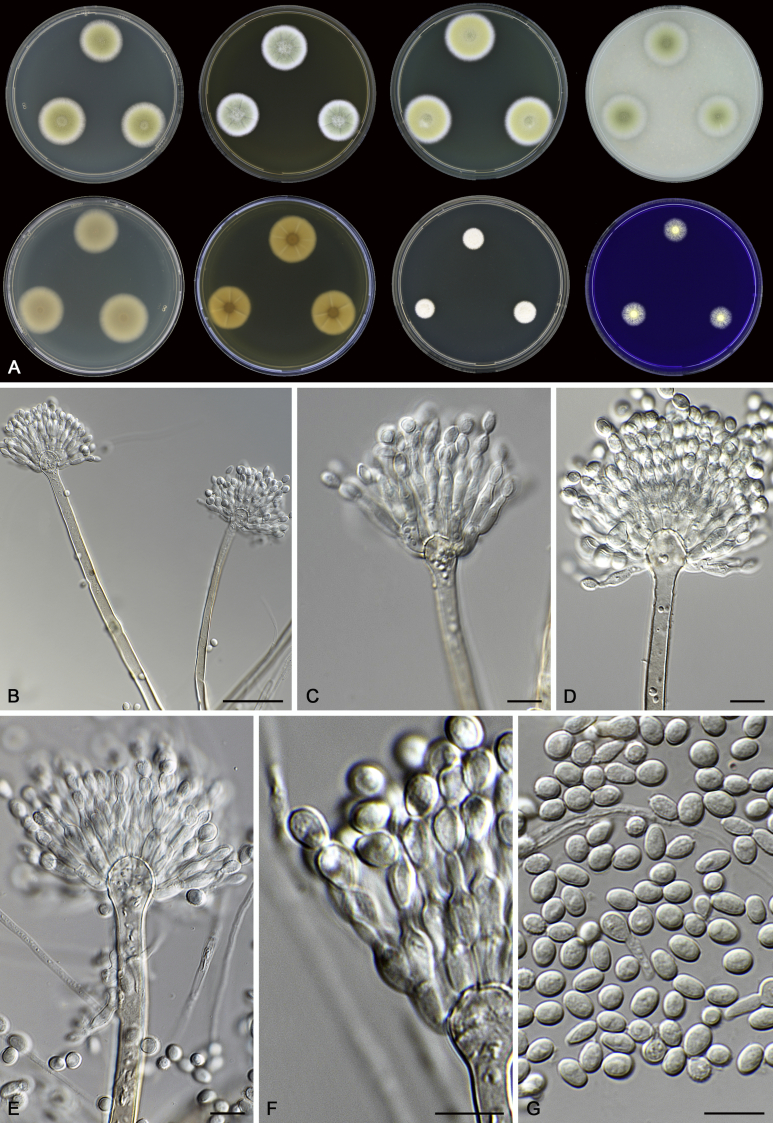
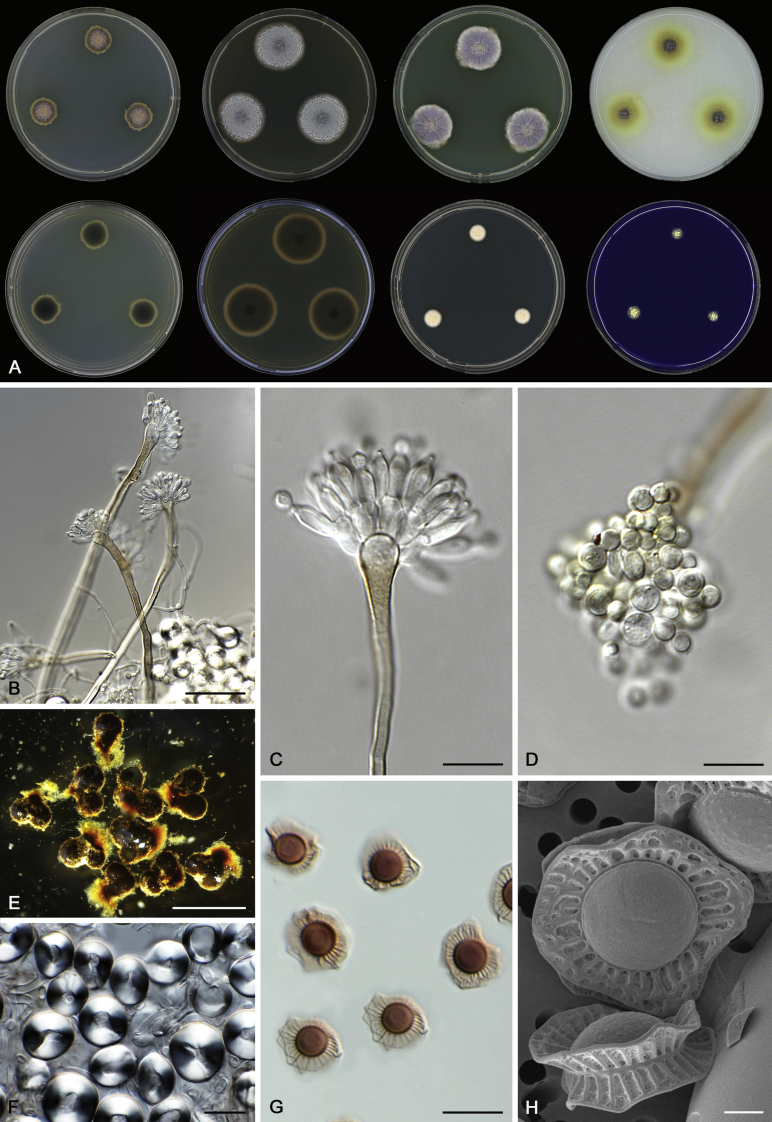
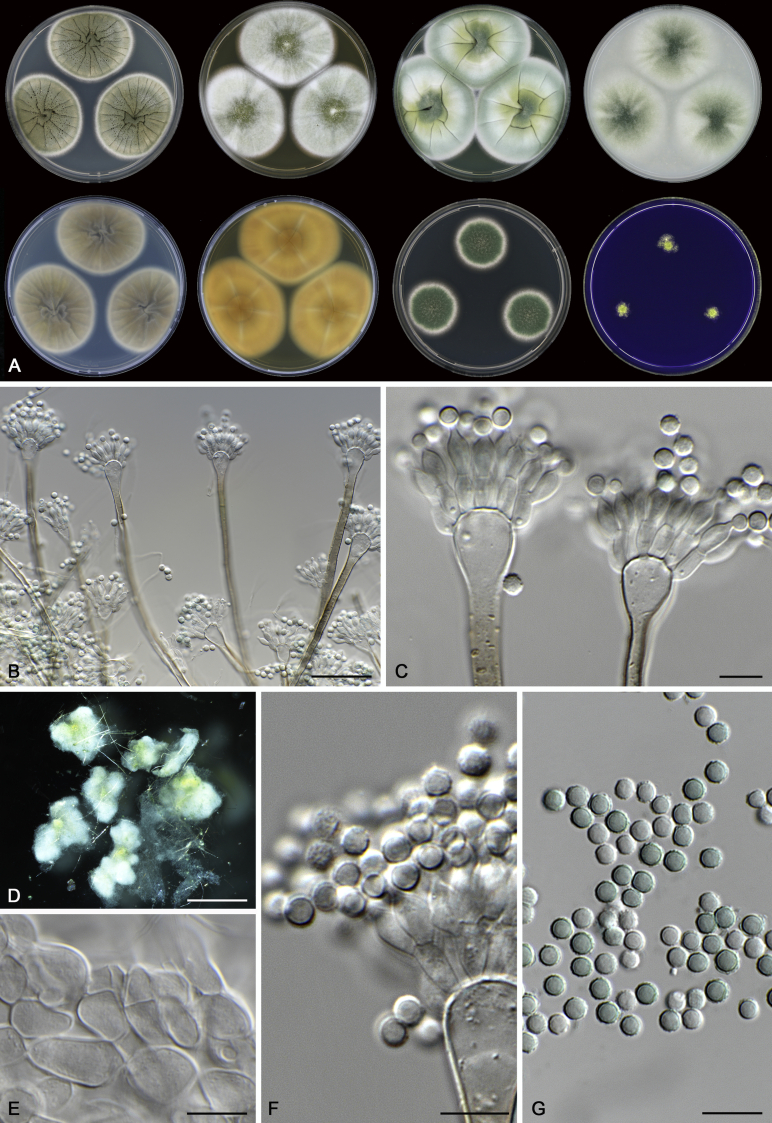
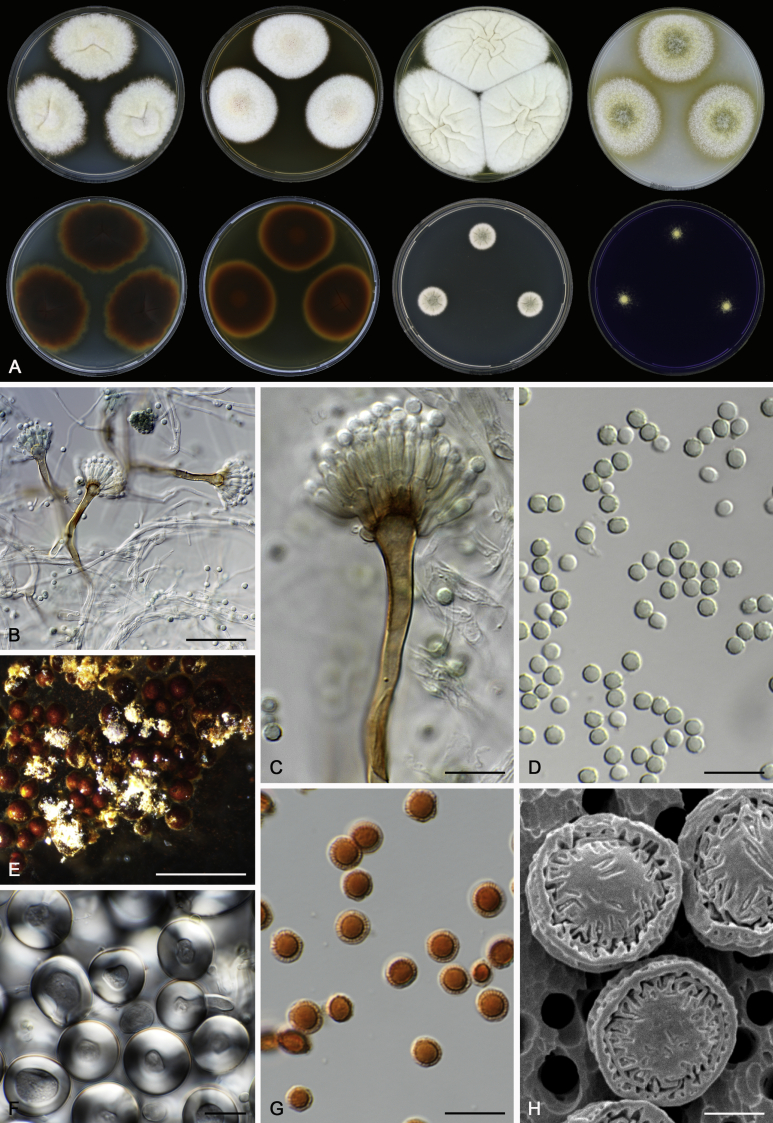
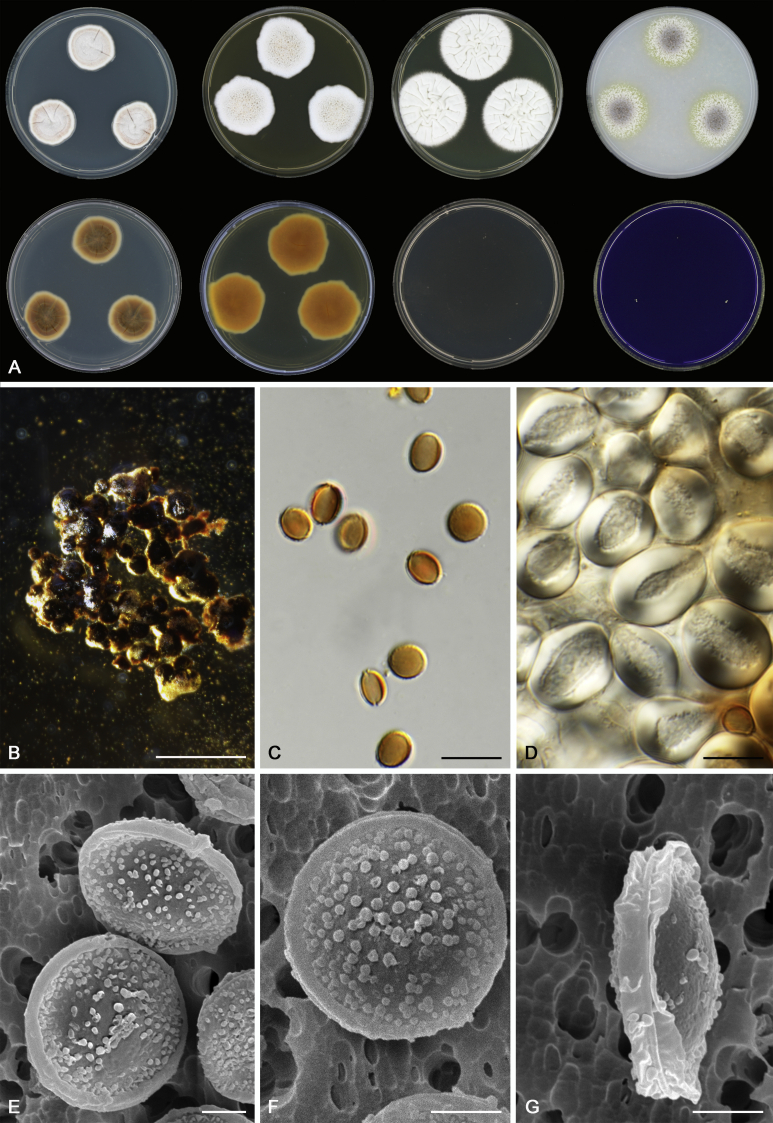
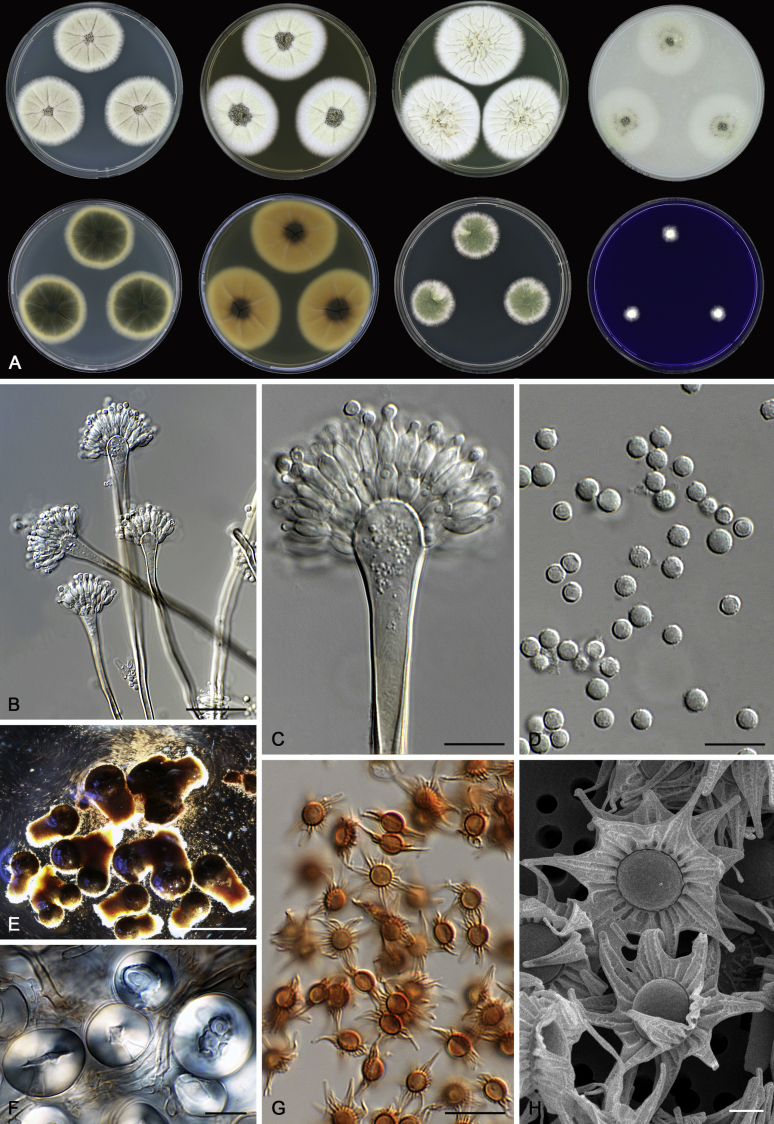
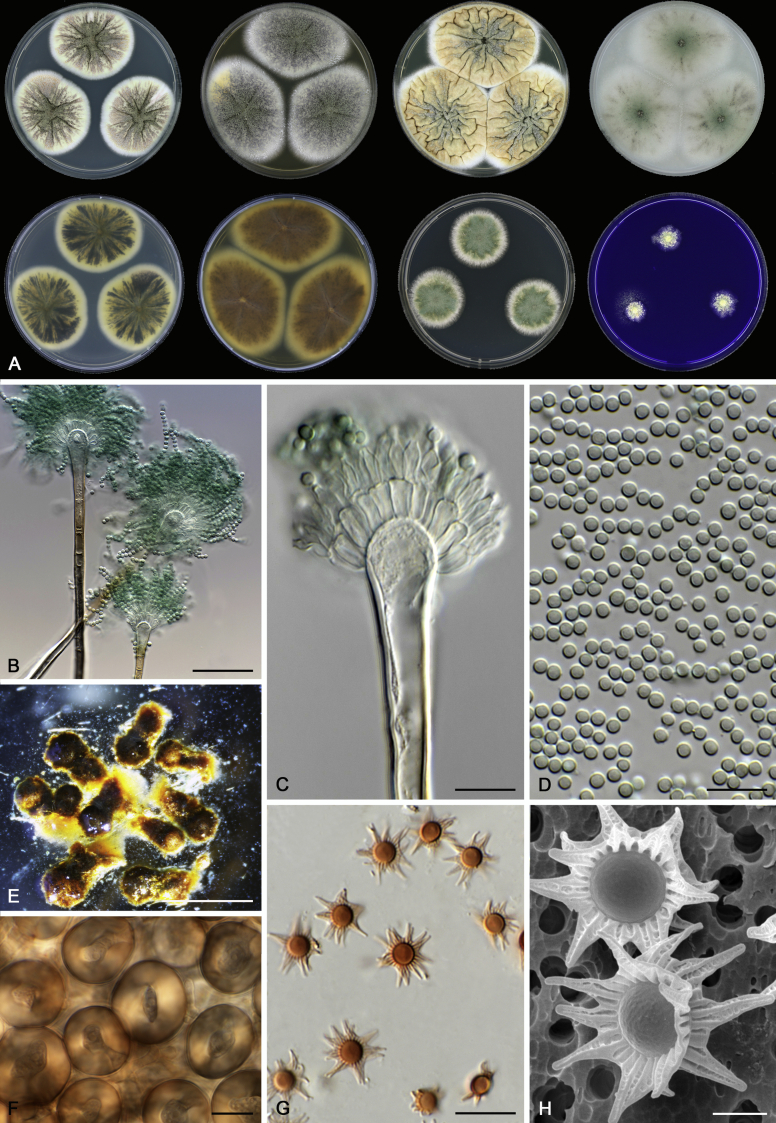
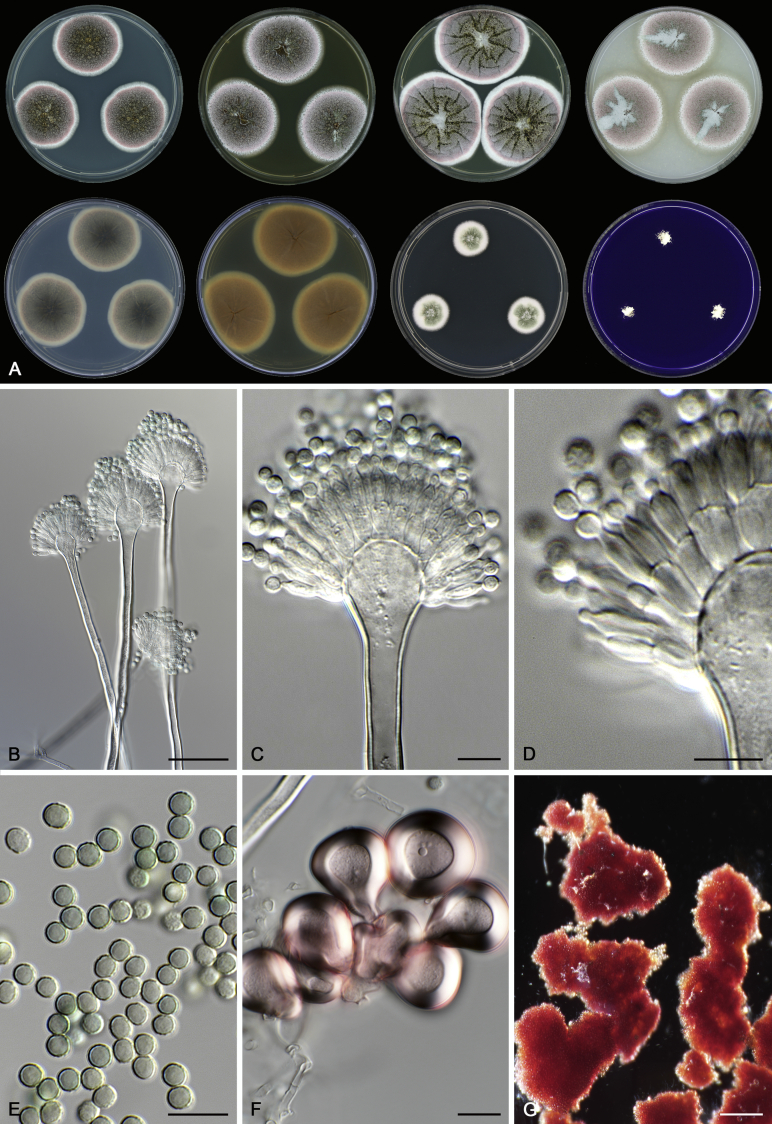
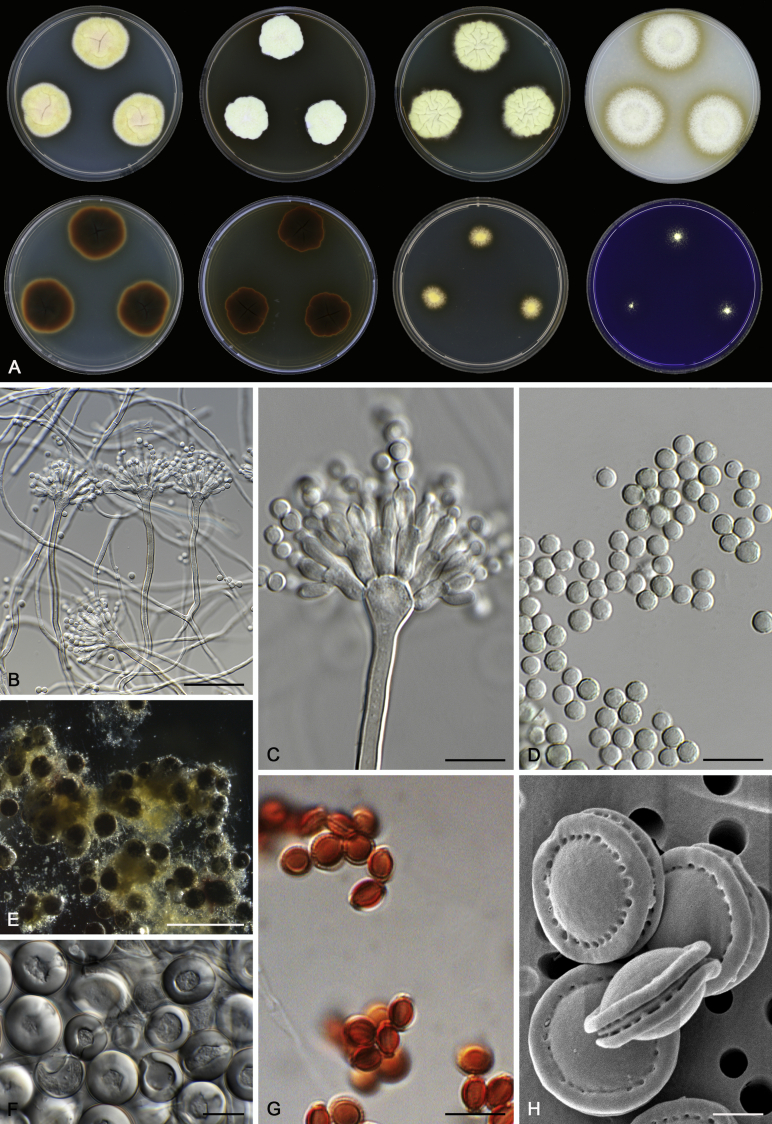
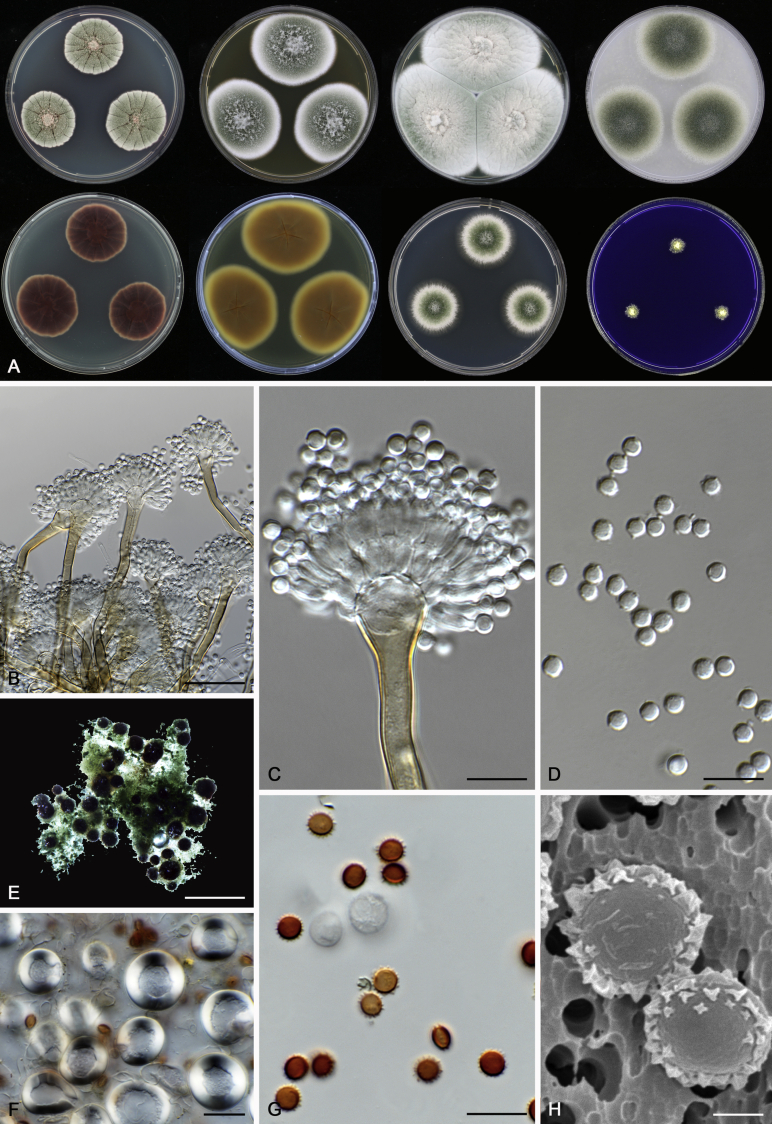
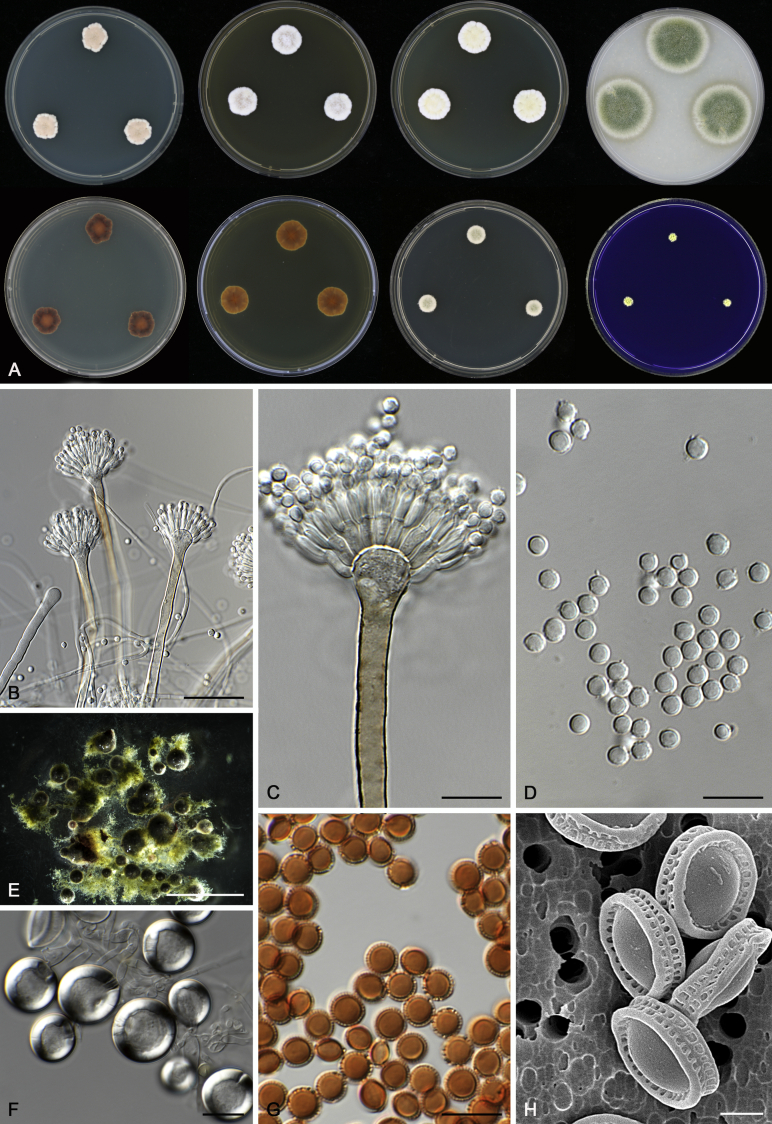
section includes species with striking morphological characters, such as biseriate conidiophores with brown-pigmented stipes, and if present, the production of ascomata embedded in masses of Hülle cells with often reddish brown ascospores. The majority of species in this section have a sexual state, which were named in the dual name nomenclature system. In the present study, strains belonging to subgenus were subjected to multilocus molecular phylogenetic analyses using internal transcribed spacer region (ITS), partial β-tubulin (), calmodulin () and RNA polymerase II second largest subunit () sequences. Nine sections are accepted in subgenus including the new section A polyphasic approach using morphological characters, extrolites, physiological characters and phylogeny was applied to investigate the taxonomy of section . Based on this approach, section is subdivided in seven clades and 65 species, and 10 species are described here as new. Morphological characters including colour, shape, size, and ornamentation of ascospores, shape and size of conidia and vesicles, growth temperatures are important for identifying species. Many species of section produce the carcinogenic mycotoxin sterigmatocystin. The most important mycotoxins in section are aflatoxins, sterigmatocystin, emestrin, fumitremorgins, asteltoxins, and paxillin while other extrolites are useful drugs or drug lead candidates such as echinocandins, mulundocandins, calbistrins, varitriols, variecolins and terrain. Aflatoxin B is produced by four species: , and
该组包括具有显著形态特征的物种,如具褐色梗的双列分生孢子梗,若存在的话,还有埋生于大量壳细胞团中的子囊果,其通常具红褐色的子囊孢子。该组中的大多数物种具有有性态,在双名命名系统中有相应的命名。在本研究中,对属于该亚属的菌株使用内转录间隔区(ITS)、部分β-微管蛋白()、钙调蛋白()和RNA聚合酶II第二大亚基()序列进行多位点分子系统发育分析。该亚属接受九个组,包括新组。采用形态特征、次生代谢产物、生理特征和系统发育相结合的多相方法来研究组的分类。基于此方法,组被细分为七个分支和65个物种,本文还描述了10个新物种。形态特征包括子囊孢子的颜色、形状、大小和纹饰、分生孢子和小梗的形状和大小、生长温度等对于物种鉴定很重要。组中的许多物种会产生致癌霉菌毒素柄曲霉素。组中最重要的霉菌毒素是黄曲霉毒素、柄曲霉素、埃默菌素、烟曲霉震颤素、曲霉毒素和派西利菌素,而其他次生代谢产物是有用的药物或潜在药物候选物,如棘白菌素、穆伦多菌素、卡尔比星、变曲霉素、变绿菌素和特瑞菌素。黄曲霉毒素B由四个物种产生:、和