Digestive System Research Unit, Departament de Medicina, University Hospital Vall d'Hebron, Centro de Investigación Biomédica en Red de Enfermedades Hepáticas y Digestivas (Ciberehd), Universitat Autònoma de Barcelona, , Barcelona, Spain.
Gut. 2014 Mar;63(3):401-8. doi: 10.1136/gutjnl-2012-303013. Epub 2013 Jun 13.
To characterise the influence of diet on abdominal symptoms, anal gas evacuation, intestinal gas distribution and colonic microbiota in patients complaining of flatulence.
Patients complaining of flatulence (n=30) and healthy subjects (n=20) were instructed to follow their usual diet for 3 days (basal phase) and to consume a high-flatulogenic diet for another 3 days (challenge phase).
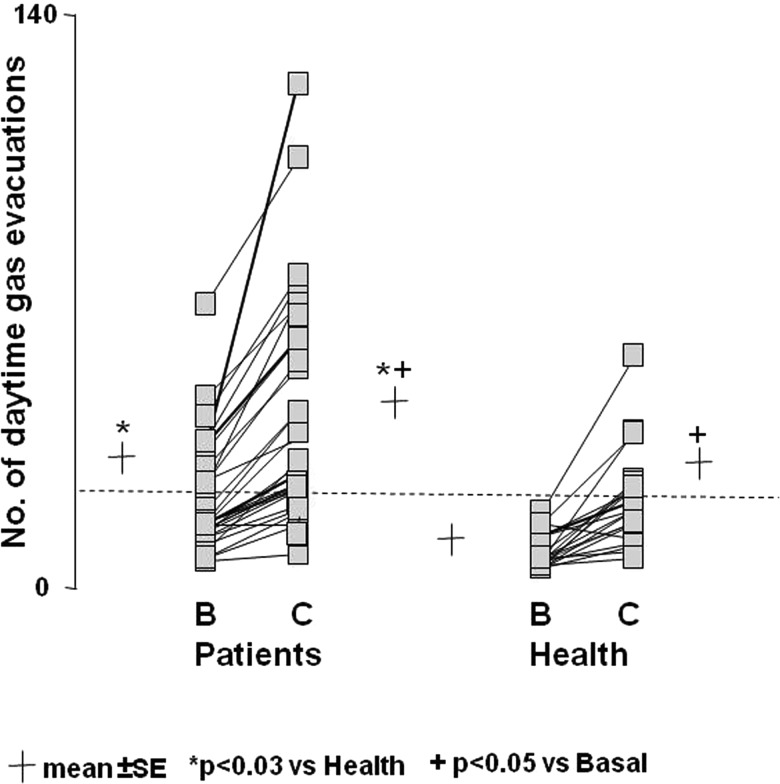
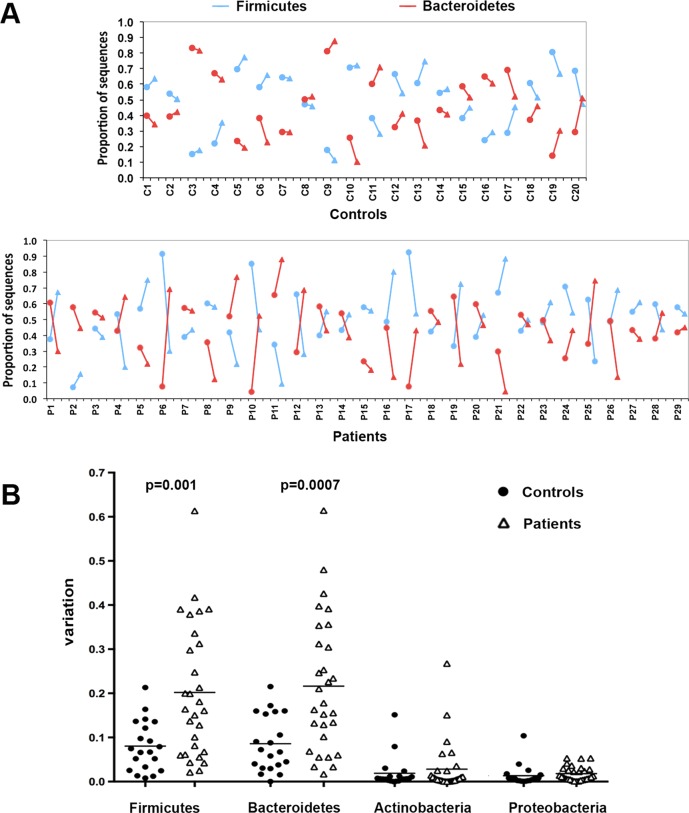
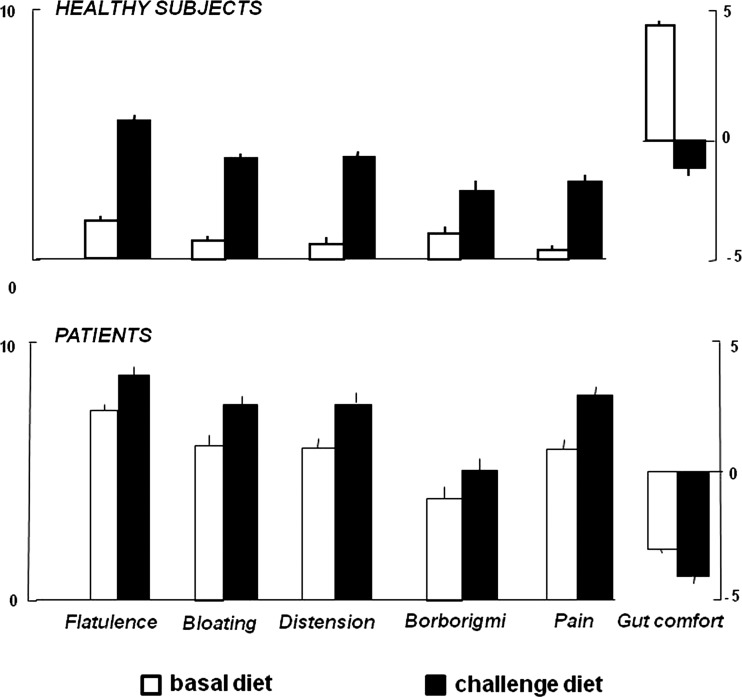
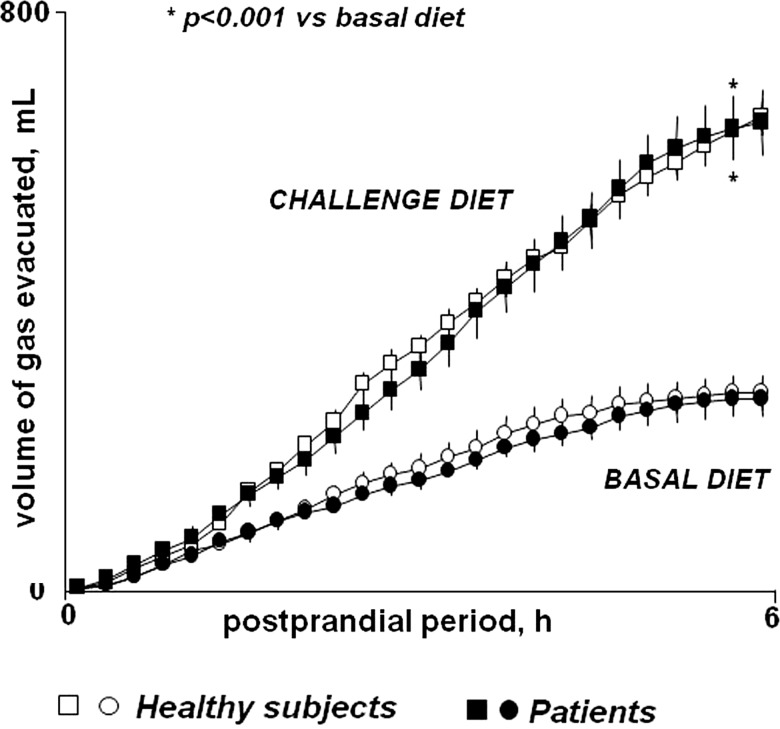
During basal phase, patients recorded more abdominal symptoms than healthy subjects in daily questionnaires (5.8±0.3 vs 0.4±0.2 mean discomfort/pain score, respectively; p=<0.0001) and more gas evacuations by an event marker (21.9±2.8 vs 7.4±1.0 daytime evacuations, respectively; p=0.0001), without differences in the volume of gas evacuated after a standard meal (262±22 and 265±25 mL, respectively). On flatulogenic diet, both groups recorded more abdominal symptoms (7.9±0.3 and 2.8±0.4 discomfort/pain, respectively), number of gas evacuations (44.4±5.3 and 21.7±2.9 daytime evacuations, respectively) and had more gas production (656±52 and 673±78 mL, respectively; p<0.05 vs basal diet for all). When challenged with flatulogenic diet, patients' microbiota developed instability in composition, exhibiting variations in the main phyla and reduction of microbial diversity, whereas healthy subjects' microbiota were stable. Taxa from Bacteroides fragilis or Bilophila wadsworthia correlated with number of gas evacuations or volume of gas evacuated, respectively.
Patients complaining of flatulence have a poor tolerance of intestinal gas, which is associated with instability of the microbial ecosystem.
描述饮食对腹胀患者腹部症状、肛门排气、肠道气体分布和结肠微生物群的影响。
腹胀患者(n=30)和健康对照者(n=20)被要求遵循他们的日常饮食3 天(基础期),并在另 3 天内食用高产气饮食(挑战期)。
在基础期,患者在日常问卷中记录的腹部症状多于健康对照组(分别为 5.8±0.3 和 0.4±0.2 个不适/疼痛评分;p<0.0001),通过事件标记器记录的排气次数也多于健康对照组(分别为 21.9±2.8 和 7.4±1.0 次白天排气;p=0.0001),但标准餐后排出的气体量无差异(分别为 262±22 和 265±25 mL)。在产气饮食下,两组患者均记录到更多的腹部症状(分别为 7.9±0.3 和 2.8±0.4 个不适/疼痛评分)、更多的排气次数(分别为 44.4±5.3 和 21.7±2.9 次白天排气)和更多的气体生成(分别为 656±52 和 673±78 mL;p<0.05 与基础饮食相比)。当接受产气饮食挑战时,患者的微生物群组成变得不稳定,主要菌群发生变化,微生物多样性减少,而健康对照者的微生物群则保持稳定。脆弱拟杆菌或沃氏嗜胆菌的分类群与排气次数或排气量呈正相关。
腹胀患者对肠道气体的耐受性较差,这与微生物生态系统的不稳定性有关。