School of Biotechnology and Biomolecular Sciences, University of New South Wales, Sydney, New South Wales, Australia.
PLoS One. 2013 Jun 11;8(6):e65342. doi: 10.1371/journal.pone.0065342. Print 2013.
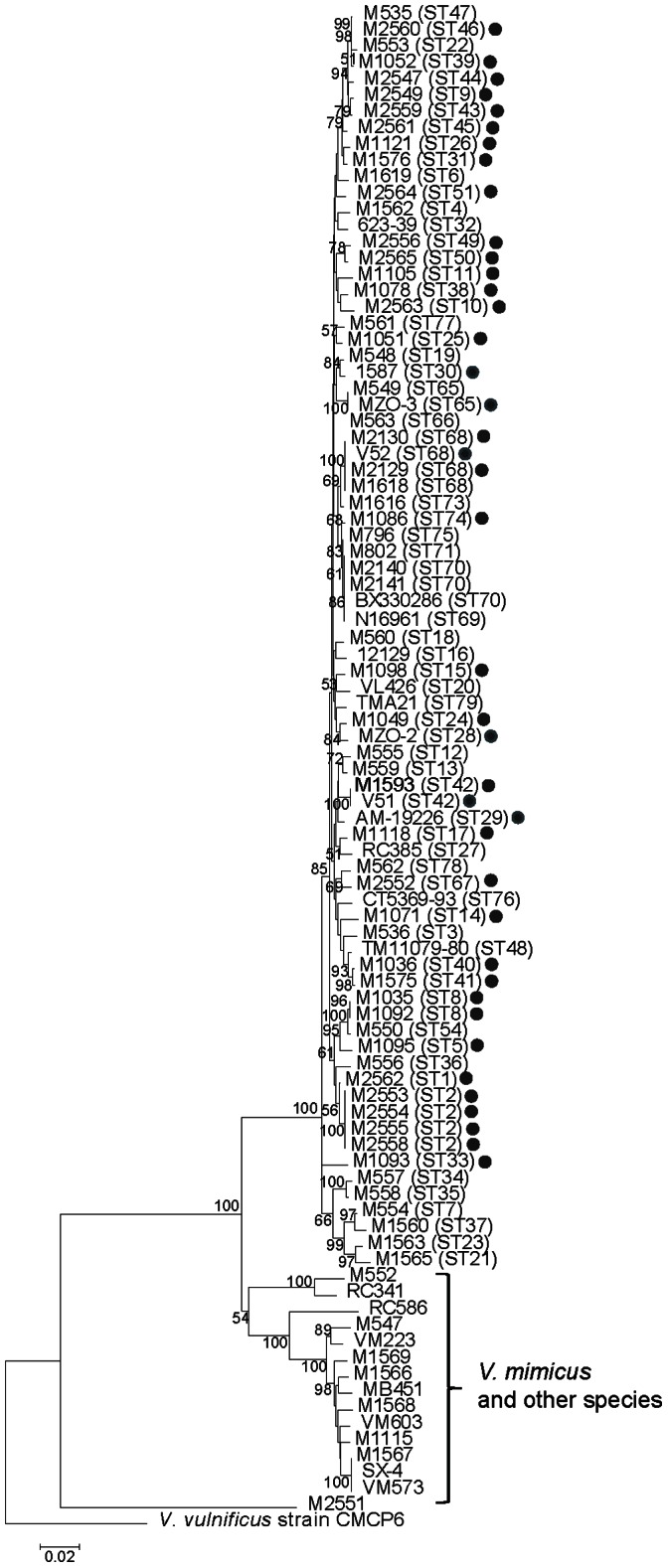
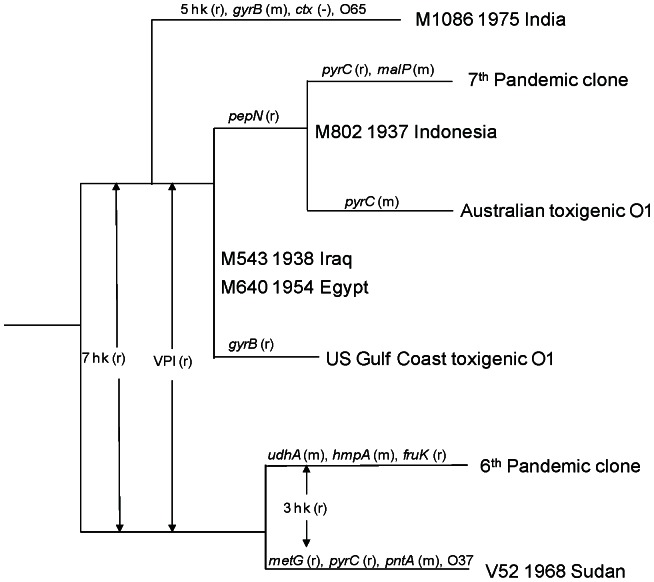
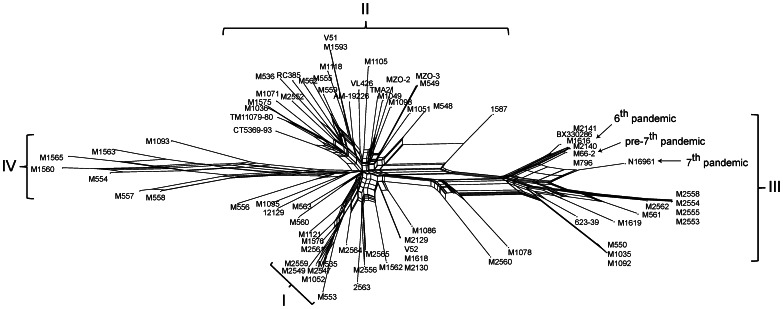
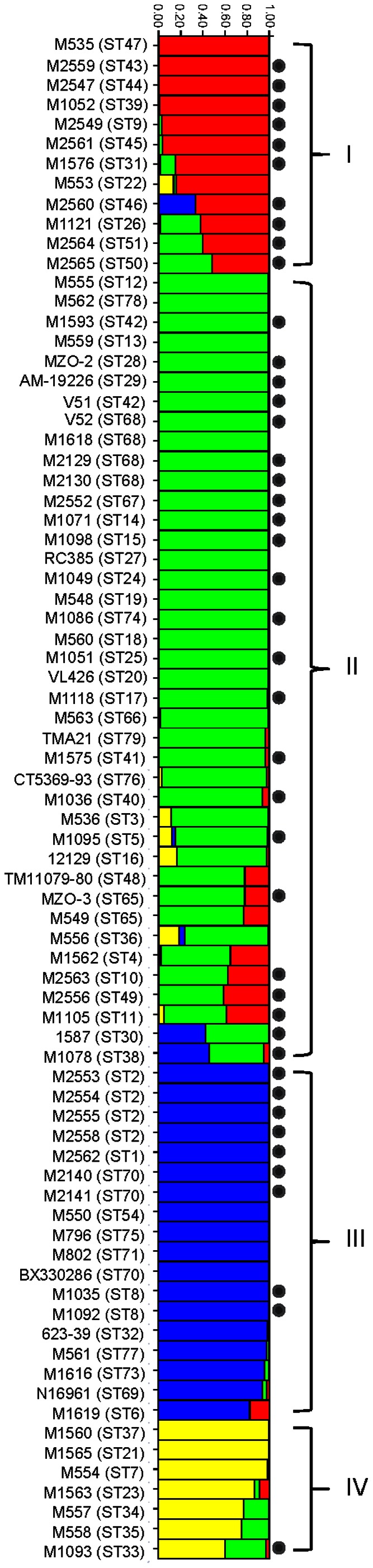
Pathogenic non-O1/non-O139 Vibrio cholerae strains can cause sporadic outbreaks of cholera worldwide. In this study, multilocus sequence typing (MLST) of seven housekeeping genes was applied to 55 non-O1/non-O139 isolates from clinical and environmental sources. Data from five published O1 isolates and 17 genomes were also included, giving a total of 77 isolates available for analysis. There were 66 sequence types (STs), with the majority being unique, and only three clonal complexes. The V. cholerae strains can be divided into four subpopulations with evidence of recombination among the subpopulations. Subpopulations I and III contained predominantly clinical strains. PCR screening for virulence factors including Vibrio pathogenicity island (VPI), cholera toxin prophage (CTXΦ), type III secretion system (T3SS), and enterotoxin genes (rtxA and sto/stn) showed that combinations of these factors were present in the clinical isolates with 85.7% having rtxA, 51.4% T3SS, 31.4% VPI, 31.4% sto/stn (NAG-ST) and 11.4% CTXΦ. These factors were also present in environmental isolates but at a lower frequency. Five strains previously mis-identified as V. cholerae serogroups O114 to O117 were also analysed and formed a separate population with V. mimicus. The MLST scheme developed in this study provides a framework to identify sporadic cholera isolates by genetic identity.
致病性非 O1/非 O139 霍乱弧菌株可在全球范围内引起散发性霍乱暴发。在这项研究中,应用多位点序列分型(MLST)对来自临床和环境来源的 55 株非 O1/非 O139 分离株的 7 个管家基因进行了分析。同时还包括了来自 5 株已发表的 O1 分离株和 17 个基因组的数据,总计可用于分析的分离株为 77 株。共发现 66 种序列型(ST),其中大多数是独特的,仅有 3 个克隆复合体。这些霍乱弧菌株可分为 4 个亚群,亚群之间存在重组的证据。亚群 I 和 III 主要包含临床菌株。针对毒力因子(包括霍乱弧菌致病岛(VPI)、霍乱毒素前噬菌体(CTXΦ)、III 型分泌系统(T3SS)和肠毒素基因(rtxA 和 sto/stn)进行 PCR 筛选显示,这些因子的组合存在于临床分离株中,其中 85.7%携带 rtxA,51.4%携带 T3SS,31.4%携带 VPI,31.4%携带 sto/stn(NAG-ST),11.4%携带 CTXΦ。这些因子也存在于环境分离株中,但频率较低。5 株先前被错误鉴定为 O114 至 O117 血清群的霍乱弧菌株也进行了分析,它们与 V. mimicus 形成了一个单独的种群。本研究中建立的 MLST 方案为通过遗传同一性识别散发性霍乱分离株提供了一个框架。