Shaygannejad Vahid, Ardestani Parisa Emami, Ghasemi Majid, Meamar Rokhsareh
Department of Neurology, Isfahan University of Medical Sciences, Isfahan, Iran ; Department of Neurology, Isfahan Neurosciences Research Center, Isfahan University of Medical Sciences, Isfahan, Iran.
Int J Prev Med. 2013 May;4(Suppl 2):S189-93.
Restless legs syndrome (RLS) is a common movement disorder. The occurrence of this syndrome is due to genetic factors and lifestyle. This study performed to determine restless legs syndrome (RLS) prevalence in Iranian multiple sclerosis (MS) patients and the possible risk factors.
This cross-sectional study was conducted with MS patients, and the age- and sex-matched control group comprised healthy persons. Then, all subjects were asked about RLS symptoms. After the diagnosis of RLS, the patients were divided into two groups: With and without RLS. In both groups, the following variables were evaluated: Age, sex, other underlying disease, duration of MS, MS course, family history of RLS, history of anemia, and drug intakes. The severity of the disease in subjects diagnosed with RLS was also evaluated.
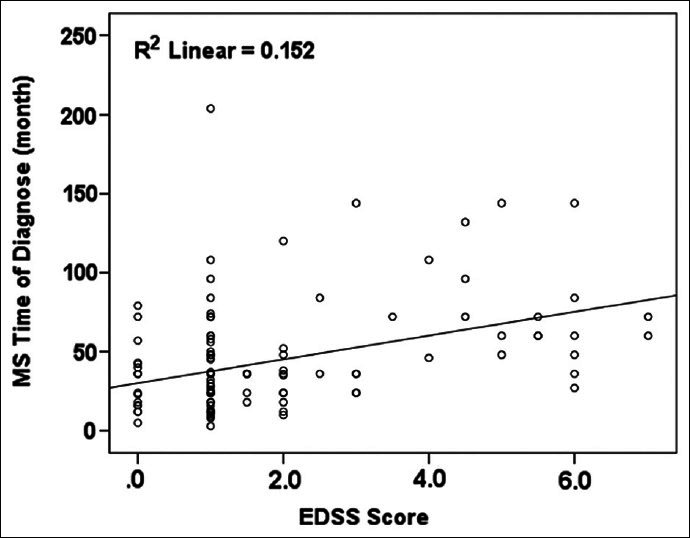
A total of 126 patients in the MS group and 126 healthy controls were included in the study, with no statistically significant differences between them in terms of age and gender. In MS group, 82 (65.1%) and, in control group, 16 (12.7%) had RLS. The frequency of RLS in the MS patients was significantly higher than that in the control group. Among MS patients, 60 male (73.2%) and 22 female (26.8%) had RLS. Mean age of MS patients with RLS was significantly higher than that in MS patients without RLS. MS patients and higher EDSS score had more RLS symptoms.
We suggest that RLS always be considered during neurological examinations of MS patients.
不安腿综合征(RLS)是一种常见的运动障碍。该综合征的发生归因于遗传因素和生活方式。本研究旨在确定伊朗多发性硬化症(MS)患者中不安腿综合征(RLS)的患病率及可能的危险因素。
本横断面研究针对MS患者进行,年龄和性别匹配的对照组为健康人。然后,询问所有受试者有关RLS症状。RLS诊断后,患者被分为两组:有RLS组和无RLS组。在两组中,评估以下变量:年龄、性别、其他基础疾病、MS病程、MS病情、RLS家族史、贫血史和药物摄入情况。还评估了诊断为RLS的受试者的疾病严重程度。
研究共纳入126例MS组患者和126例健康对照,他们在年龄和性别方面无统计学显著差异。MS组中,82例(65.1%)有RLS,对照组中16例(12.7%)有RLS。MS患者中RLS的发生率显著高于对照组。在MS患者中,60例男性(73.2%)和22例女性(26.8%)有RLS。有RLS的MS患者的平均年龄显著高于无RLS的MS患者。MS患者中EDSS评分较高者RLS症状更多。
我们建议在对MS患者进行神经学检查时应始终考虑RLS。