School of Public Health, Curtin Health Innovation Research Institute, Biosciences Research Precinct, Faculty of Health Sciences, Curtin University, Kent st, Bentley, WA, 6102, Australia.
J Neuroinflammation. 2013 Jun 19;10:73. doi: 10.1186/1742-2094-10-73.
Emerging evidence suggests that disturbances in the blood-brain barrier (BBB) may be pivotal to the pathogenesis and pathology of vascular-based neurodegenerative disorders. Studies suggest that heightened systemic and central inflammations are associated with BBB dysfunction. This study investigated the effect of the anti-inflammatory nutraceuticals garlic extract-aged (GEA), alpha lipoic acid (ALA), niacin, and nicotinamide (NA) in a murine dietary-induced model of BBB dysfunction.
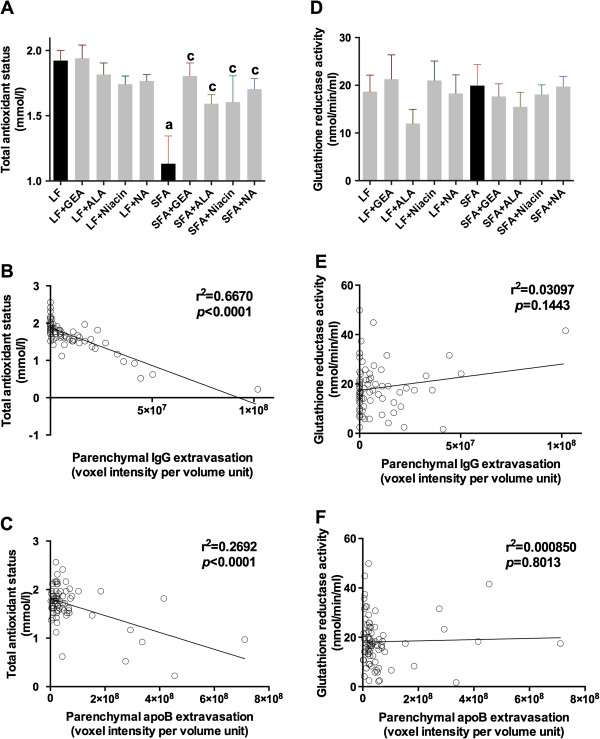
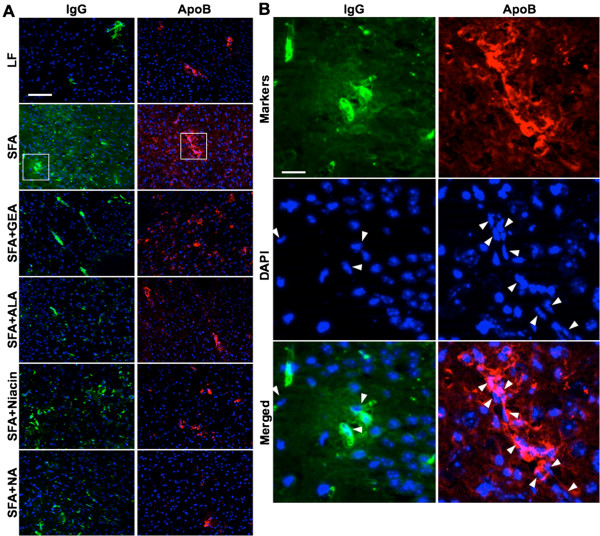
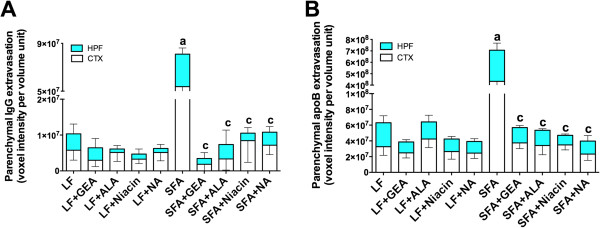
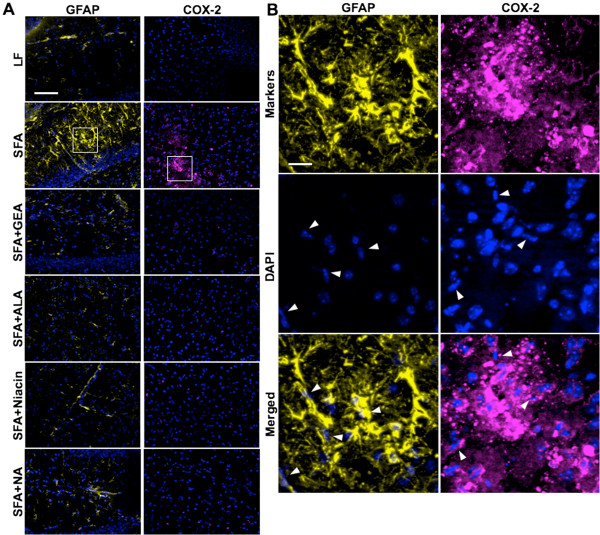
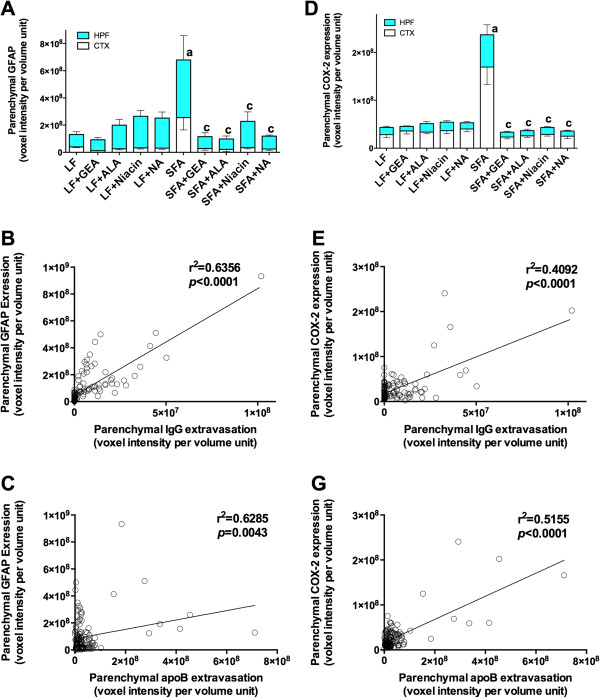
C57BL/6 mice were fed a diet enriched in saturated fatty acids (SFA, 40% fat of total energy) for nine months to induce systemic inflammation and BBB disturbances. Nutraceutical treatment groups included the provision of either GEA, ALA, niacin or NA in the positive control SFA-group and in low-fat fed controls. Brain parenchymal extravasation of plasma derived immunoglobulin G (IgG) and large macromolecules (apolipoprotein (apo) B lipoproteins) measured by quantitative immunofluorescent microscopy, were used as markers of disturbed BBB integrity. Parenchymal glial fibrillar acidic protein (GFAP) and cyclooxygenase-2 (COX-2) were considered in the context of surrogate markers of neurovascular inflammation and oxidative stress. Total anti-oxidant status and glutathione reductase activity were determined in plasma.
Brain parenchymal abundance of IgG and apoB lipoproteins was markedly exaggerated in mice maintained on the SFA diet concomitant with significantly increased GFAP and COX-2, and reduced systemic anti-oxidative status. The nutraceutical GEA, ALA, niacin, and NA completely prevented the SFA-induced disturbances of BBB and normalized the measures of neurovascular inflammation and oxidative stress.
The anti-inflammatory nutraceutical agents GEA, ALA, niacin, or NA are potent inhibitors of dietary fat-induced disturbances of BBB induced by systemic inflammations.
新出现的证据表明,血脑屏障(BBB)的紊乱可能是血管性神经退行性疾病发病机制和病理学的关键。研究表明,全身和中枢炎症的加剧与 BBB 功能障碍有关。本研究调查了抗炎营养保健品大蒜提取物-老化(GEA)、α-硫辛酸(ALA)、烟酸和烟酰胺(NA)在小鼠饮食诱导的 BBB 功能障碍模型中的作用。
C57BL/6 小鼠喂食富含饱和脂肪酸(SFA,总能量的 40%脂肪)的饮食 9 个月,以诱导全身炎症和 BBB 紊乱。营养保健品治疗组包括在阳性对照 SFA 组和低脂喂养对照组中提供 GEA、ALA、烟酸或 NA。通过定量免疫荧光显微镜测量脑实质中血浆衍生免疫球蛋白 G(IgG)和大分子(载脂蛋白(apo)B 脂蛋白)的外渗,作为 BBB 完整性受损的标志物。胶质纤维酸性蛋白(GFAP)和环氧化酶-2(COX-2)作为神经血管炎症和氧化应激的替代标志物进行考虑。在血浆中测定总抗氧化状态和谷胱甘肽还原酶活性。
在维持 SFA 饮食的小鼠中,脑实质中 IgG 和 apoB 脂蛋白的含量明显增加,同时 GFAP 和 COX-2 显著增加,全身抗氧化状态降低。营养保健品 GEA、ALA、烟酸和 NA 完全阻止了 SFA 诱导的 BBB 紊乱,并使神经血管炎症和氧化应激的测量值正常化。
抗炎营养保健品 GEA、ALA、烟酸或 NA 是膳食脂肪诱导的全身炎症引起的 BBB 紊乱的有效抑制剂。