Department of Pathology and Infectious Disease, Royal Veterinary College, Hawkshead Lane, North Mymms, Hertfordshire AL9 7TA, United Kingdom.
Vet Res. 2013 Jun 19;44(1):43. doi: 10.1186/1297-9716-44-43.
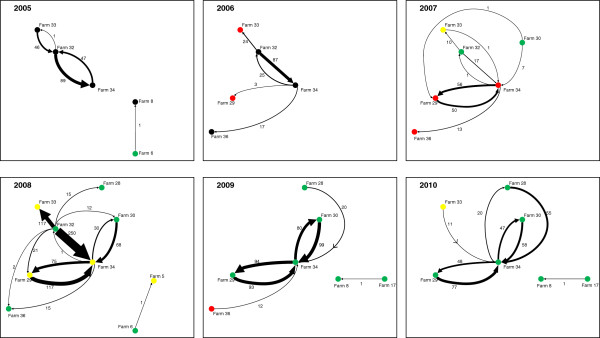
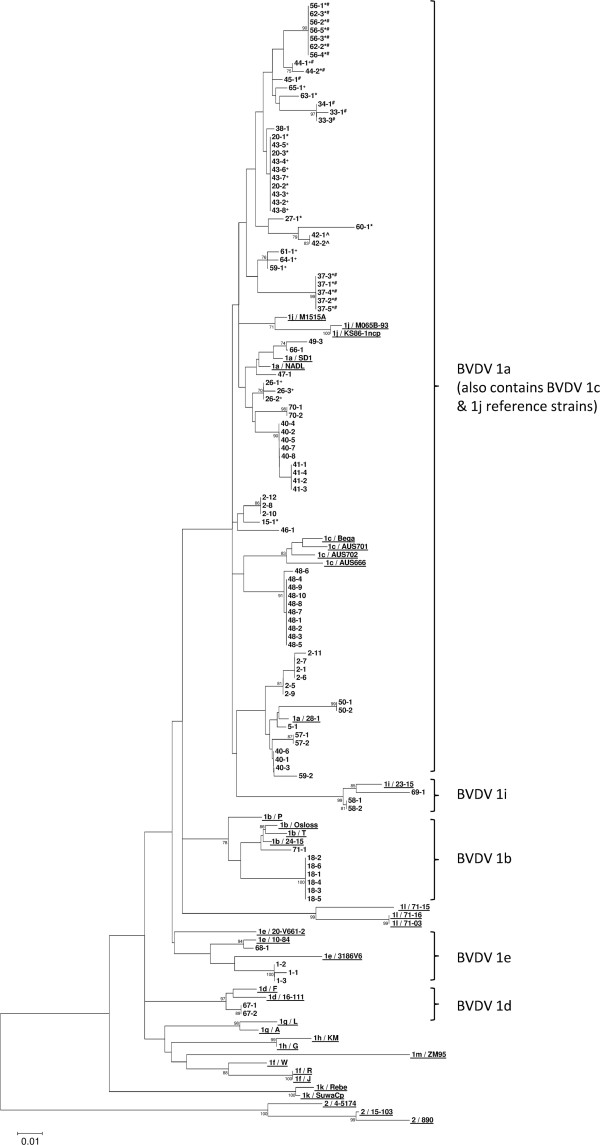
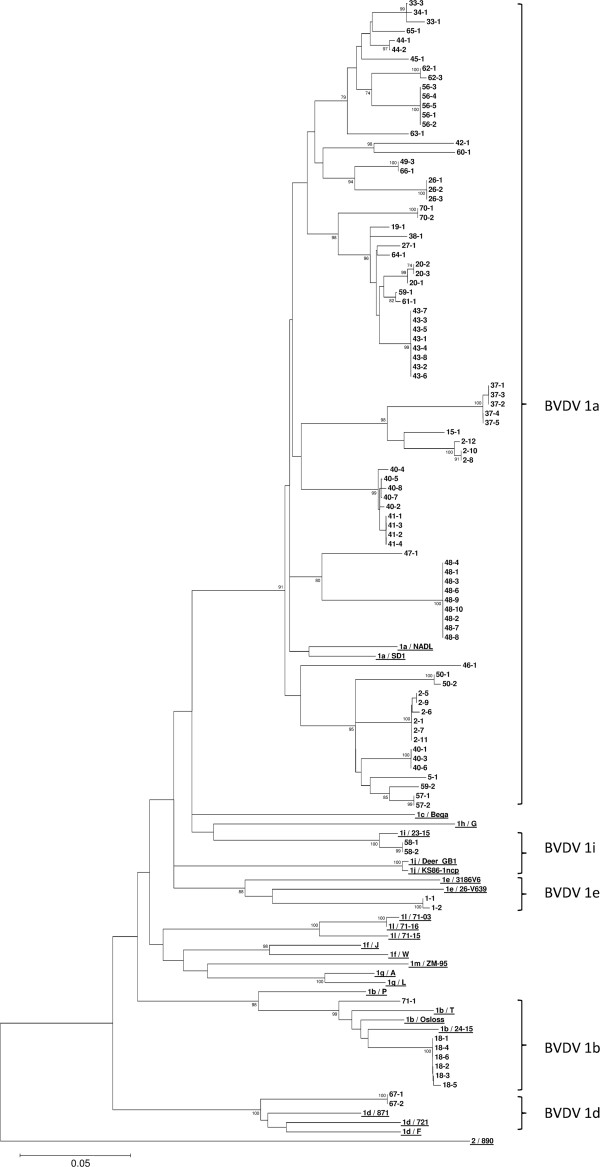
Bovine Viral Diarrhoea Virus (BVDV) is a pestivirus which infects cattle populations worldwide and is recognised as a significant source of economic loss through its impact on health and productivity. Studies investigating the molecular epidemiology of BVDV can give invaluable information about the diversity of viral strains present in a population and this, in turn, can inform control programs, drive vaccine development and determine likely infection sources. The current study investigated 104 viral isolates from forty farms across the UK. Through phylogenetic and nucleotide sequence analysis of the 5'UTR and Npro regions of the isolates investigated, it was determined that BVDV 1a was the predominant sub-genotype. However, BVDV 1b, 1e and 1i were also identified and, for the first time in the UK, BVDV 1d. Through analysis of animal movement data alongside the phylogenetic analysis of these BVD isolates, it was possible to link animal movements to the viral isolates present on several premises and, for the first time, begin to elucidate the routes of viral transmission. With further work, this type of analysis would enable accurate determination and quantification of the true biosecurity risk factors associated with BVDV transmission.
牛病毒性腹泻病毒(BVDV)是一种瘟病毒,可感染全球的牛群,并且由于其对健康和生产力的影响,被认为是造成重大经济损失的重要根源。对 BVDV 的分子流行病学进行研究可以提供有关病毒株在特定群体中多样性的宝贵信息,而这反过来又可以为控制计划提供信息、推动疫苗开发并确定可能的感染源。本研究调查了来自英国 40 个农场的 104 个病毒分离株。通过对所研究的分离株 5'UTR 和 Npro 区的遗传进化和核苷酸序列分析,确定 1a 亚型是主要的亚群。但是,也鉴定出了 1b、1e 和 1i 亚型,并且在英国首次鉴定出了 1d 亚型。通过对动物运动数据和这些 BVD 分离株的遗传进化分析相结合,能够将动物的运动与几个场所存在的病毒分离株联系起来,并首次开始阐明病毒传播的途径。通过进一步的研究,这种分析将能够准确确定和量化与 BVDV 传播相关的真实生物安全风险因素。