Armstrong J S, Weinzwieg I P, Davies J D
Department of Pathology, Royal Infirmary, Bristol.
J Clin Pathol. 1990 Jul;43(7):604-7. doi: 10.1136/jcp.43.7.604.
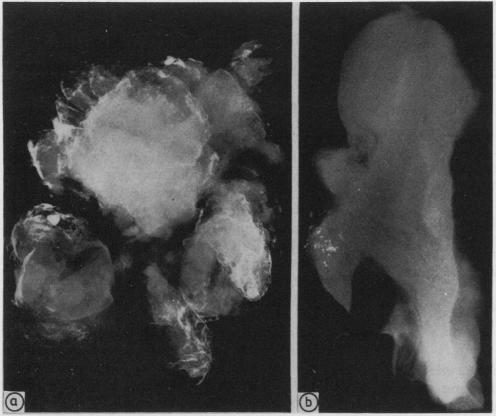
Traditionally India ink has been used to mark surgical resection margins, more recently with acetone to aid drying. Alternative methods have been suggested in recent months, including solutions of alcian blue, and Tippex. These methods use one colour only and Tippex is radiodense. Artists' pigments have been used, but their radiodensity makes them unsuitable for the detailed mammograms of the sliced screened specimens. An alternative method was specifically designed for impalpable breast lesions. It is based on coloured gelatins that are painted on to the biopsy specimen before dissection. The markers are radiolucent, quick to set, and do not penetrate the connective tissue. They can be applied to both fresh and fixed tissues, and the cost is about 0.05 pounds a specimen. The system is also suitable for marking other large specimens.
传统上,印度墨水一直被用于标记手术切除边缘,最近则使用丙酮来辅助干燥。近几个月来,人们提出了其他方法,包括阿尔新蓝溶液和修正液。这些方法仅使用一种颜色,且修正液具有放射密度。有人使用过艺术家颜料,但因其放射密度使其不适用于切片筛查标本的详细乳房X光片。一种替代方法是专门为不可触及的乳腺病变设计的。它基于彩色明胶,在解剖前涂在活检标本上。这些标记物是射线可透过的,凝固快,不会穿透结缔组织。它们可应用于新鲜组织和固定组织,每个标本的成本约为0.05英镑。该系统也适用于标记其他大标本。