Eskandarloo Amir, Abdinian Mehrdad, Salemi Fatemeh, Hashemzadeh Zahra, Safaei Mehran
Department of Oral and Maxillofacial Radiology, School of Dentistry, Hamedan University of Medical Science, Hamedan, Iran.
Dent Res J (Isfahan). 2012 Dec;9(Suppl 1):S81-7.
Bone density measurement in a radiographic view is a valuable method for evaluating the density of bone quality before performing some dental procedures such as, dental implant placements. It seems that Cone-Beam Computed Tomography (CBCT) can be used as a diagnostic tool for evaluating the density of the bone, prior to any treatment, as the reported radiation dose in this method is minimal. The aim of this study is to investigate the effect of object location on the density measurement in CBCT versus Multislice computed tomography (CT).
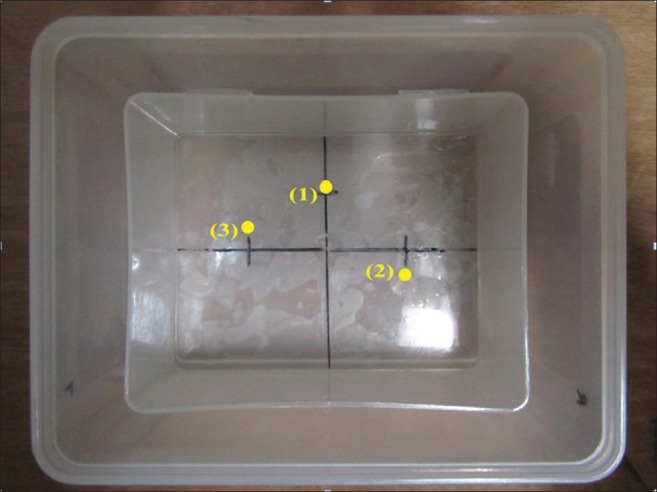
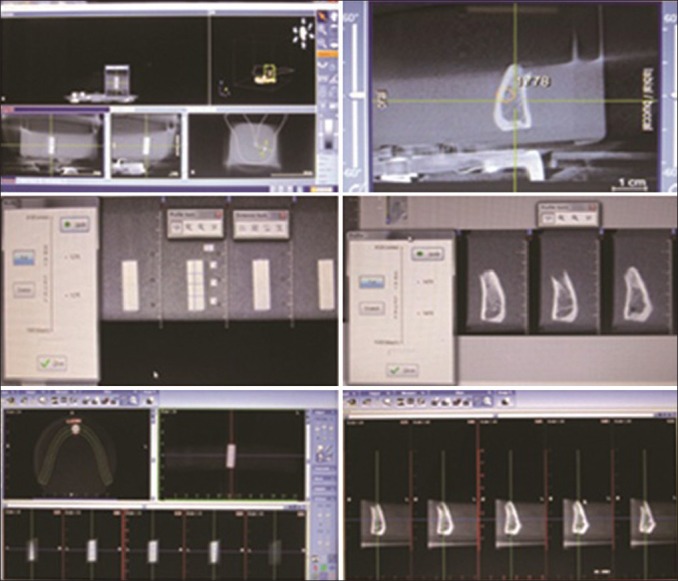
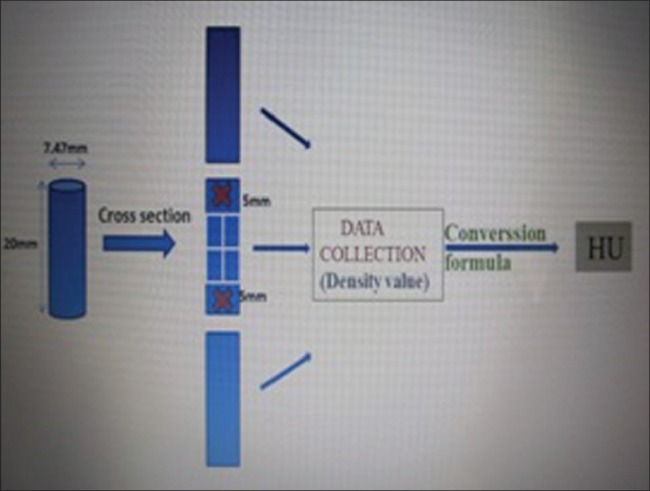
In an experimental study, three samples with similar dimensions, but different compositions, different densities (Polyethylene, Polyamide, Polyvinyl Chloride), and three bone pieces of different parts of the mandibular bone were imaged in three different positions by CBCT and Multislice CT sets. The average density value was computed for each sample in each position. Then the data obtained from each CBCT was converted to a Hounsfield unit and evaluated using a single variable T analysis. A P value <0.05 was considered to be significant.
The density in a Multislice CT is stable in the form of a Hounsfield Number, but this density is variable in the images acquired through CBCT, and the change in the position results in significant changes in the density. In this study, a statistically significant difference (P value = 0.000) has been observed for the position of the sample and its density in CBCT in comparison to Multislice CT.
Density values in CBCT are not real because they are affected by the position of the object in the machine.
在进行某些牙科手术(如种植牙植入)之前,通过X线摄影视图测量骨密度是评估骨质密度的一种有价值的方法。锥形束计算机断层扫描(CBCT)似乎可以用作在任何治疗之前评估骨密度的诊断工具,因为该方法报告的辐射剂量极小。本研究的目的是调查物体位置对CBCT与多层计算机断层扫描(CT)中密度测量的影响。
在一项实验研究中,对三个尺寸相似但成分不同、密度不同(聚乙烯、聚酰胺、聚氯乙烯)的样本以及下颌骨不同部位的三块骨块,通过CBCT和多层CT设备在三个不同位置进行成像。计算每个样本在每个位置的平均密度值。然后将从每个CBCT获得的数据转换为亨氏单位,并使用单变量T分析进行评估。P值<0.05被认为具有显著性。
多层CT中的密度以亨氏数的形式稳定,但通过CBCT获取的图像中的这种密度是可变的,并且位置的变化会导致密度的显著变化。在本研究中,与多层CT相比,观察到CBCT中样本位置及其密度存在统计学显著差异(P值=0.000)。
CBCT中的密度值不真实,因为它们受物体在机器中的位置影响。