Systems Biology Program, Centro Nacional de Biotecnología CSIC, Cantoblanco-Madrid, Spain.
PLoS One. 2013 Jun 20;8(6):e65986. doi: 10.1371/journal.pone.0065986. Print 2013.
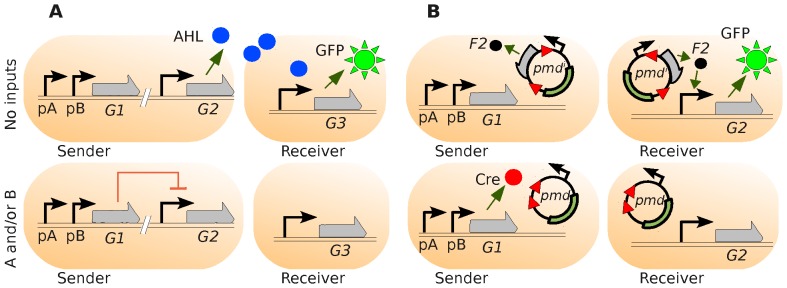
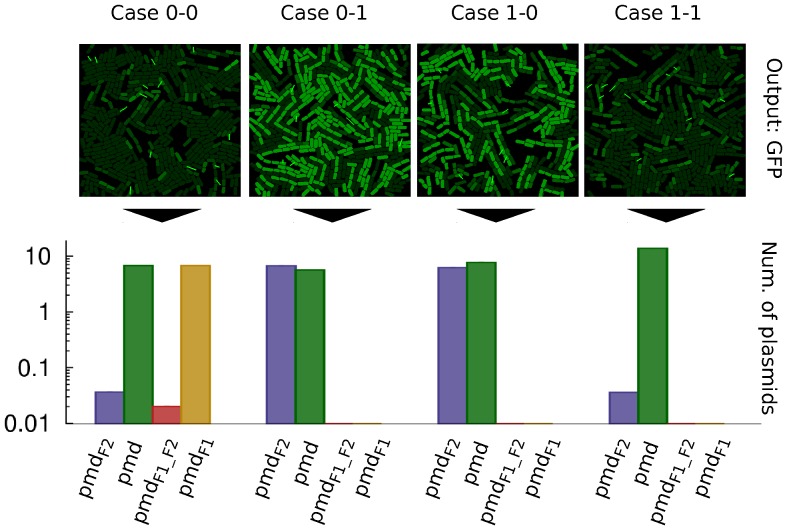
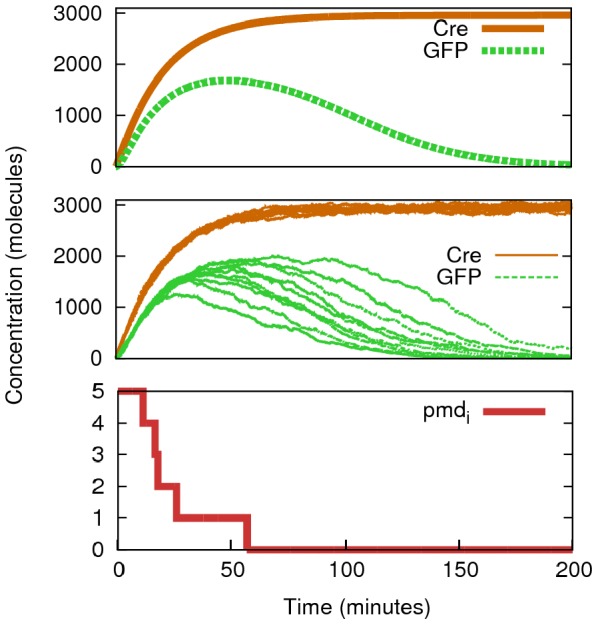
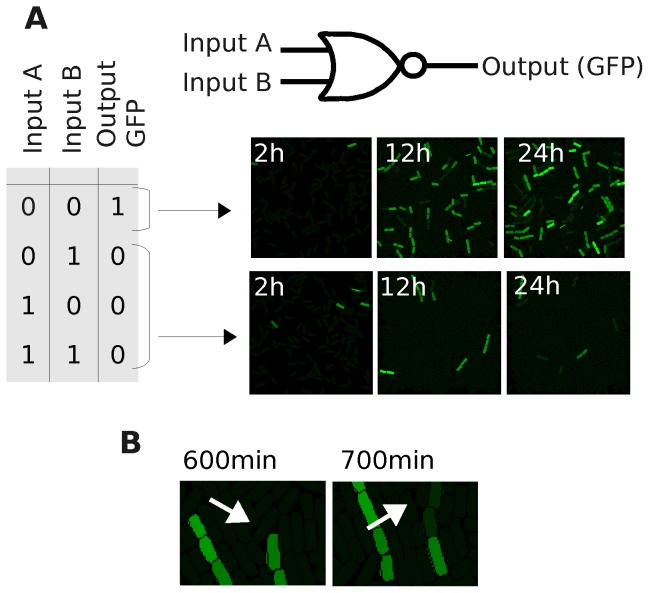
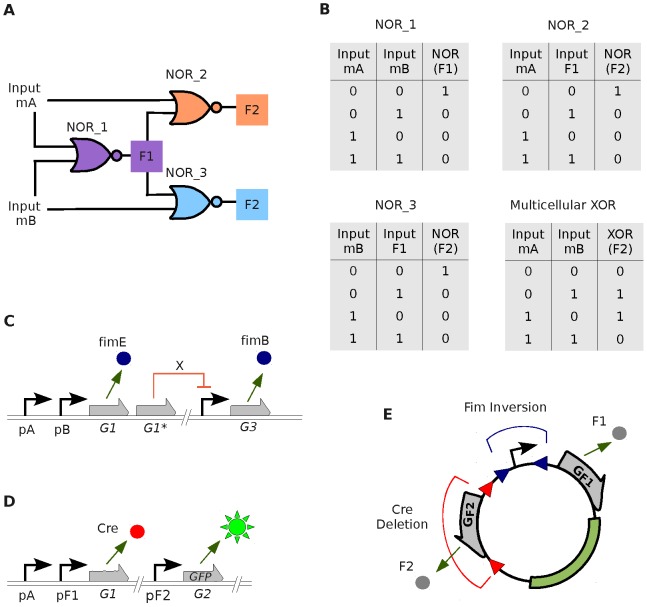
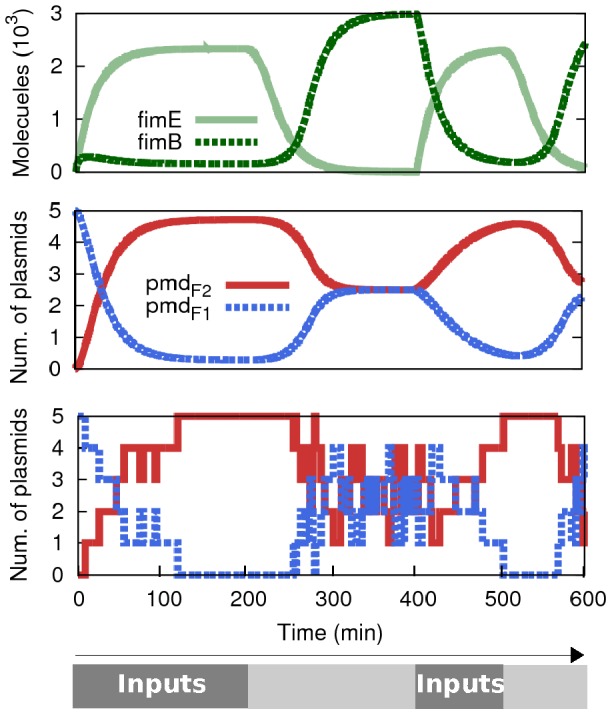
Recent efforts in synthetic biology have focussed on the implementation of logical functions within living cells. One aim is to facilitate both internal "re-programming" and external control of cells, with potential applications in a wide range of domains. However, fundamental limitations on the degree to which single cells may be re-engineered have led to a growth of interest in multicellular systems, in which a "computation" is distributed over a number of different cell types, in a manner analogous to modern computer networks. Within this model, individual cell type perform specific sub-tasks, the results of which are then communicated to other cell types for further processing. The manner in which outputs are communicated is therefore of great significance to the overall success of such a scheme. Previous experiments in distributed cellular computation have used global communication schemes, such as quorum sensing (QS), to implement the "wiring" between cell types. While useful, this method lacks specificity, and limits the amount of information that may be transferred at any one time. We propose an alternative scheme, based on specific cell-cell conjugation. This mechanism allows for the direct transfer of genetic information between bacteria, via circular DNA strands known as plasmids. We design a multi-cellular population that is able to compute, in a distributed fashion, a Boolean XOR function. Through this, we describe a general scheme for distributed logic that works by mixing different strains in a single population; this constitutes an important advantage of our novel approach. Importantly, the amount of genetic information exchanged through conjugation is significantly higher than the amount possible through QS-based communication. We provide full computational modelling and simulation results, using deterministic, stochastic and spatially-explicit methods. These simulations explore the behaviour of one possible conjugation-wired cellular computing system under different conditions, and provide baseline information for future laboratory implementations.
最近,合成生物学的研究重点集中在在活细胞内实现逻辑功能上。其目的之一是促进细胞的内部“重新编程”和外部控制,在广泛的领域都有潜在的应用。然而,单个细胞可被重新设计的程度受到了根本限制,这导致人们对多细胞系统的兴趣日益增加,在多细胞系统中,“计算”分布在许多不同的细胞类型中,类似于现代计算机网络。在这种模型中,单个细胞类型执行特定的子任务,然后将结果传达给其他细胞类型以进行进一步处理。因此,输出的传达方式对这种方案的整体成功具有重要意义。分布式细胞计算的先前实验使用全局通信方案(如群体感应(QS))来实现细胞类型之间的“布线”。虽然这种方法很有用,但缺乏特异性,并且限制了一次可以传输的信息量。我们提出了一种替代方案,基于特定的细胞间连接。这种机制允许通过称为质粒的圆形 DNA 链在细菌之间直接转移遗传信息。我们设计了一个多细胞群体,能够以分布式方式计算布尔异或函数。通过这种方式,我们描述了一种基于混合不同菌株的分布式逻辑的一般方案;这是我们新方法的一个重要优势。重要的是,通过连接交换的遗传信息量明显高于基于 QS 的通信可能的量。我们使用确定性、随机和空间显式方法提供了全面的计算建模和模拟结果。这些模拟探索了不同条件下一种可能的连接布线细胞计算系统的行为,并为未来的实验室实现提供了基线信息。