Department of Chemistry, Stanford University, Stanford, California 94305, USA.
Nature. 2013 Jul 18;499(7458):320-3. doi: 10.1038/nature12304.
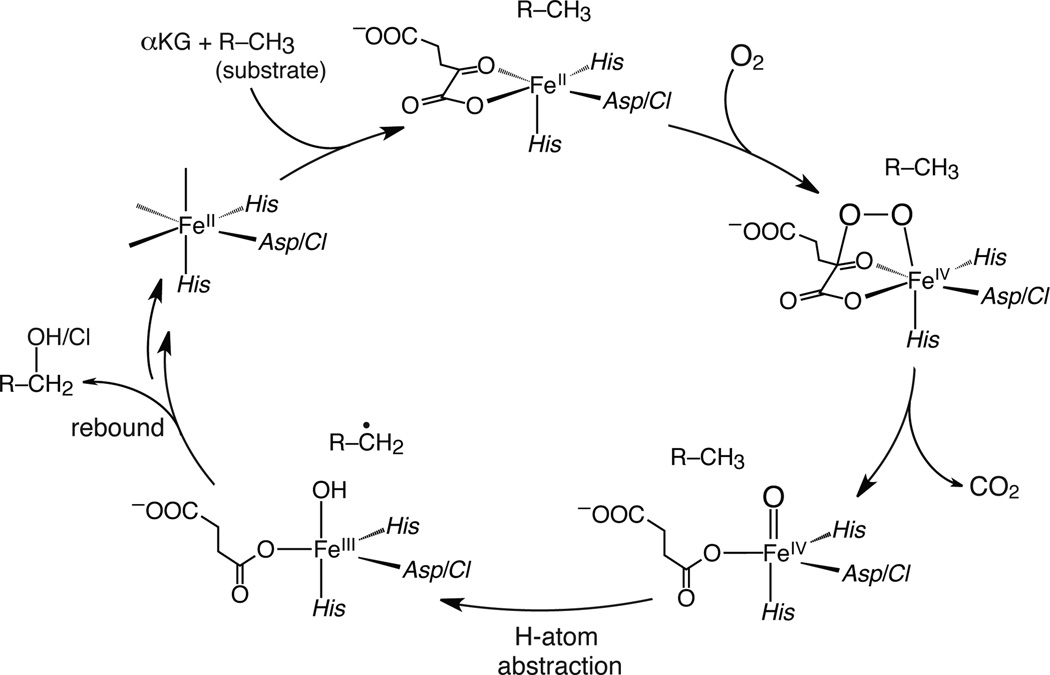
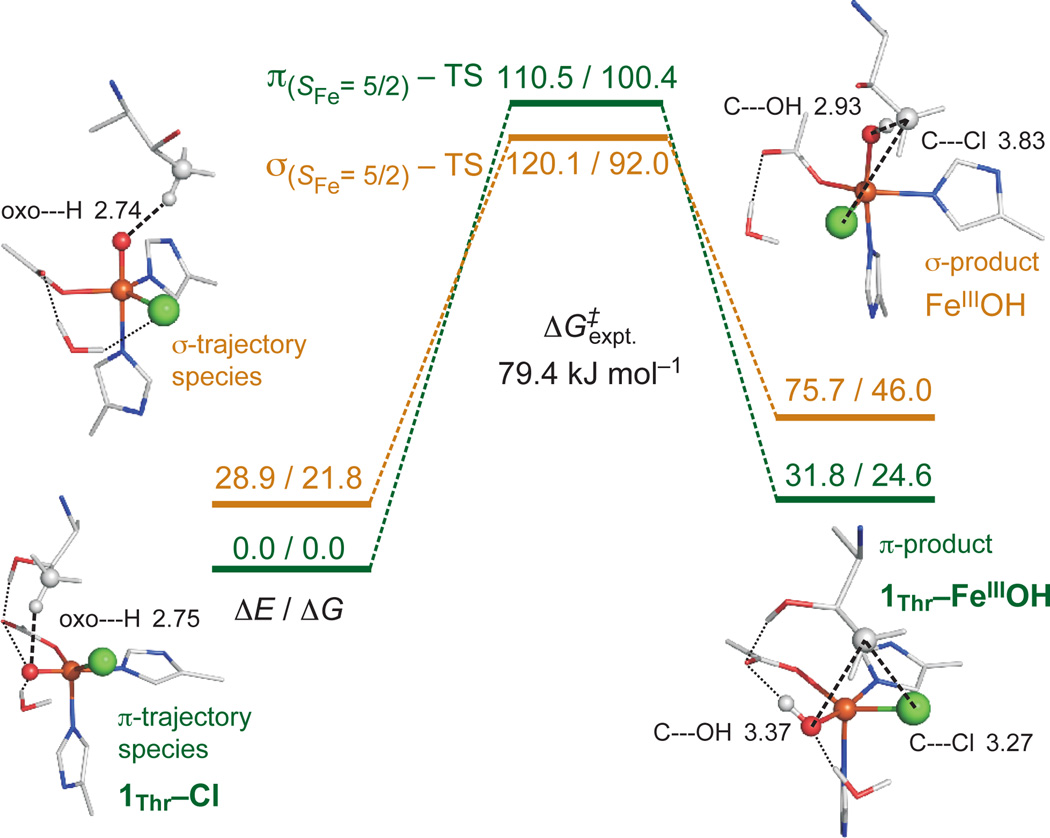
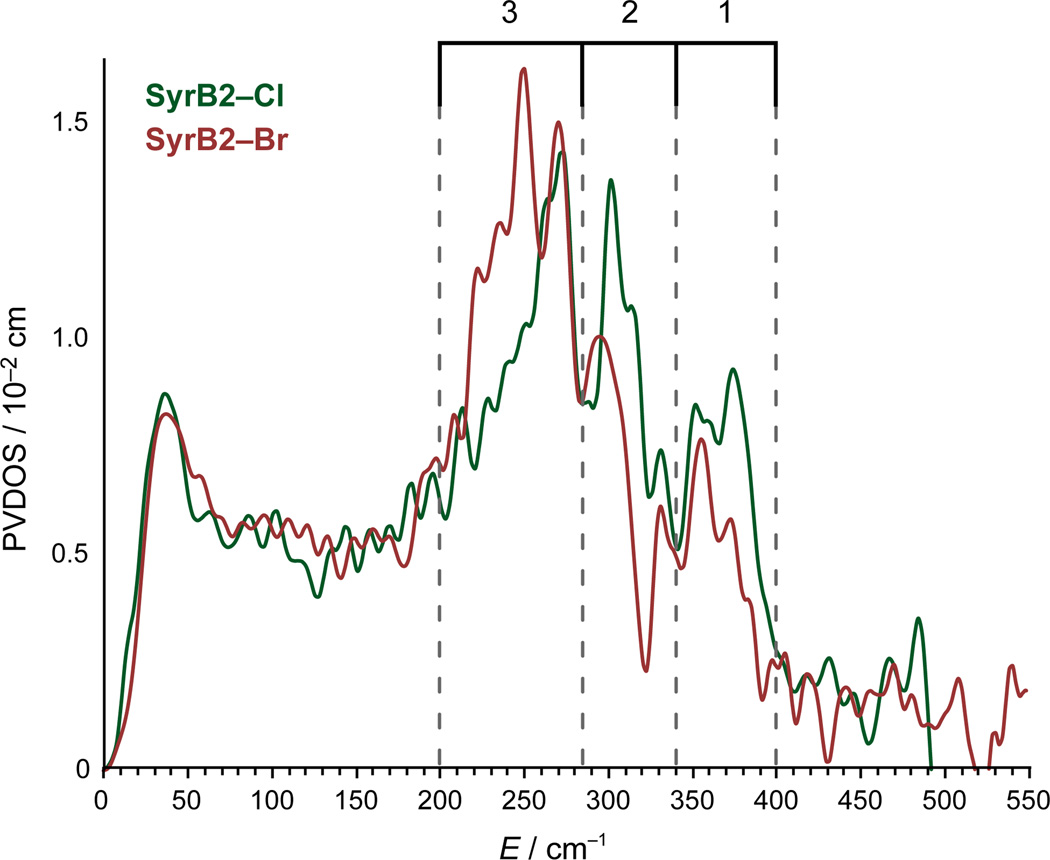
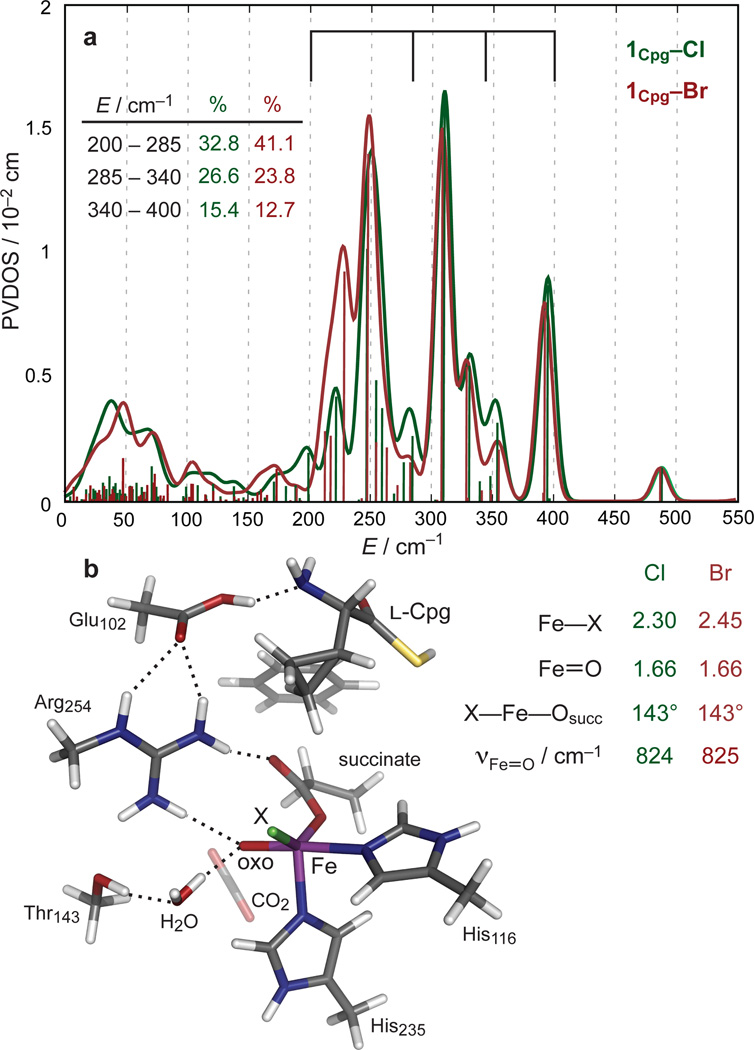
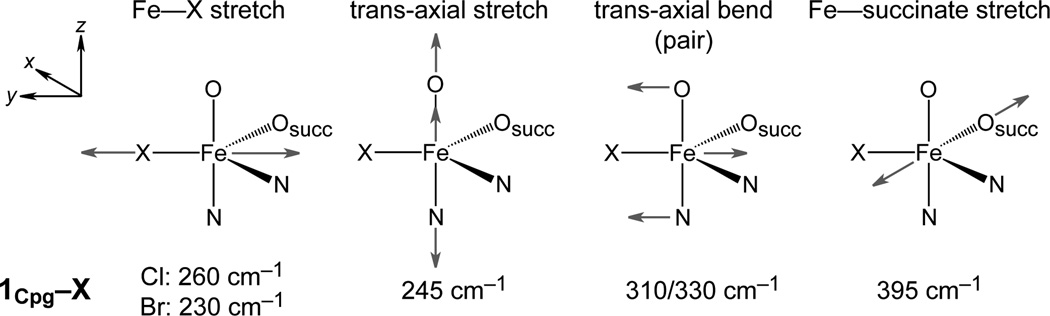
Mononuclear non-haem iron (NHFe) enzymes catalyse a broad range of oxidative reactions, including halogenation, hydroxylation, ring closure, desaturation and aromatic ring cleavage reactions. They are involved in a number of biological processes, including phenylalanine metabolism, the production of neurotransmitters, the hypoxic response and the biosynthesis of secondary metabolites. The reactive intermediate in the catalytic cycles of these enzymes is a high-spin S = 2 Fe(IV)=O species, which has been trapped for a number of NHFe enzymes, including the halogenase SyrB2 (syringomycin biosynthesis enzyme 2). Computational studies aimed at understanding the reactivity of this Fe(IV)=O intermediate are limited in applicability owing to the paucity of experimental knowledge about its geometric and electronic structure. Synchrotron-based nuclear resonance vibrational spectroscopy (NRVS) is a sensitive and effective method that defines the dependence of the vibrational modes involving Fe on the nature of the Fe(IV)=O active site. Here we present NRVS structural characterization of the reactive Fe(IV)=O intermediate of a NHFe enzyme, namely the halogenase SyrB2 from the bacterium Pseudomonas syringae pv. syringae. This intermediate reacts via an initial hydrogen-atom abstraction step, performing subsequent halogenation of the native substrate or hydroxylation of non-native substrates. A correlation of the experimental NRVS data to electronic structure calculations indicates that the substrate directs the orientation of the Fe(IV)=O intermediate, presenting specific frontier molecular orbitals that can activate either selective halogenation or hydroxylation.
单核非血红素铁 (NHFe) 酶催化广泛的氧化反应,包括卤化、羟化、环闭、去饱和和芳环裂解反应。它们参与许多生物过程,包括苯丙氨酸代谢、神经递质的产生、缺氧反应和次生代谢物的生物合成。这些酶的催化循环中的反应中间体是一种高自旋 S = 2 Fe(IV)=O 物种,已经捕获了许多 NHFe 酶,包括卤化酶 SyrB2(丁香霉素生物合成酶 2)。旨在了解这种 Fe(IV)=O 中间体反应性的计算研究由于对其几何和电子结构的实验知识有限,因此适用性有限。基于同步加速器的核共振振动光谱 (NRVS) 是一种灵敏有效的方法,可确定涉及 Fe 的振动模式对 Fe(IV)=O 活性位点性质的依赖性。在这里,我们展示了来自丁香假单胞菌 pv 的 NHFe 酶,即卤化酶 SyrB2 的反应性 Fe(IV)=O 中间体的 NRVS 结构特征。syringae。这种中间体通过初始氢原子抽象步骤反应,对天然底物进行后续卤化或对非天然底物进行羟化。实验 NRVS 数据与电子结构计算的相关性表明,底物指导 Fe(IV)=O 中间体的取向,呈现出可以激活选择性卤化或羟化的特定前沿分子轨道。