Department of Chemistry, Stanford University, 333 Campus Drive, Stanford, California 94305-5080, United States.
J. Heyrovský Institute of Physical Chemistry, The Czech Academy of Sciences, Dolejškova 3, Prague 8 182 23, Czech Republic.
J Am Chem Soc. 2020 Nov 4;142(44):18886-18896. doi: 10.1021/jacs.0c08903. Epub 2020 Oct 26.
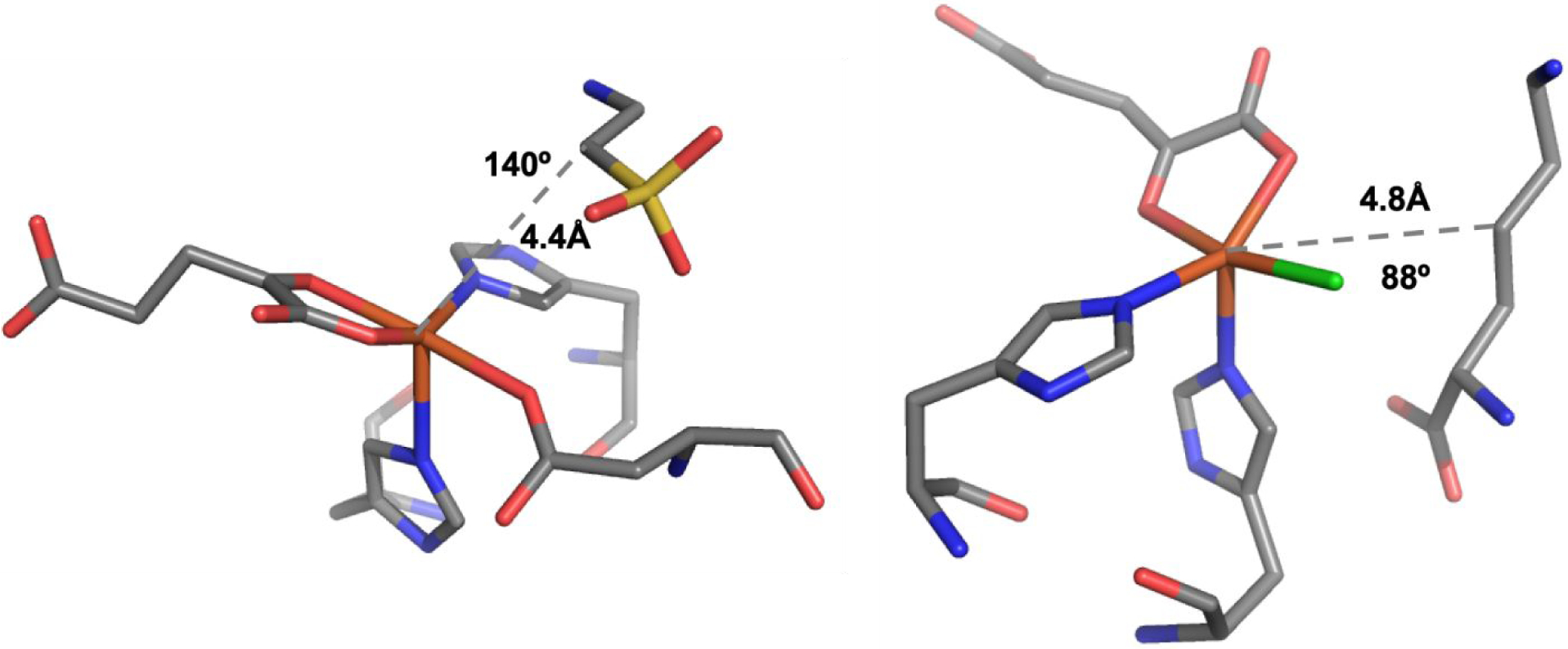
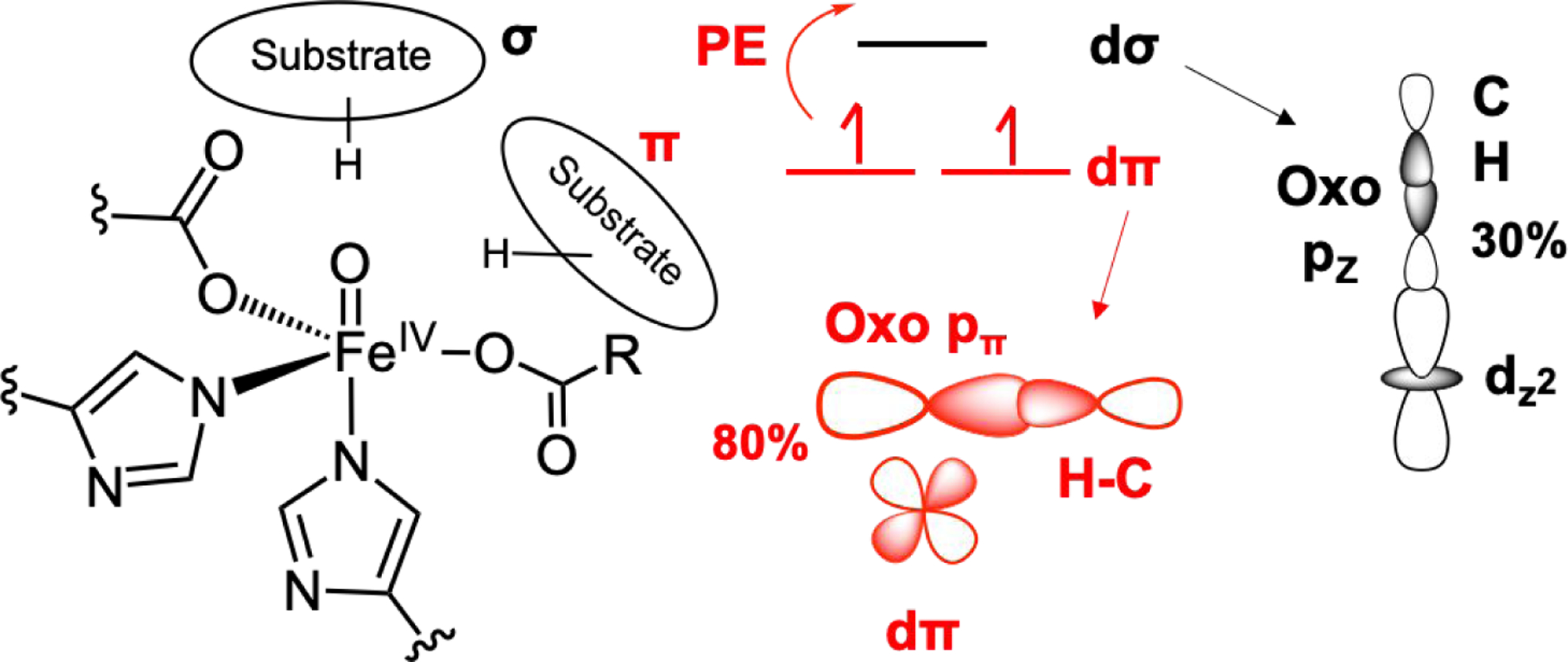
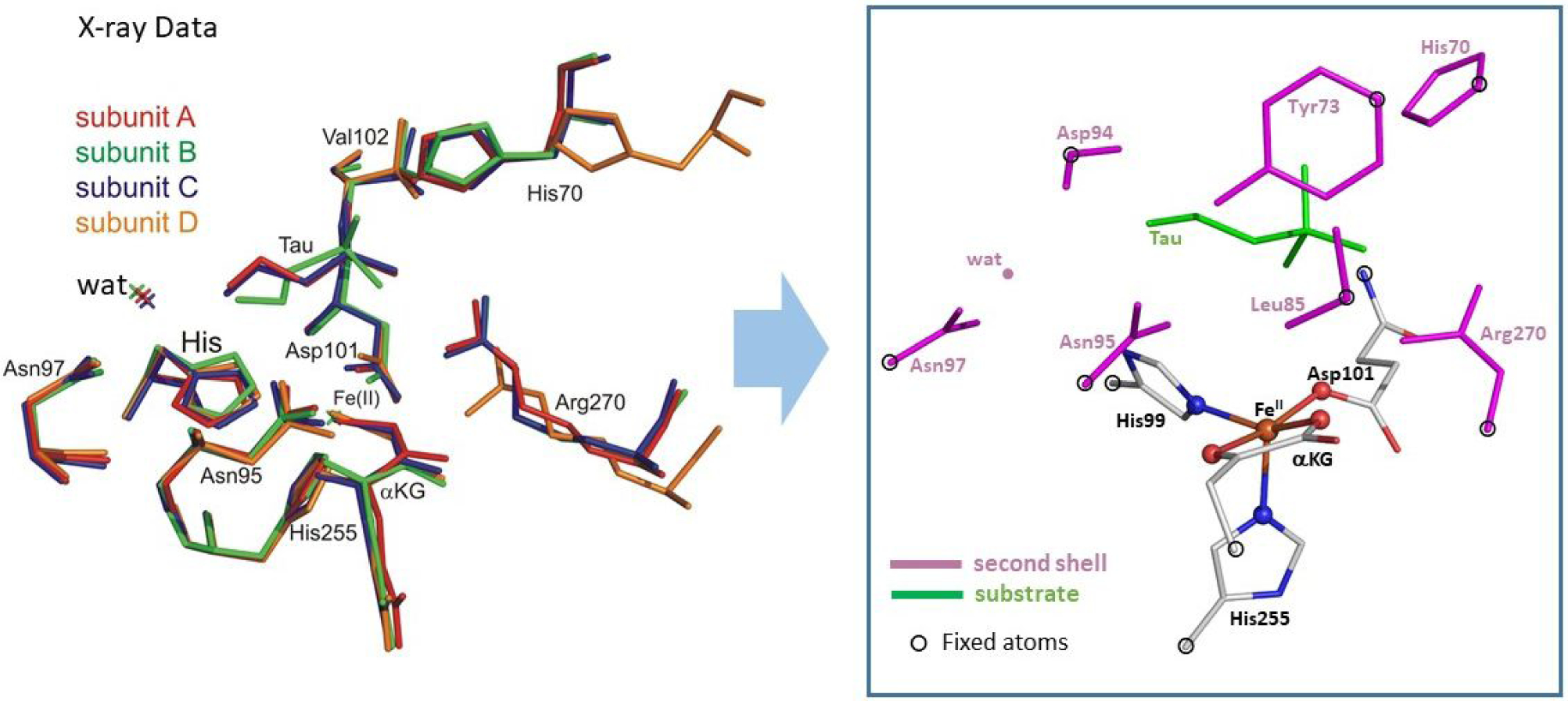
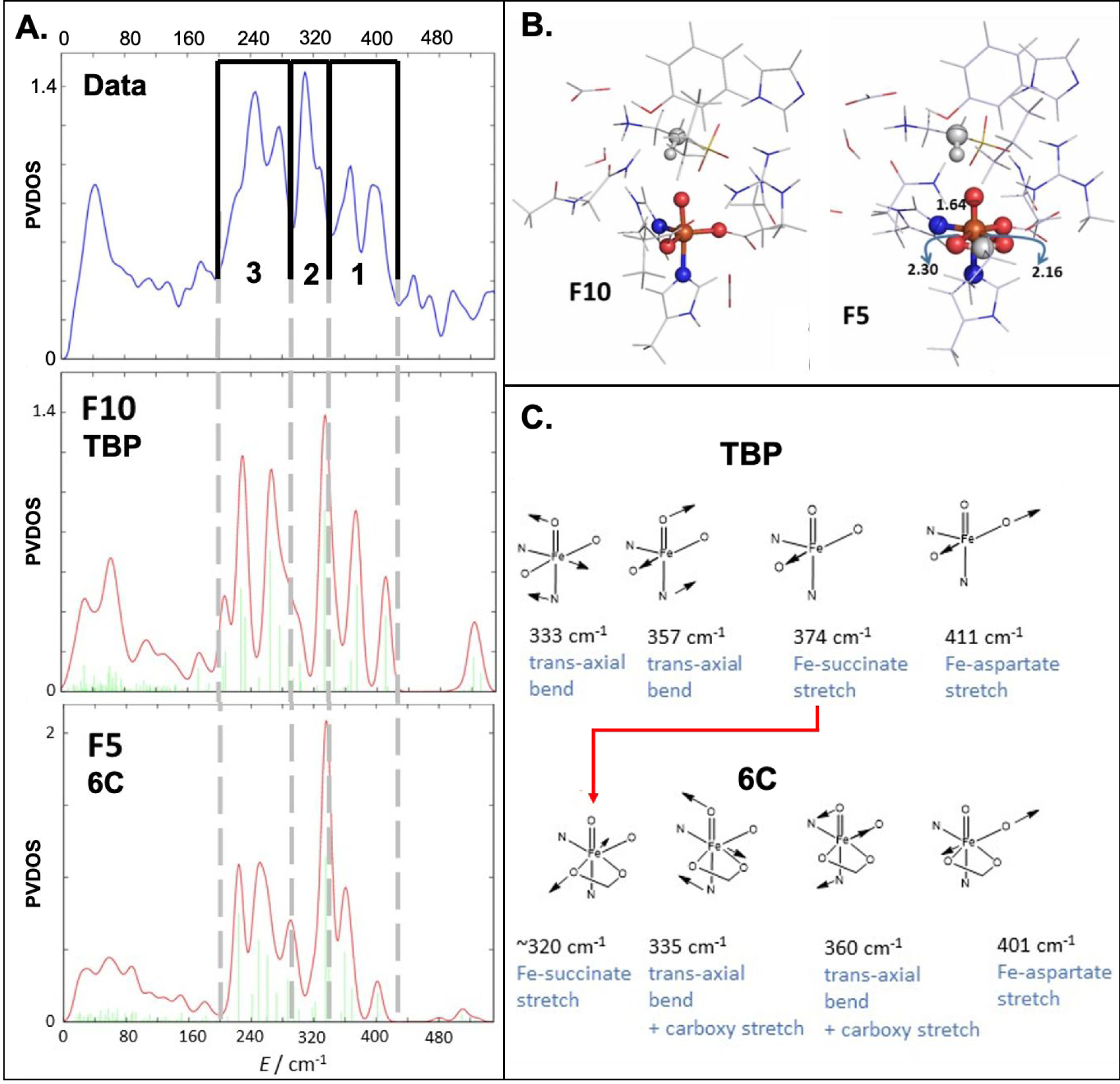
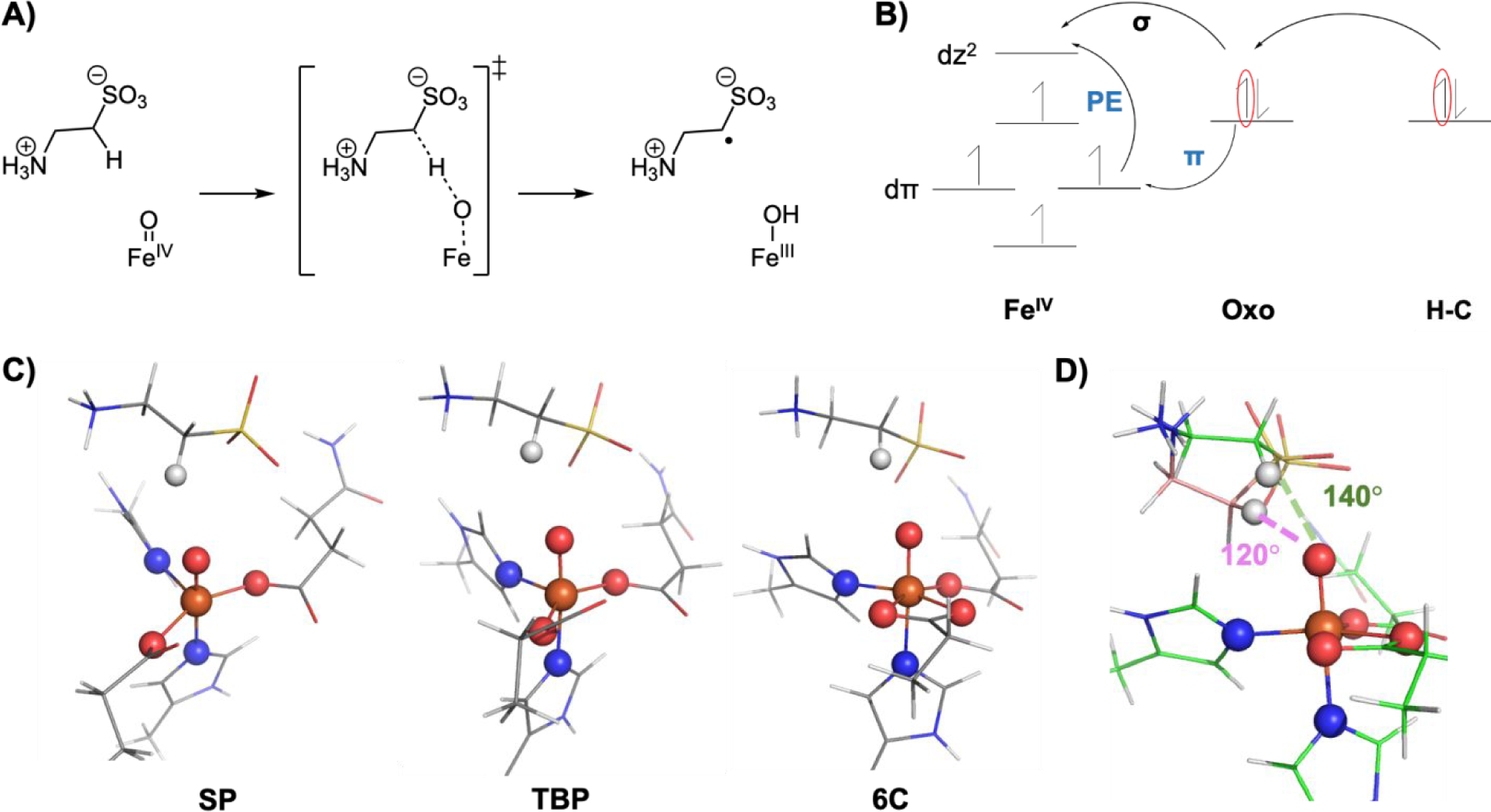
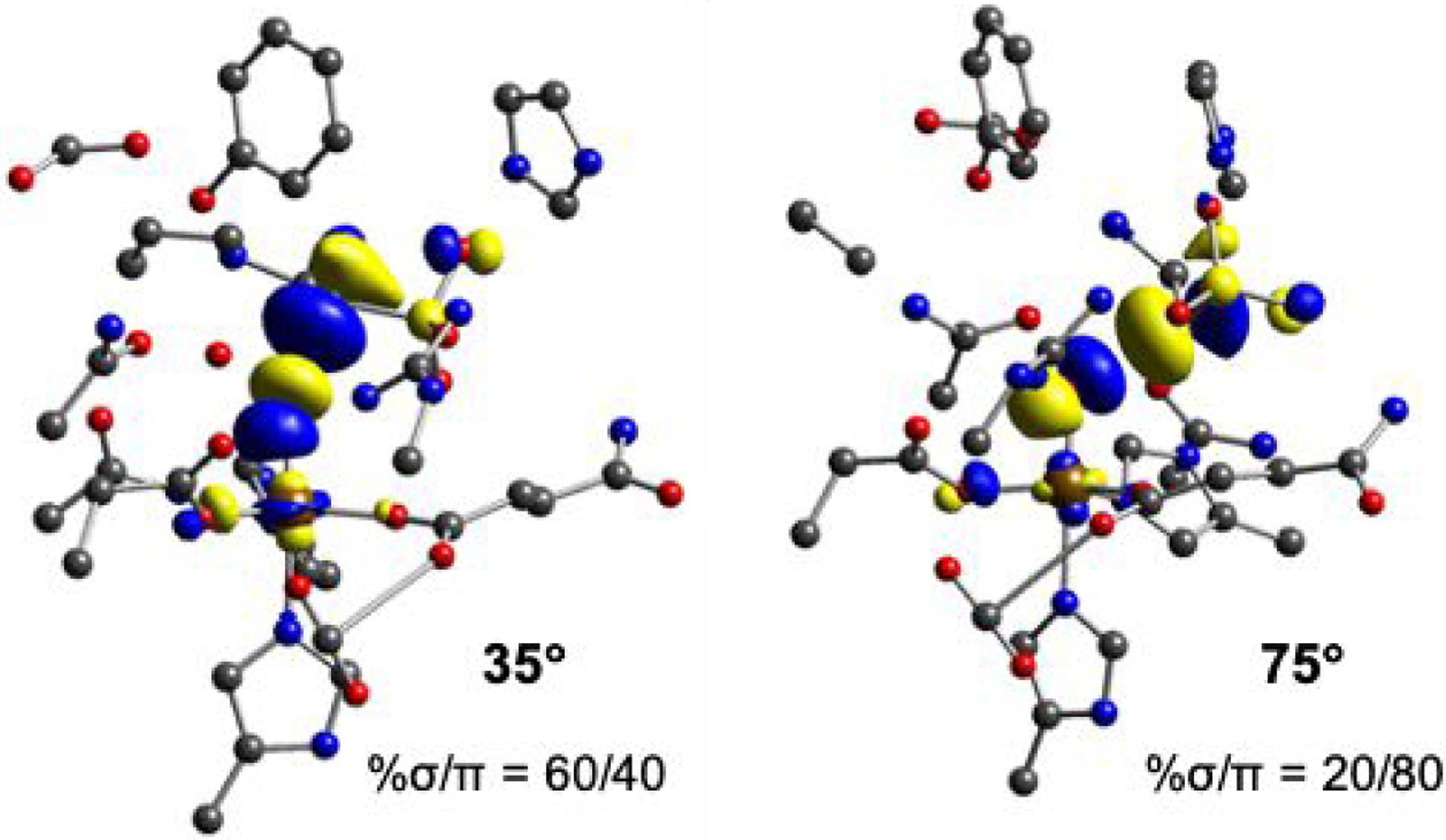
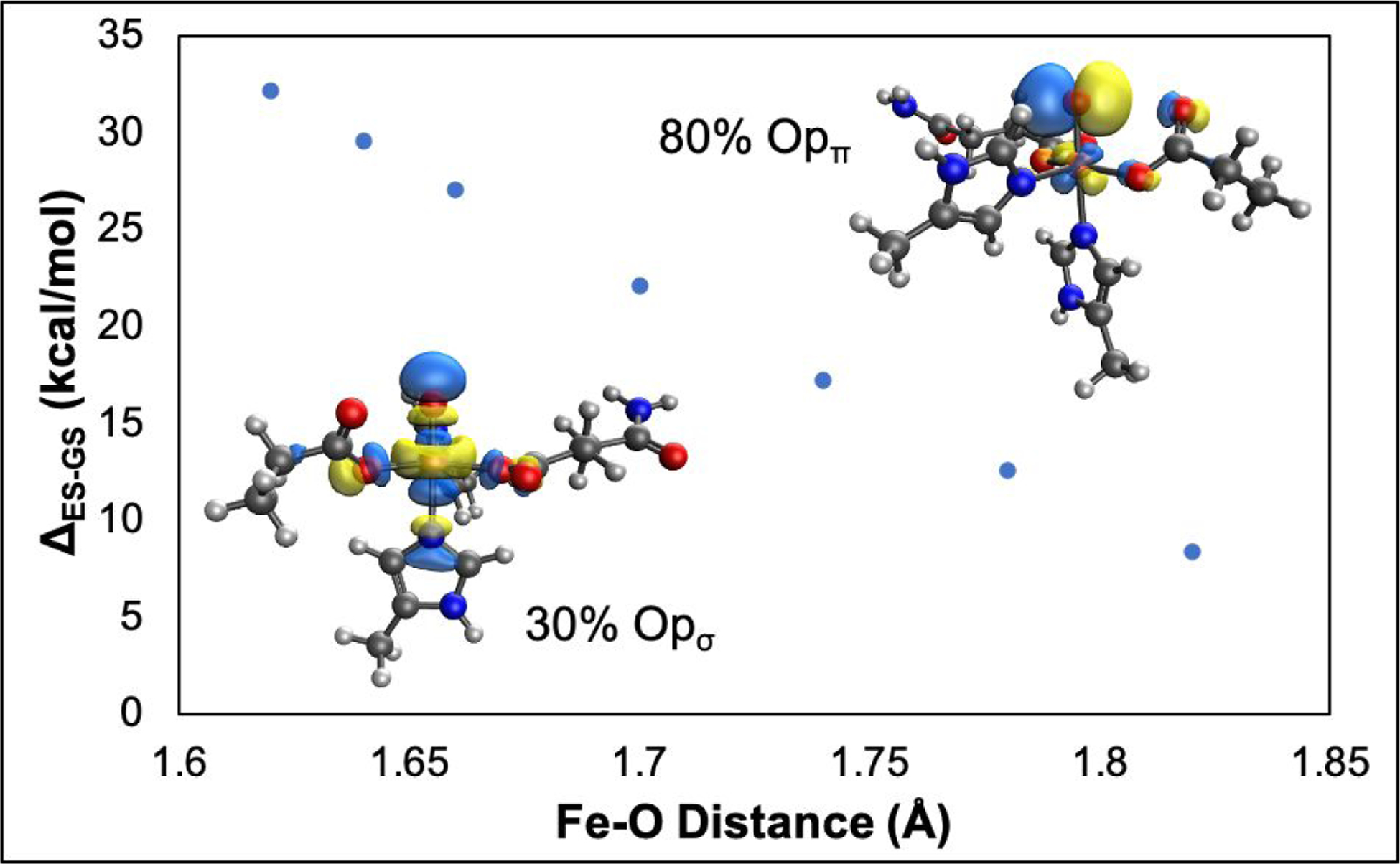
The α-ketoglutarate (αKG)-dependent oxygenases catalyze a diverse range of chemical reactions using a common high-spin Fe═O intermediate that, in most reactions, abstract a hydrogen atom from the substrate. Previously, the Fe═O intermediate in the αKG-dependent halogenase SyrB2 was characterized by nuclear resonance vibrational spectroscopy (NRVS) and density functional theory (DFT) calculations, which demonstrated that it has a trigonal-pyramidal geometry with the scissile C-H bond of the substrate calculated to be perpendicular to the Fe-O bond. Here, we have used NRVS and DFT calculations to show that the Fe═O complex in taurine dioxygenase (TauD), the αKG-dependent hydroxylase in which this intermediate was first characterized, also has a trigonal bipyramidal geometry but with an aspartate residue replacing the equatorial halide of the SyrB2 intermediate. Computational analysis of hydrogen atom abstraction by square pyramidal, trigonal bipyramidal, and six-coordinate Fe═O complexes in two different substrate orientations (one more along [σ channel] and another more perpendicular [π channel] to the Fe-O bond) reveals similar activation barriers. Thus, both substrate approaches to all three geometries are competent in hydrogen atom abstraction. The equivalence in reactivity between the two substrate orientations arises from compensation of the promotion energy (electronic excitation within the d manifold) required to access the π channel by the significantly larger oxyl character present in the pπ orbital oriented toward the substrate, which leads to an earlier transition state along the C-H coordinate.
α-酮戊二酸(αKG)依赖性加氧酶使用共同的高自旋 Fe═O 中间体催化各种化学反应,在大多数反应中,从底物中提取一个氢原子。以前,通过核共振振动光谱(NRVS)和密度泛函理论(DFT)计算对 αKG 依赖性卤代酶 SyrB2 中的 Fe═O 中间体进行了表征,结果表明它具有三角双锥几何形状,底物的易裂 C-H 键被计算为垂直于 Fe-O 键。在这里,我们使用 NRVS 和 DFT 计算表明,牛磺酸双加氧酶(TauD)中的 Fe═O 配合物也具有三角双锥几何形状,但取代了 SyrB2 中间体的轴向卤化物的天冬氨酸残基。在两种不同的底物取向(一种更沿着 [σ 通道],另一种更垂直于 [π 通道] 到 Fe-O 键)下,对正方形金字塔形、三角双锥形和六配位 Fe═O 配合物中氢原子的抽象进行计算分析揭示了相似的活化能垒。因此,所有三种几何形状的两种底物方法都能够进行氢原子抽象。两个底物取向之间的反应性等效性是由于通过 d 简并内的电子激发(电子激发)来进入π通道所需的促进能(promotion energy)得到补偿,这导致在沿 C-H 坐标的过渡态更早出现。